NIGERIA – President Bola Ahmed Tinubu’s own generation walked through primary, secondary, and university on government scholarships and bursaries. It was Awolowo’s 1955 Western Region reforms, then nationwide Universal Primary Education (UPE) in 1976. That generation now governs a country where today’s students must borrow to sit in the same lecture halls.
The Nigeria Education Loan Fund (NELFUND) is not generosity but liability. The generation of President Tinubu enjoyed education as a dividend of democracy; today, he has made it a huge price to be paid by only the poor. No student from a rich family subscribes to NELFUND .
Statistics have it that NELFUND has disbursed ₦322.69 billion to 1.64 million beneficiaries across 350-plus institutions. But those are NELFUND’s own records, self-reported and self-celebrated, not numbers independently verified by the Independent Corrupt Practices and Other Related Offences Commission (ICPC), the Economic and Financial Crimes Commission (EFCC), the Auditor-General, or the National Assembly .
The ICPC opened its probe on May 1, 2025—fifteen months ago—after finding that of ₦100 billion released, only ₦28.8 billion had reached students directly, leaving ₦71.2 billion unaccounted for . An earlier probe was worse: as of March 2024, the ICPC found only ₦44.2 billion of ₦203.8 billion received had been disbursed to institutions—a ₦159.6 billion gap . Fifteen months on, no public reconciliation has resolved this controversy.
The ICPC’s investigation also revealed that the total money received by NELFUND as of March 19, 2024, was ₦203.8 billion, broken down as follows: ₦10 billion from the Federation Allocation Account Committee, ₦50 billion from the EFCC, and ₦71.9 billion from the Tertiary Education Trust Fund (TETFUND) on two separate occasions .
Notice who is actually demanding answers. Not the Ministry of Education! Not the board of NELFUND! It is the National Association of Nigerian Students (NANS), calling the shortfall “a betrayal of public trust,” and the Academic Staff Union of Universities (ASUU), whose president said that the union warned from the outset that the scheme could become “an opportunity for corruption” .
ASUU’s President, Prof. Chris Piwuna, has stated that the union turned down an offer to serve on NELFUND’s governing board, preferring to maintain its independence . He also noted that students are “afraid of taking loans” and “afraid of how they will repay these loans,” questioning why a government that should directly support education has instead shifted the burden onto students .
When the people closest to the classroom trust the numbers less than the people managing the money, that distrust is not paranoia. It is an informed judgment.
NELFUND’s response so far has been denial, not disclosure. The NELFUND communications office called the claims “false, grossly irresponsible, and deeply damaging,” yet no independent reconciliation was offered in fifteen months . That is a familiar script of the Tinubu administration: manage the story, not the substance.
NELFUND has maintained that “no funds have been mismanaged, stolen, or are unaccounted for under the current NELFUND student loan scheme,” arguing that the figures being misrepresented are drawn from “entirely different education financing interventions predating NELFUND’s operational commencement” . The fund also claims to operate a “zero human interface, fully automated loan system” that eliminates opportunities for financial misconduct .
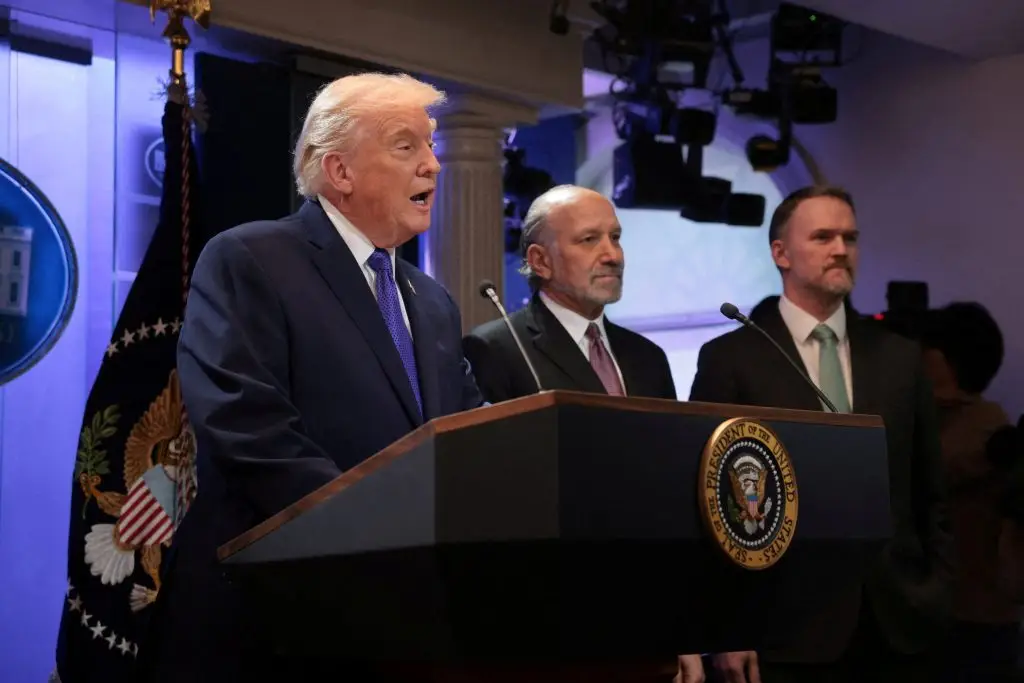
In the midst of all these, President Tinubu personally commended NELFUND on August 3, 2026, even as the 15-month probe remains open, unresolved, and unexplained to the public it was meant for . He praised the agency for widening access to tertiary education and commended the Managing Director, Akintunde Sawyerr, for providing the leadership that has driven the initiative’s implementation .
Five months to the 2027 election, the All Progressives Congress (APC) needs the support of the teeming young voters to win, by dangling the carrot of debt-ridden NELFUND degrees to Nigerian youths while their children graduate in first-world countries without debts.
Nigerian politicians and top functionaries pay huge tuitions and upkeep abroad for their children, not NELFUND loans—a figure way higher than their annual salaries and emoluments. Buhari’s children graduated from Surrey in 2016; Tinubu’s son graduated from Surrey in 2026, and a host of others.
Estimates put Nigerians’ collective foreign school spending above ₦1 trillion a year—money leaving a country whose own universities are underfunded by the same elite sending their children to the Western world. But Nigerians are not naive not to have noticed the coincidence and timing; they are asking whether NELFUND loans are part of 2027 electioneering.
In Anambra State, NELFUND beneficiaries have endorsed President Tinubu for a second term and contributed ₦10,735,500 towards the purchase of his 2027 expression of interest form . The beneficiaries described the gesture as “a symbolic expression of their gratitude for the President’s bold educational reforms” .
Nigerians do not begrudge their leaders’ success, but to mortgage their children’s future to fund someone else’s is what they resent.
All eyes on the ball; Nigerians are watching closely. And a new Nigeria is POssible!