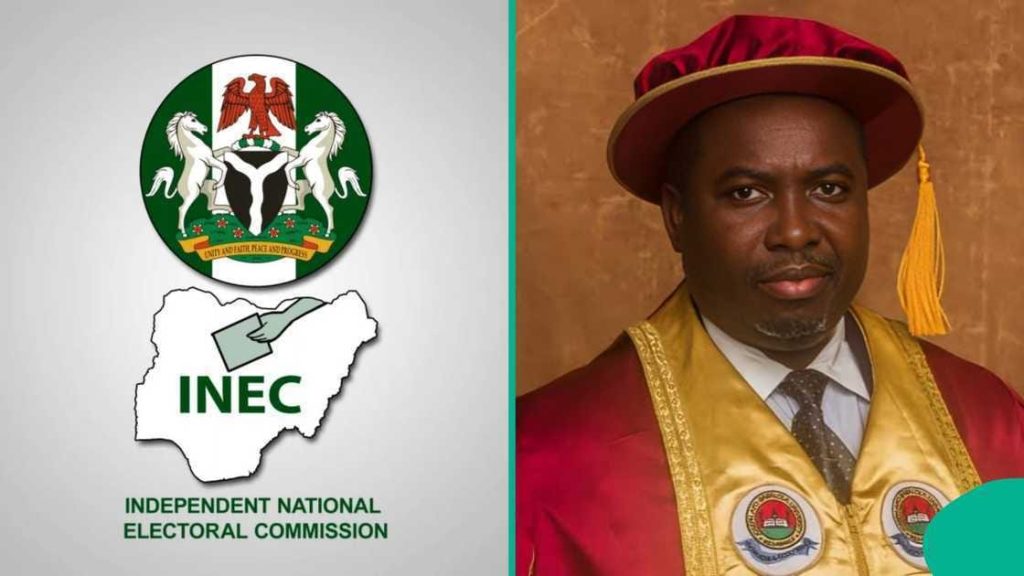
ABUJA, Nigeria — Concerns have emerged over the integrity of Nigeria’s voter registration records following the circulation of screenshots purportedly showing questionable voter photographs on the Independent National Electoral Commission (INEC) online voter register.
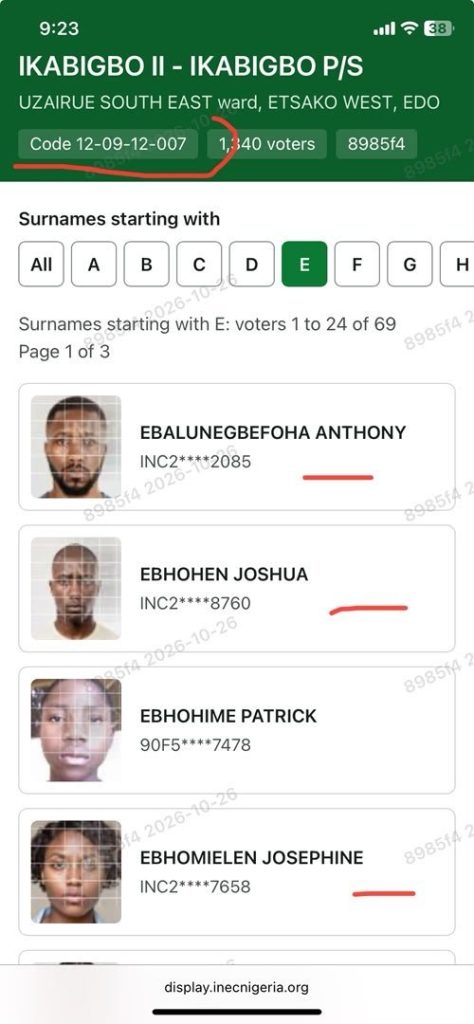
The screenshots, which identify polling units in Uzairue South East Ward, Etsako West Local Government Area of Edo State, show voter records containing photographs that have prompted questions about the authenticity of images uploaded to the register.
The records displayed include Ikabigbo I – Ikabigbo P/S, with 1,133 registered voters; Ikabigbo II – Ikabigbo P/S, with 1,340 voters; and Iyoku – Utukwe Afashio Booth, with 987 voters.
The issue was highlighted by economist and public commentator Pat Utomi, who warned that the presence of alleged AI-generated images in a register intended to support Nigeria’s democracy raises serious concerns about verification, transparency and accountability.
“INEC cannot afford to be careless with the credibility of Nigeria’s electoral process,” Utomi said in a post on X. He added that the country’s democracy was at stake.
The development raises questions about the processes used to verify voter photographs and the safeguards in place to ensure the accuracy and reliability of information published on the electoral register.
However, the screenshots alone do not establish that the photographs were generated using artificial intelligence or that the affected voter records are fraudulent. Independent verification would be required to establish the authenticity of the images and determine whether any registration procedures were breached.
INEC has a critical responsibility to maintain public confidence in Nigeria’s electoral system. Clarification from the commission on the photographs, the verification procedures applied and any investigation into the concerns would help address questions surrounding the register.
As Nigeria prepares for future electoral contests, transparency and credible voter records remain essential to public trust in the democratic process.