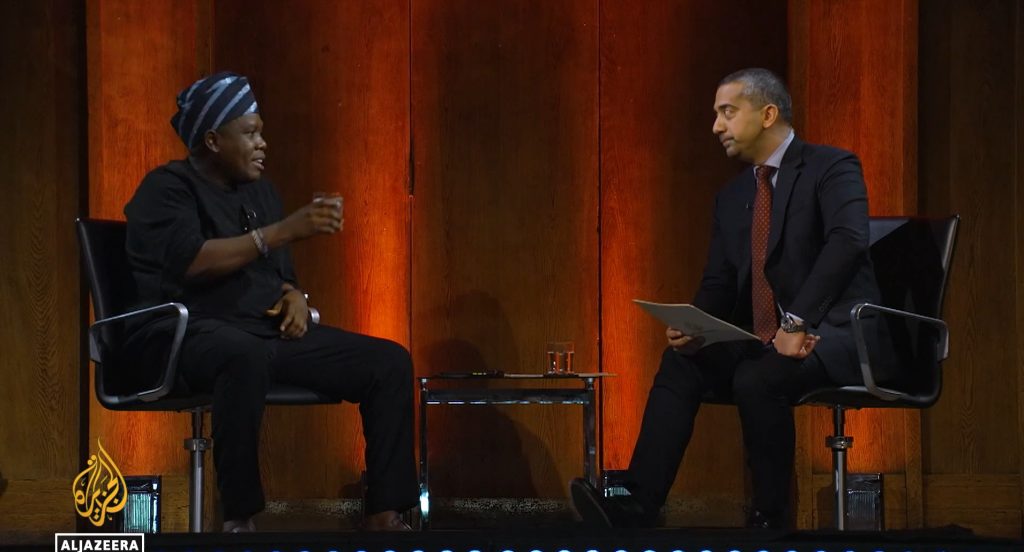
The set of Al Jazeera’s Head to Head is not built for comfort. It is built for reckoning. The studio lights are clinical. The audience is global. And Mehdi Hasan, the programme’s razor-edged anchor, does not arrive with soft questions. He arrives with documents.
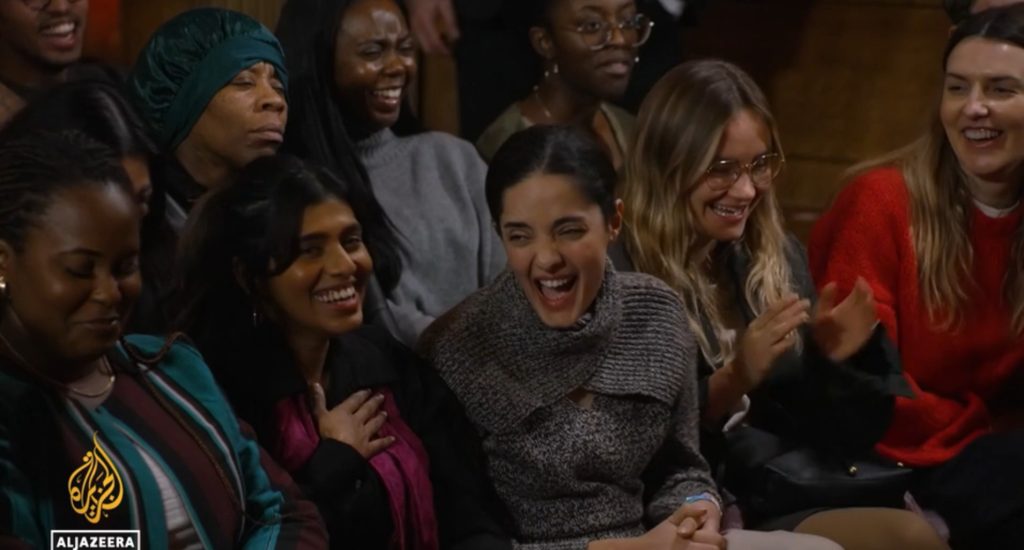
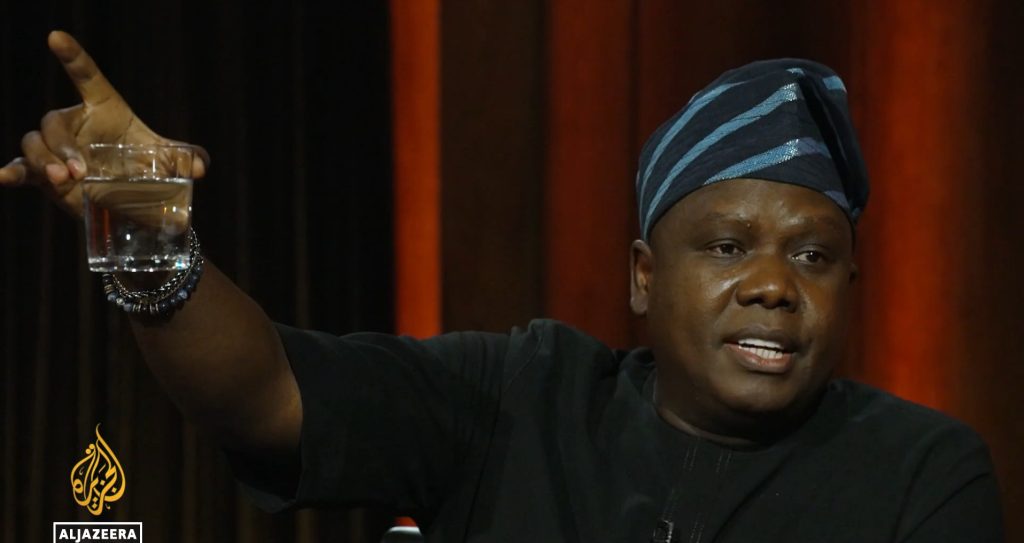
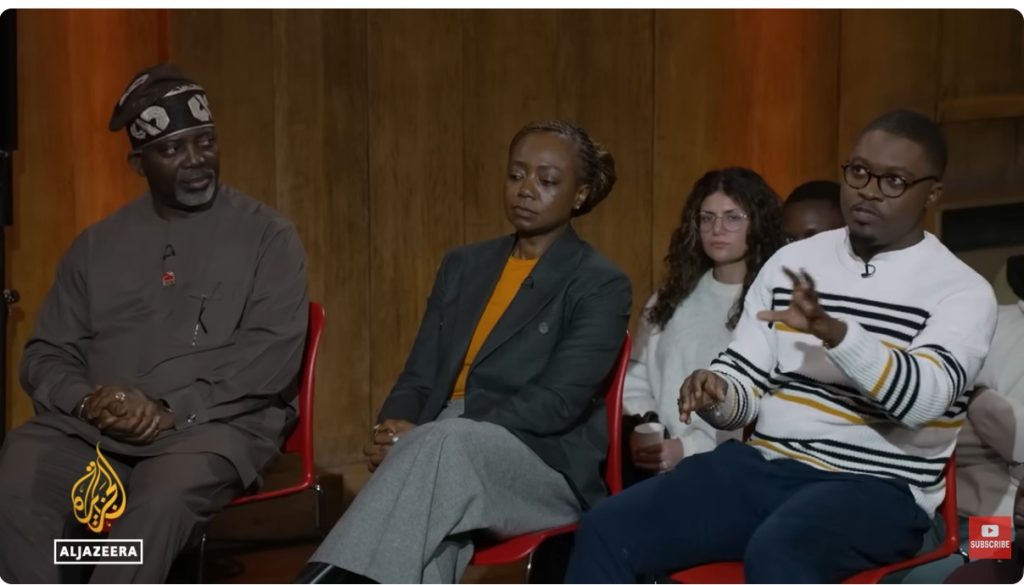
The episode aired on March 6, 2026. Daniel Bwala, Special Adviser to President Bola Tinubu on Media and Policy Communications, took his seat across from Hasan. Titled with characteristic bluntness—“Nigeria: ‘Renewed Hope’ or ‘Hopelessness’?”—what followed was nearly 50 minutes that Nigerians are still dissecting, replaying, and wincing at.
It did not go well.
Hasan opened with a statistic that left little room for pleasantries. Nigeria, he told Bwala and the watching world, is now the fifth most violent country on the planet, according to the Armed Conflict Location & Event Data Project (ACLED) Global Conflict Index. The security situation, he pressed, had worsened. Was the government pleased about that?
Bwala’s response was measured, if somewhat meandering. “We started to see back-to-back attacks in Nigeria after the Christian genocide narratives,” he said, “and I acknowledge the fact that we have insecurity in Nigeria.” He then added that no country in the world was immune to security challenges—an argument that, on its own, might have been defensible. But Hasan was not done.
He produced data. Nigeria’s own National Human Rights Commission, he noted, had documented at least 2,266 people killed by bandits or insurgents in just the first half of 2025 alone—figures that cut directly against the administration’s narrative of progress. When Bwala attempted to offer context, Hasan turned the word back on him.
“Context matters,” Bwala said.
“What is the context?” Hasan asked.
“The context is—it’s not getting worse.”
A pause. Hasan looked at him. “The context is not getting worse?”
“Yes.”
The exchange, brief as it was, became the defining clip of the evening. It travelled across X and WhatsApp within hours, the kind of moment that does not need commentary because it is its own commentary.
But that was only the first ambush. The second was more personal.
Hasan had done his homework—thoroughly. He came armed with Bwala’s own words from the 2023 election cycle, a period when Bwala, then an opposition figure, had been vocally and colourfully hostile toward Tinubu. He had accused the Tinubu camp of creating a militia. He had called the president-elect a drug baron, corrupt, and unfit to lead. He had alleged that bullion vans outside Bourdillon were connected to vote-buying. These were not obscure claims. They had been carried by multiple Nigerian media outlets and were, in several cases, on video.
Bwala denied them. All of them.
“I want to put it on record, on my own honour,” he said at one point, visibly strained, “that’s not what I said.”
Hasan played the recordings. The Daniel Bwala of 2023 appeared on screen and said exactly what the Daniel Bwala of 2026 had just insisted he never said.
The fallout was swift and unsparing.
Kingsley Moghalu, former Deputy Governor of the Central Bank of Nigeria, did not mince words. He described the interview as “a disaster of gargantuan proportions for Nigeria as a country, for President Tinubu’s administration, and for Bwala himself.” He said he had received calls from friends around the world expressing shock. “It was a sad day for our country,” he said. “Competence doesn’t count. Mediocrity reigns.”
Moghalu also turned his gaze beyond the man and toward the system that produced him. “Why appoint former attack dogs of the political opposition as spokespersons and ambassadors for the administration simply because they have ‘defected’?” he asked, noting that such individuals carry political baggage that follows them into every public-facing room they enter. Bwala, he said, was “left trying to eat his words with barefaced lies.”
On social media, the verdict was equally blunt. One commentator described the interview as exposing “the lies, the incoherent contexts and many more.” Another said Hasan had “messed him up big time.” A third called it “an embarrassing moment for Nigeria on the global stage.” One user put the matter to Tinubu’s handlers directly: “He came with reckless and broad political talking points, but Hasan demanded precision and evidence. He should have known he was not going to Channels or Arise TV, but a Western media platform built for accountability, where evasion exposes weakness on a global stage.” Isaac Fayose, businessman and online commentator, reduced it to a single sentence: “You can’t defend this government without looking stupid.”
Bwala, for his part, came out swinging. He had no regrets, he said. He would do it again anywhere in the world. He acknowledged Hasan’s skill, calling him “undoubtedly the world’s greatest debater,” while insisting that the anchor would “hardly let you answer a question unless it suited his narrative.” As for the old statements being used against him, he was characteristically direct: “What I said about Tinubu in the past? All politics.”
Then came the second act.
Days after the broadcast, Bwala made a new and more combustible claim. In an interview with online personality Daddy Freeze, he alleged that Al Jazeera had doctored the programme. According to him, the original interview was conducted on February 11, 2026, and ran for one hour and nineteen minutes. What the network published online on March 6, he claimed, was a 49-minute cut, stripping away nearly twenty minutes of his responses. Al Jazeera then produced an eight-minute highlights version that, in his telling, stitched together clips in a way designed to emphasise certain points while burying the context around them.
“They portray to the public that in that interview I was asked, and when I answered it was not favourable,” he said. “They played my previous comments regarding the question they asked. Unethical and illegal.”
He accused Hasan of deploying “opposition research-style journalism” and labelled portions of what was broadcast “outright fake news,” a charge he said he would substantiate at a later date.
The response to that claim was, if anything, harsher than the response to the interview itself.
Arise News anchor Rufai Oseni was direct. “There is real accountable journalism, and that’s what Mehdi practices,” he said. “It was not that they were adding extra materials. It was the quotes that Bwala himself said, and they just added the videos to make it clearer.”
Reuben Abati, veteran journalist and former presidential spokesman under Goodluck Jonathan, took a different approach. If the interview was truly doctored, he said on the Arise Morning Show, Bwala should sue. Record the evidence. Go to court. “Is misrepresentation an offence? Yes, it is. If you are misrepresented, you can sue for damages.”
The implication was unmistakable: the path to clearing his name runs through a courtroom, not a podcast.
As of March 13, 2026, no legal action has been filed. No date has been set. The charge of doctoring remains precisely what it was when Bwala made it: an allegation, unaccompanied by evidence, issued to an audience that had already watched nearly 50 minutes of him contradicting himself on the publicly available full episode.
The deeper question—one this entire episode has forced into the open—is not really about Daniel Bwala. It is about a political culture that routinely sends people into high-stakes international arenas without the preparation, professional grounding, or factual accuracy those arenas demand.
Nigerian journalists who challenge influential politicians with uncomfortable questions are often intimidated or denied access, which means that by the time a government official steps in front of a Mehdi Hasan, they have had years of soft landings—years of interviews where nobody came armed with documents, nobody pressed on contradictions, nobody paused and said: “That’s not what you said.”
The global stage does not offer that courtesy. It never has.
What Hasan confronted Bwala with was not a smear campaign. It was Bwala’s own record: his statements, his recordings, his contradictions. A man undone not by his interviewer but, as the Vanguard observed, by the return of his own speech.
“His past words entered the room,” the paper wrote, “and refused to leave.”
To now claim those words were never fairly put to him requires a kind of audacity that deserves its own editorial. Al Jazeera broadcast a programme watched by millions on a global platform with a decades-long editorial reputation. Its anchors are challenged in the British Parliament, the United States Congress, and newsrooms around the world. The suggestion that it manufactured an ambush against a Nigerian presidential aide, while interesting, demands more than a podcast appearance to sustain.
Nigeria, the fifth most violent country in the world. That is the number Mehdi Hasan opened with. It is the number that should outlast every claim, counterclaim, and allegation that followed.
It demands not a spokesperson threatening legal action against the journalist who cited it, but a government with a credible answer to why it is true.
That answer was not delivered on March 6.
The courthouse Abati pointed to remains, for now, empty.
And the search for the answer continues.