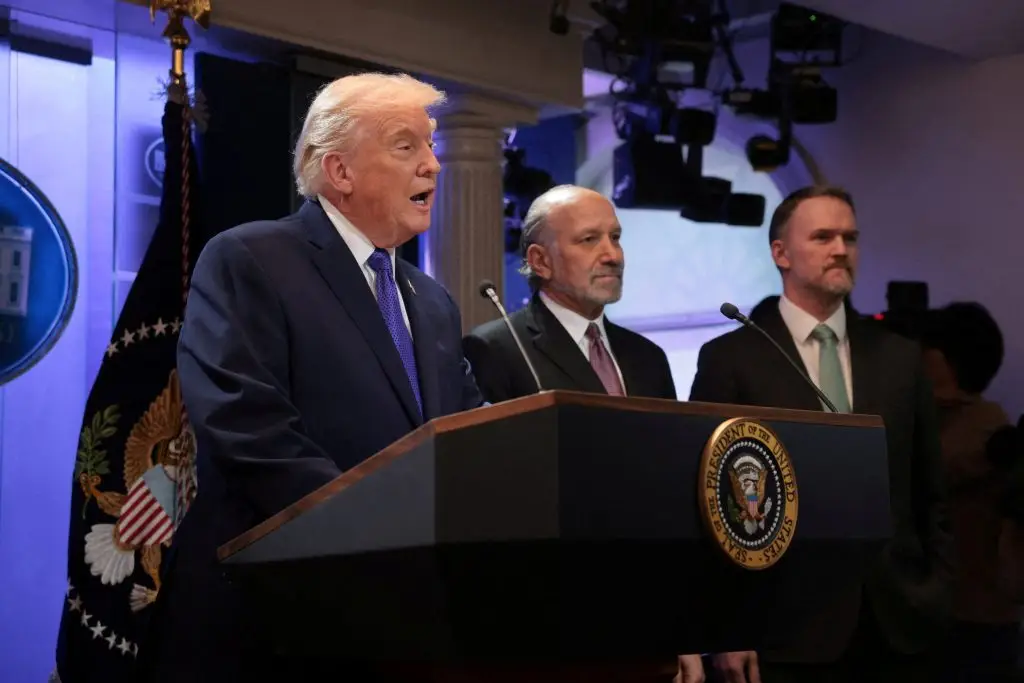
U.S. President Donald Trump announced on Thursday that he would pause attacks on Iran’s energy plants for 10 additional days at the Iranian government’s request, adding that talks with Tehran were going “very well.”
Trump’s social media post came after he stressed at a morning cabinet meeting that Iranian officials were desperate for a deal to end the war that he and Israel launched last month.
“They now have a chance to make a deal, but that’s up to them,” Trump said.
Tehran Rejects U.S. Proposal
However, a senior Iranian official told Reuters on Thursday that a proposal received from the U.S. for ending nearly four weeks of fighting was “one-sided and unfair.”
The official said the proposal, conveyed by Pakistan, lacked the minimum requirements for success and served only U.S. and Israeli interests.
U.S. Special Envoy Steve Witkoff confirmed that the U.S. had sent a “15-point action list” as a basis for negotiations to end the war.
“We have, along with your foreign policy team, presented a 15-point action list that forms the framework for a peace deal,” Witkoff said.
Pakistan’s foreign minister said “indirect talks” between the U.S. and Iran were taking place through messages relayed by Islamabad.
Mixed Signals
Trump has tried to portray Iran as begging for peace after being decisively defeated.
“They’ve been obliterated. Who wouldn’t negotiate? They are begging to make a deal. We’ll see if we can make the right deal. And if they make the right deal, then the Strait will open up, Hormuz Strait will open up,” Trump said.
Tehran has downplayed diplomatic progress. On Thursday, the Islamic Revolutionary Guards Corps released footage of fresh missile launches, underscoring its continued military capability.
Strait of Hormuz Crisis
The war has effectively closed the Strait of Hormuz, a maritime corridor for nearly one-fifth of global oil and liquefied natural gas supplies. Tehran has said it would allow what it called “non-hostile” vessels to transit the Strait if they coordinated with Iranian officials.
Malaysia’s prime minister said on Thursday that after discussions with Iran, Egypt, and Turkey, his country’s vessels would be allowed through the waterway.
“In the meantime, we’ll just keep blowing them away, unimpeded, unstopped. There’s not a thing they can do about it. They can’t do anything about it. If they could — if they could, you’d be hearing about it,” Trump said.
Uncertainty Over U.S. Intentions
A Western diplomat said it was not clear if Washington was seeking to end the war or to calm markets before a potential ground operation.
Trump is expected to send thousands of troops to the Middle East, driving expectations of a ground invasion. The prospect of a ground offensive has alarmed allies and raised questions about the administration’s long-term strategy.
What Happens Next
The 10-day pause on energy attacks offers a narrow window for diplomacy. Whether the two sides can bridge the gap between Trump’s claims of progress and Tehran’s rejection of the U.S. proposal remains uncertain.
For global energy markets, any sign of progress toward reopening the Strait of Hormuz would be welcomed. But with Iran continuing to downplay diplomatic developments and the U.S. reportedly preparing for a ground invasion, the path to peace remains precarious.
Based on reporting by Reuters. Additional analysis by The Credibility News.