A Chinese electronics manufacturer has emerged from a year of U.S. tariff turbulence with a clear verdict: despite geopolitical tensions and forced diversification efforts, China remains extremely difficult to replace as a manufacturing base.
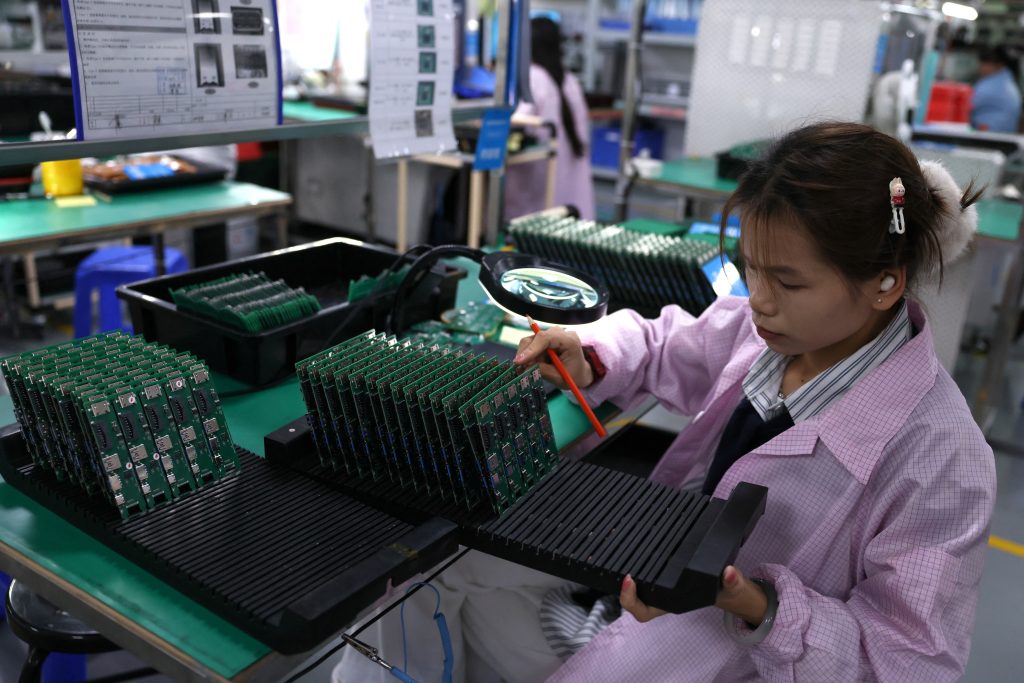
Agilian Technology, a Dongguan-based contract manufacturer serving Western brands, saw more than half its revenue — tied to U.S. orders — effectively frozen during the height of trade tensions in 2025. Panicked clients demanded the company shift production outside China, triggering a rushed search for alternatives.
The disruption mirrored broader challenges across China’s manufacturing sector. The country’s official purchasing managers’ index (PMI) contracted for much of 2025, reaching its weakest point in April since late 2023.
Yet Beijing’s countermeasures, including export controls on critical minerals, contributed to a partial de-escalation. By March 2026, China’s PMI rebounded at its fastest pace in a year.
For Agilian, with annual revenues of around $30 million, the recovery underscored the enduring strategic value of its Chinese operations — even as it continues limited diversification abroad.
Supply chains reshaped, not broken
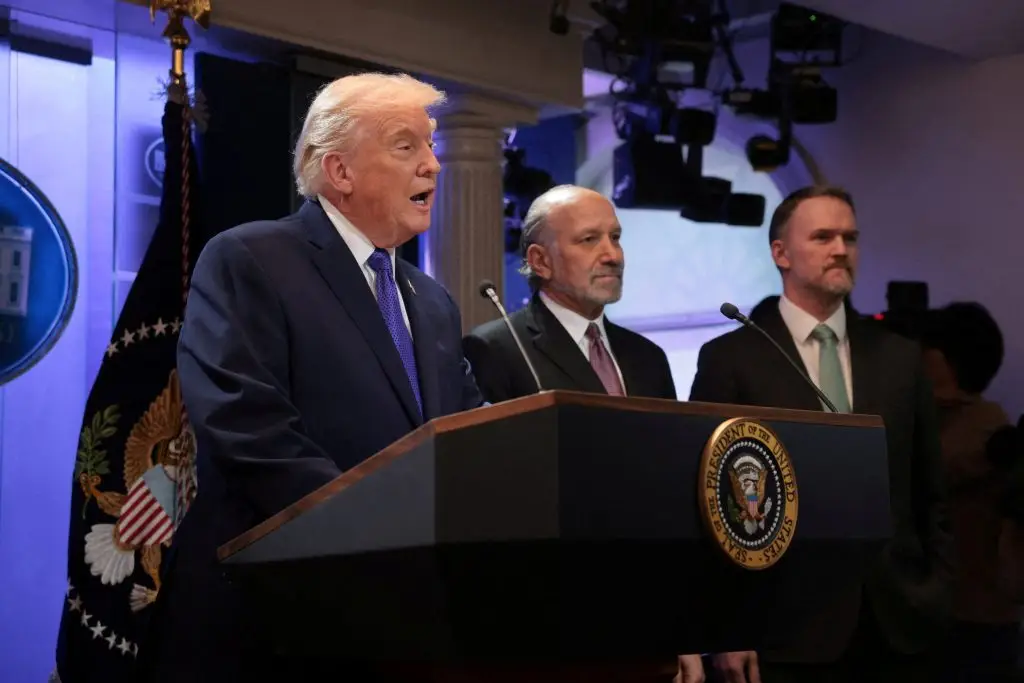
Economists say the U.S. tariffs imposed under President Donald Trump have not derailed China’s manufacturing momentum, but have instead driven a restructuring of global trade flows.
“The data confirms that tariffs haven’t derailed China’s manufacturing sector,” said Nick Marro of the Economist Intelligence Unit. “They’ve driven a restructuring of supply chains.”
China’s trade surplus surged to $213.6 billion in the first two months of 2026, up from $169.2 billion a year earlier. For the whole of 2025, the surplus reached a record $1.2 trillion.
Still, the impact on U.S.-focused exporters was significant. Agilian’s CEO, Fabien Gaussorgues, said exports to the United States fell by around 20% last year.
A scramble to diversify
As Trump’s re-election campaign gained momentum in 2024, clients began stockpiling goods in North America to preempt potential tariffs, driving warehouse costs sharply higher.
After Trump returned to office, the pressure intensified. Clients called urgently, pushing Agilian to establish production outside China.
The company evaluated several locations:
- Malaysia (Penang) — Selected for partial production shift.
- India (Dharwad) — Slower to establish, hampered by regulatory hurdles.
- United States — Ruled out due to incomplete supply chains and significantly higher costs.
“India takes time,” Gaussorgues said. “It took us one year just to establish the company.”
Tariff shock — and partial reversal
Tensions peaked in April 2025 when additional U.S. tariffs on Chinese goods rose by 34 percentage points on top of prior increases. Tit-for-tat measures pushed combined levies above 100% on both sides.
Orders were cancelled, production lines halted, and inventory piled up in warehouses.
“It was a disaster,” said Agilian vice-president Renaud Anjoran.
A breakthrough agreement between Washington and Beijing in May led to the rollback of most new tariffs. Subsequent negotiations between Trump and Chinese President Xi Jinping reduced levies further.
By the second half of 2025, Agilian experienced its busiest production period on record, with output hours rising 29%.
China remains central
Despite diversification efforts, Agilian found that replicating China’s complete manufacturing ecosystem — dense supplier networks, speed, cost efficiency, and component quality — is extraordinarily difficult.
Facilities in Malaysia and India proved slower and less efficient to scale. Even U.S. production attempts remained heavily reliant on Chinese components, undercutting reshoring goals.
“Everything takes way longer outside China,” Anjoran said.
Today, the company continues to invest in overseas capacity as a hedge against future disruptions, but views its Dongguan base as indispensable. Improving quality and lower costs of Chinese components have only strengthened that assessment.
Looking ahead
Agilian aims to grow revenues by 30% over the next three years, though executives remain cautious about potential renewed geopolitical tensions.
“The best we can hope for is continued dialogue,” said Marro.
The lesson from a year of tariff turmoil is clear: global supply chains may shift and adapt, but China’s deep-rooted manufacturing dominance is not easily displaced.
Source: Adapted from Reuters reporting by David Kirton and colleagues.