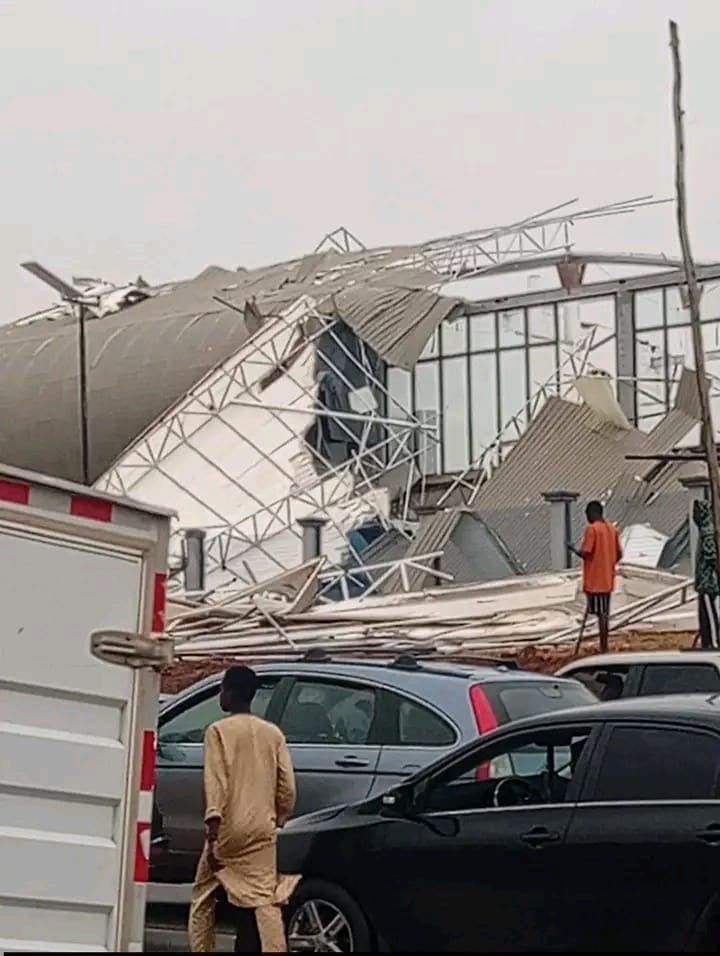
NIGERIA: A section of the newly constructed Kugbo Bus Terminal in Abuja collapsed on Tuesday following heavy rainfall, triggering a major traffic crisis and raising fresh concerns about infrastructure standards in the Federal Capital Territory.
Eyewitnesses at the scene told reporters that the structure began to show signs of distress shortly after a prolonged downpour earlier in the day. According to multiple accounts, water appeared to accumulate around parts of the terminal — possibly due to poor drainage — before sections of the building suddenly gave way. The collapse reportedly affected parts of the terminal’s external structure, with debris spilling onto adjoining roads.
The immediate trigger is believed to be the intensity of the rainfall combined with suspected structural weaknesses, although officials are yet to confirm the exact cause. Some residents suggested that the foundation may have been compromised, while others pointed to substandard materials or rushed construction work as possible factors.
The collapse had an instant impact on movement in the area. Debris from the structure blocked major access routes in Kugbo, forcing authorities to shut down affected roads. Within minutes, heavy gridlock spread across the axis, extending towards Nyanya and Karu — two of the busiest commuter corridors linking Abuja to neighbouring regions.
Motorists were trapped in standstill traffic for hours, with some abandoning their vehicles to continue their journeys on foot. Commercial transport operators were also forced to suspend operations temporarily, leaving many commuters stranded and scrambling for alternatives.
Emergency responders, including personnel from the Federal Road Safety Corps and other security agencies, were deployed to the scene to manage traffic and secure the area. However, efforts to restore normalcy were slowed by the scale of the obstruction and the high volume of vehicles affected.
As of the time of this report, there are no confirmed fatalities linked to the incident. However, a few individuals at the scene were reportedly treated for minor injuries, largely resulting from panic and the rush to evacuate the area. Authorities have yet to release an official casualty figure or a comprehensive assessment of the damage.
The terminal, constructed under the Federal Capital Territory Administration and reportedly valued at over ₦30 billion, had only recently been commissioned, making the incident particularly alarming for residents and stakeholders.
Public reaction has been swift and critical. Many Abuja residents have described the collapse as both shocking and unacceptable, questioning how a newly completed, multi‑billion‑naira project could fail after a single rainfall. Calls for accountability have intensified, with demands for a full‑scale investigation into the contractors, engineers, and regulatory bodies responsible for the project.
As authorities continue to assess the situation, the incident has reignited broader concerns about quality control, regulatory oversight, and the long‑term safety of public infrastructure in Nigeria’s capital.