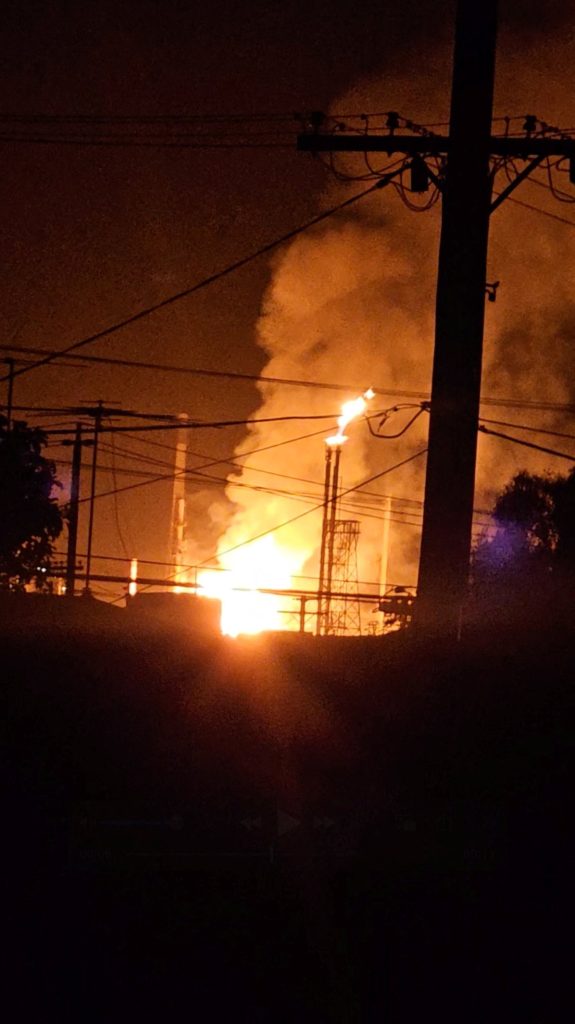
A fire at Australia’s largest oil refinery has strained the nation’s fuel supply at a critical moment, as the Iran war continues to disrupt global energy markets and drive up prices worldwide.
The blaze broke out at Viva Energy’s 120,000 barrels-per-day refinery, located about an hour’s drive from Melbourne, on Wednesday night. State fire authorities said the fire had been brought “under control” by noon on Thursday.
The incident could hardly have come at a worse time. Australia depends on imports for 80 percent of its fuel needs and has been racing to secure alternative supplies since the Middle East conflict began nearly seven weeks ago.
“This is not a positive development,” he told Channel Nine. “But obviously there’s a long way to go in terms of working out just what the impact is.”
Viva Energy’s refinery supplies more than half of the fuel in Victoria, Australia’s second most populous state, and about a tenth of the nation’s total fuel demand.
The company said petrol and aviation gasoline output would be affected, but that it would meet fuel demand through imports. The plant continues to produce jet fuel and diesel, though at reduced levels for safety reasons.
“I would expect we’d see a price hike depending on the scale of the damage,” said John Coyne, an analyst at the Australian Strategic Policy Institute. “Secondly, it reinforces the challenges we have in terms of sovereign and resilient capabilities here.”
The fire came as Prime Minister Anthony Albanese visited Kuala Lumpur on Thursday to discuss securing fuel supplies with his Malaysian counterpart, Anwar Ibrahim. The trip follows similar visits to Singapore and Brunei.
Malaysia and Brunei, both oil-producing nations, could increase production — but only to a certain degree, Coyne said.
No injuries have been reported from the fire. The cause and the full extent of the damage remain unclear.
Even before the fire, the Iran war had created chaos in Australian fuel markets. Supply fears stoked panic buying, doubling demand in some areas despite government assurances that supplies were adequate.
Last month, Albanese announced temporary relief measures, including halving the fuel excise and suspending the heavy road user charge for three months, to help households cope with rising costs.
“It’s going to be a very bumpy and expensive few months,” said Tennant Reed, climate change and energy director at the Australian Industry Group.
In March, the government committed to underwriting a portion of fuel purchases by refiners and suppliers. Albanese said his government would continue working with Viva Energy to bring affected operations back online as quickly as possible.
Reed said the government could go to market to secure more supply to make up for any production loss, but cargoes would still take weeks to arrive.
Viva Energy CEO Scott Wyatt told reporters that the immediate priority was extinguishing the fire completely before assessing damage and safely restoring production.
“All the other units are still operating and still in production but they are at minimum rates to maintain safety across the site,” he said.
“We’ll only start increasing production again once we’re confident that we can do that safely.”
Viva’s shares were placed on a trading halt pending an update on the fire’s impact.
Australia relies on imports for 80 percent of its fuel needs — a vulnerability that the Iran war has brutally exposed. With global supply disrupted and prices already elevated, a fire at the nation’s largest refinery could not have come at a worse time.
For Australian motorists, the immediate impact will likely be higher prices at the pump. For the government, it is a stark reminder of the fragility of the nation’s fuel security.
As Prime Minister Albanese seeks supply assurances from Malaysia and Brunei, the fire at Viva’s refinery adds urgency to an already critical mission.
Sources: Reuters