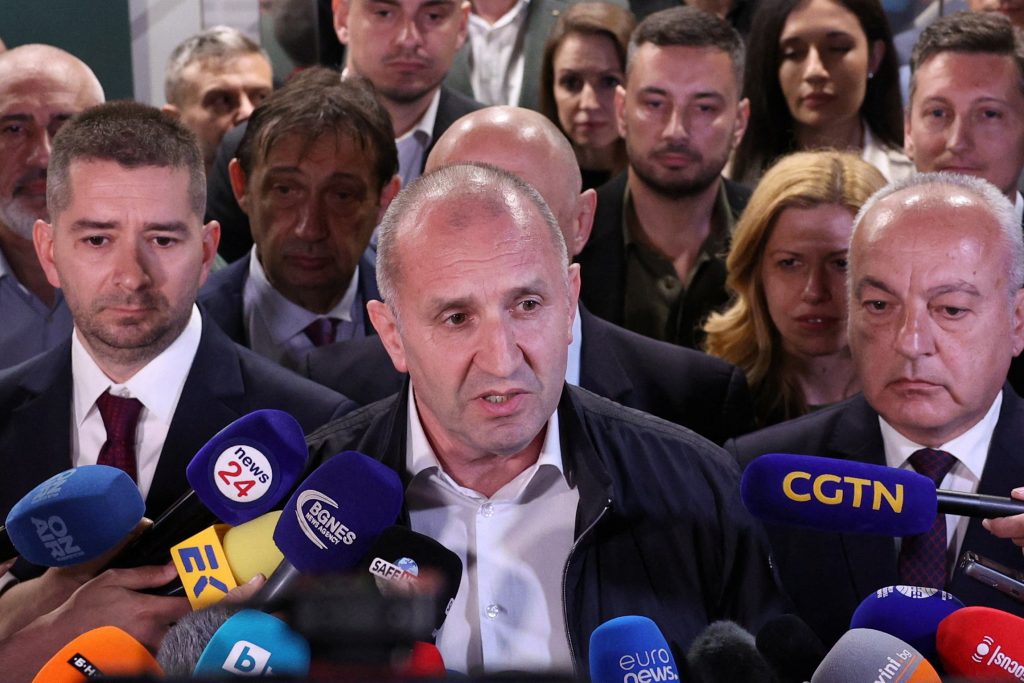
SOFIA, BULGARIA — Bulgaria is heading into a new political phase after former president Rumen Radev won a clear and wide victory in the country’s parliamentary election, according to official results released on Monday.
Radev’s party, Progressive Bulgaria, secured 44.6 percent of the vote, far ahead of its rivals. The strong result means he could form a government on his own, though he has said he may still work with other parties.
His closest challengers finished well behind. The We Continue the Change–Democratic Bulgaria alliance got 12.6 percent, while the GERB party led by former prime minister Boyko Borissov won 13.4 percent.
The outcome is one of the biggest wins seen in Bulgaria in many years. It could also bring some stability after a long period of political trouble, during which the country held eight elections in just five years.
Radev, a former air force pilot, stepped down as president earlier this year to run in the election. He built his campaign on public anger over corruption, rising prices, and repeated changes in government.
Many voters said they wanted something different.
“People are hoping to finally see real change,” said Evelina Koleva, a marketing worker in the capital, Sofia.
Radev’s win has drawn attention from both Europe and Russia, as many are watching what direction Bulgaria will take next.
Leaders in the European Union welcomed the result. European Council head Antonio Costa congratulated Radev and said he looked forward to working together.
Russia also reacted positively. The Kremlin said it was encouraged by Radev’s calls for more practical talks and better ties.
During his campaign, Radev spoke about improving relations with Moscow and allowing Russian oil and gas to flow more freely again. His views have been compared to those of Hungary’s leader Viktor Orbán, who is known for his close stance with Russia.
Still, experts say big changes in foreign policy are not likely right away. Bulgaria is a member of both the European Union and NATO, and is expected to keep its place in both groups.
Radev himself has said the country will continue on its European path, even as he pushes for some changes.
At home, the biggest concerns remain the cost of living and the state of the economy. Many Bulgarians have struggled with rising prices, especially since the country adopted the euro earlier this year.
The last government fell after protests over tax plans and higher social payments, showing how serious public frustration has become.
Authorities also tried to improve election fairness. More than 400 people were arrested over suspected vote-buying and other offences, a sharp rise from the last election.
Bulgaria has made progress over the years, especially since joining the EU in 2007. Unemployment is low, and the economy is more stable. But the country still falls behind many other EU nations in income and living standards.
Experts say Radev now faces the real test of turning his big win into real results. Tihomir Bezlov from the Centre for the Study of Democracy said the main problems are clear.
“The biggest issues are the economy and the falling population,” he said, adding that clear solutions are still needed.
With strong public support behind him, Radev now has a chance to bring some order to Bulgaria’s politics. Whether he can fix the country’s deeper problems will shape what comes next.
Sources: Reuters