CONGO – “They burned him alive, without even leaving me a trace of him.”
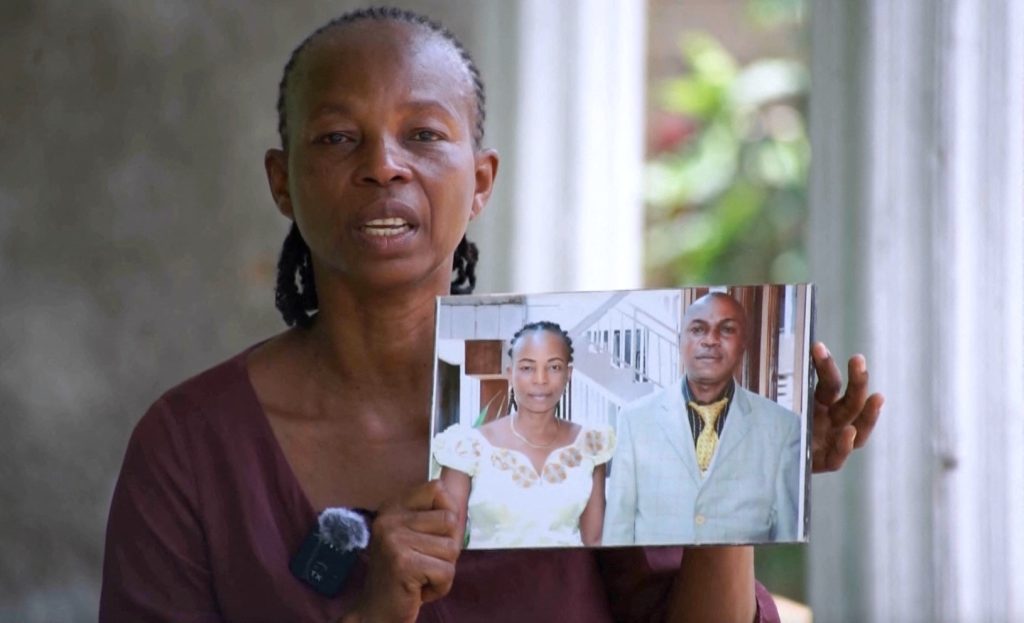
Those are the words of Justine Tangakeya Basekauke, whose husband, Dr John Tangakeya, was one of four health workers killed by an angry mob in northeastern Congo last October.
The trigger? A fake rumour that spread like wildfire on social media — claiming a mysterious illness had caused men’s genitals to atrophy.
Within days, testimonials proliferated online, amplified by churches and local media. The imaginary threat triggered a real-life panic that turned deadly before the government could react.
In Congo, misinformation “really led to death and murder,” said Elodie Ho, director of the WHO-led Africa Infodemic Response Alliance (AIRA), which monitors fake health information. “It started in communities. It spread into social media and local media. It was amplified by those actors.”
In Tshopo, a northeastern Congolese province blanketed in rainforest, rumours rippled through villages late last year. The claim: a mysterious illness had caused men’s genitals to atrophy.
Video testimonials soon appeared online. One showed a taxi driver on stage at a Christian gathering recounting how a megachurch pastor had cured him with prayer. The taxi driver presented no evidence. The video, posted on TikTok by a prominent church worker, was widely watched and shared.
A local court has since sentenced a man who accused another of spreading the disease to 12 months in prison. Around a dozen people were arrested. But the damage had already been done.
On October 6, health workers reached villages in the Isangi area of Tshopo to carry out vaccination surveys. In Ilambi village, young men accused them of secretly spreading the fake disease when they saw outsiders wearing high-visibility vests and carrying tablet computers.
Two doctors, Placide Mbungi and John Tangakeya, tried to explain their vaccine research, which was unrelated to the health scare. They were killed on the spot.
“They burned him alive, without even leaving me a trace of him,” Tangakeya’s widow told Reuters.
In nearby Yafira village, their colleagues Mathieu Mosisi and Kevin Ilunga sought help from a nearby policeman, but an angry crowd killed them as well.
At least 17 killings related to the atrophy rumour have been reported, including the health workers, according to AIRA. Reuters could not independently verify all of the deaths.
Prevalent in many parts of the world, a lack of faith in established medicine in parts of Africa is partly rooted in both the colonial era and more recent Western clinical trials.
Such mistrust is turbocharged by cheap artificial intelligence and widespread social media use, according to the African Union’s Africa Centres for Disease Control and Prevention.
“When populations do not trust vaccines, health workers, or government policies, it means they don’t access services that can help them survive,” said Dr Jean Kaseya, Director General of the Africa CDC.
The rumours continue to resurface, months later. In an incident in March, a woman in Congo’s Lualaba province was accused of spreading the disease and lynched, while a second person survived the attack, AIRA said, citing local media reports.
Further complicating efforts to tackle false information, US and other nations’ foreign aid cuts over the past year have left AIRA low on funds.
AIRA now has personnel in just three countries, down from five. An AI platform built to track online conversations for fake information is out of action because there is no money for monthly subscriptions.
The WHO regional office said talks were underway to secure funding to sustain and scale up AIRA’s work.
Source: Reuters