It began, as many political scandals do in Nigeria, with a tweet. On Saturday, May 31, 2026, Lere Olayinka, media aide to the Minister of the Federal Capital Territory, Nyesom Wike, took to X and posted what he clearly imagined was a clever political put-down. His target was Emeka Ike, the veteran Nollywood actor who had recently declared an intention to contest the House of Representatives seat for the AMAC/Bwari Federal Constituency in the FCT under the Nigerian Democratic Congress.
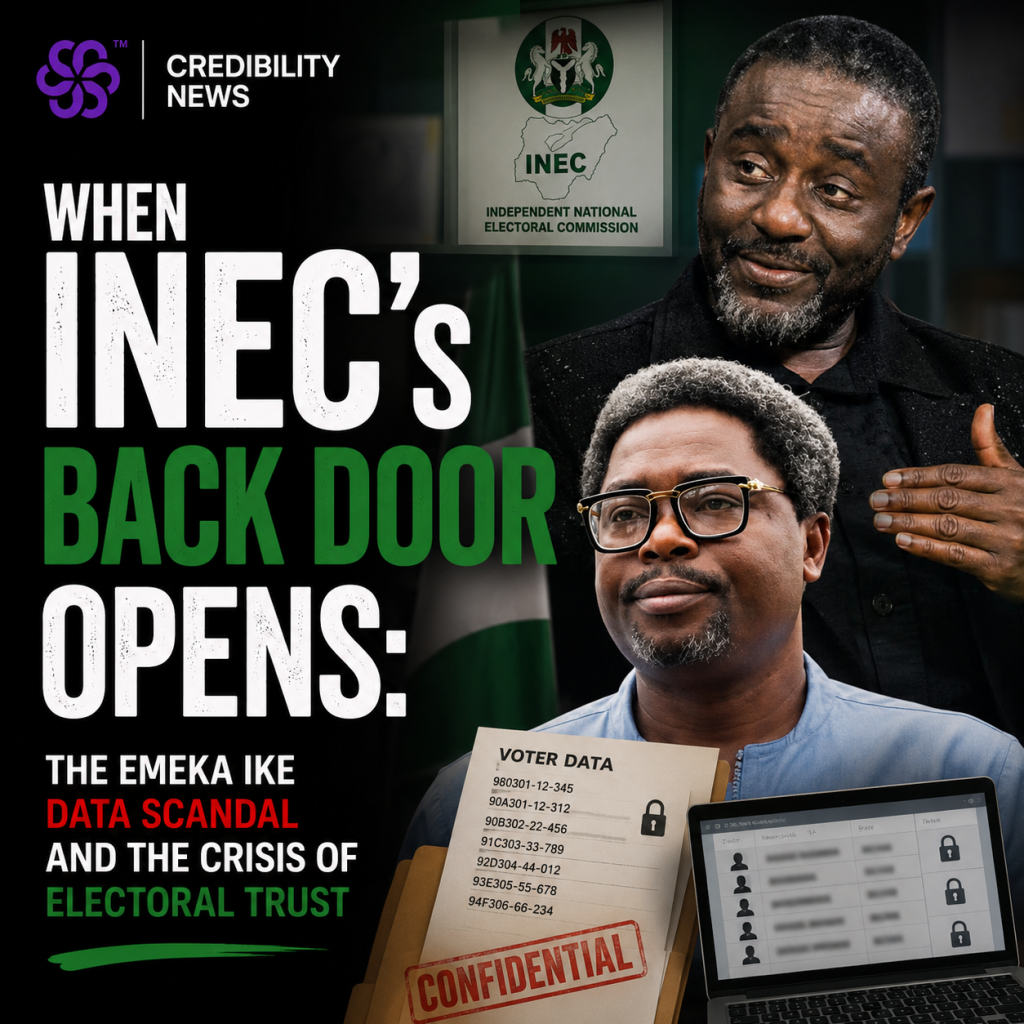
Olayinka’s post was direct in its contempt. “Emeka Ike was a registered voter in Imo State. He only transferred his INEC Registration to the FCT on May 15, 2026 — 15 days ago. And he wants to contest for House of Reps in Abuja. Someone who has never voted in the FCT. What happened to his Imo State?” But what turned a political jab into a national scandal were the two images attached to the post. Those screenshots were taken directly from INEC’s administrative login portal at cvradmin.inecnigeria.org, displaying Ike’s application number, registration centre, Voter Identification Number, profile picture, full name, and date of application.
Nigeria woke up to a question far more serious than whether Emeka Ike was qualified to contest in Abuja. It woke up to this: how did Wike’s press aide gain access to the protected administrative portal of the nation’s electoral umpire?
INEC has since confirmed that the information was accessed using valid staff credentials and released without authorisation — meaning this was not the work of a faceless hacker. It was an inside job, carried out through a legitimate account by someone with authorised access to a system that millions of Nigerians trust with their most sensitive civic data. That admission ought to shake every Nigerian who has ever registered to vote or updated their records with the Commission.
Emeka Ike was incandescent. Speaking on Channels Television’s The Morning Brief, he described the incident as “the height of political rascality” and warned that Olayinka’s action carried a chilling message for all Nigerians: “He is telling every Nigerian that whoever you are, I can pull your information from anywhere and I can do what I want, and that rascality needs to be stopped.” He has since declared that legal action is forthcoming.
The questions this scandal raises are grave. Did Olayinka access the portal himself? Did an INEC insider hand him the screenshots? If the latter, Nigeria is not dealing with a breach of protocol alone but with deliberate collusion between an electoral official and a political operative — and that is a criminal matter. INEC says its audit trail has identified the account through which the data was accessed, and the Department of State Services has commenced an independent investigation. Both developments are welcome. But Nigerians have seen too many probes dissolve into silence to celebrate investigations alone.
What must follow is consequence. The person responsible for opening that back door must be identified, prosecuted, and made an example of. Not quietly transferred. Not suspended and reinstated. Brought to book — fully and publicly. Lere Olayinka, for his part, has not deleted the offending post. That brazenness speaks to a confidence that nothing will happen to him. That confidence must be proven wrong.
Nigeria enters 2027 with an electorate already battered by institutional distrust. INEC has worked hard to rebuild credibility through biometric verification, electronic result transmission, and the CVR exercise. This scandal strikes at all of it. If political operatives loyal to serving ministers can reach into INEC’s backend systems and weaponise citizens’ electoral records, then the Commission’s independence is not a reality — it is a performance.
The back door was opened. Nigeria is watching to see who will close it, and who will answer for having left it ajar.
*For comments, reflections and further conversation, email samuelagogo4one@yahoo.com or call +2348055847364