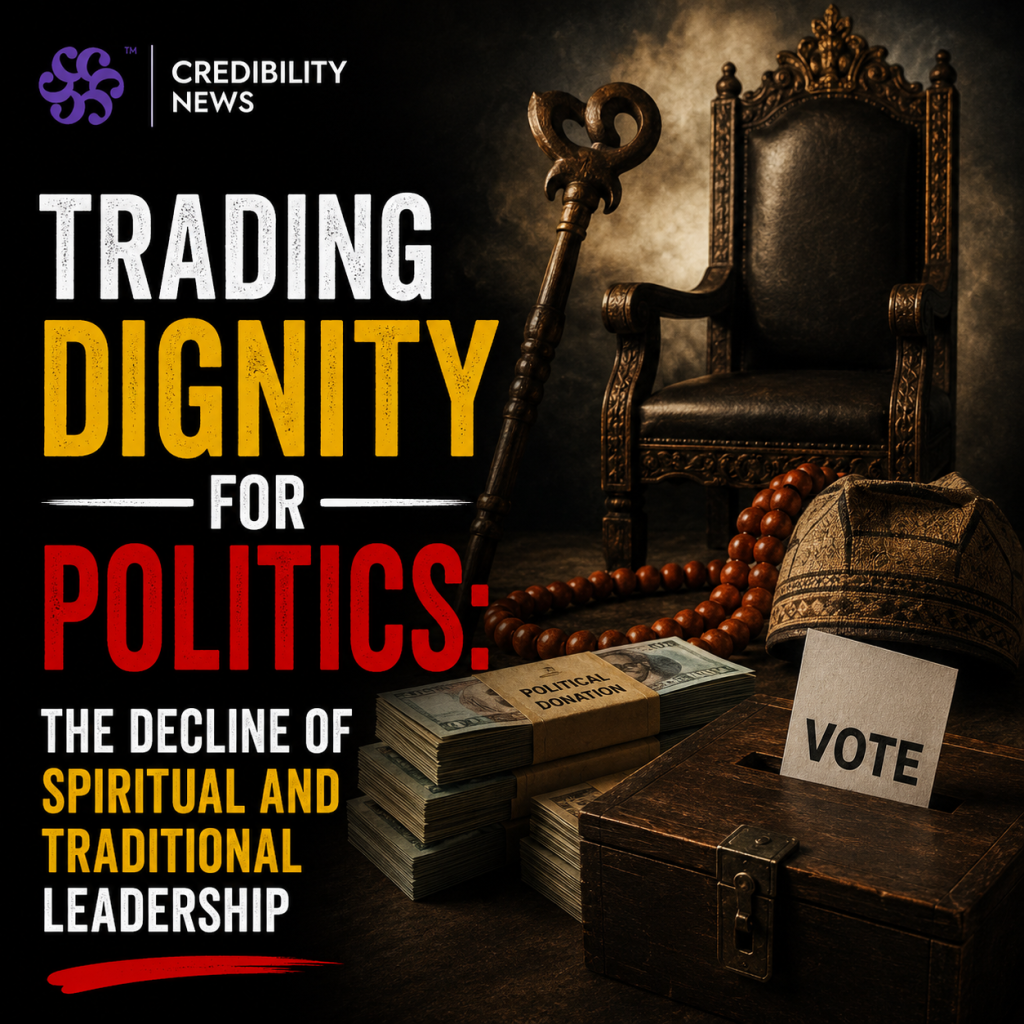
Nigeria’s spiritual and traditional leaders were once the conscience of society. Pastors were respected for their courage to rebuke wrongdoing, their prayers were sought by leaders, and their voices carried moral weight. Traditional rulers commanded reverence so deep that governors bowed before their thrones, acknowledging ancestral authority. Their words carried weight, their presence commanded respect, and their independence gave them dignity. But today, that dignity is being traded for patronage, and the consequences are troubling.
As election seasons approach, politicians begin their rounds, seeking prayers from clergy and offering gifts or bribes to traditional rulers. Their aim is clear: to use these respected figures to sway electorates. Sadly, many leaders fall into this trap. Pastors who once spoke boldly against corruption now soften their sermons to please benefactors. Some go to any extent to collect money, chasing politicians from one office to another. In doing so, they surrender the very authority that once made them indispensable.
A story was told of a pastor who was invited alongside other clerics to endorse a politician. Money was offered to all of them. While others waited eagerly to collect and share the money, this pastor rejected it outright, choosing discipline over compromise. His refusal stood as a rare reminder of the integrity that once defined spiritual leadership. Yet his example is the exception, not the rule. Today, many acclaimed pastors are hired to endorse politicians, lending their pulpits and voices to campaigns. What was once a sacred calling has become, for some, a transactional business.
Traditional rulers, too, have drifted from their sacred roles. In the past, they were custodians of culture, mediators of disputes, and symbols of communal pride. Their thrones carried weight, and their voices could calm storms in society. Governors deferred to them, recognising their influence over communities. But today, many openly dabble in politics, endorse candidates, and collect money from subjects like ordinary brokers. Communities begin to look down on rulers who trade ancestral dignity for political relevance, seeing them not as custodians of heritage but as pawns in the political game. The respect once accorded to traditional institutions is fading, replaced by suspicion and disappointment.
The tragedy is that both pastors and rulers are losing what cannot be bought back once it is gone: respect. Moral authority is fragile – once compromised, it rarely returns. When leaders become transactional, community trust erodes. When traditional institutions meddle in politics, democratic values suffer. And when spiritual leaders chase patronage, the gospel itself is cheapened.
The danger of this trend is not only the loss of respect but also the distortion of society’s values. When pastors endorse politicians for money, congregants are taught – whether directly or indirectly – that faith can be bought. When traditional rulers bow to political interests, subjects learn that culture and heritage can be traded for influence. The ripple effect is devastating: young people grow cynical, communities lose trust, and the very institutions meant to uphold morality and culture become complicit in their erosion.
Nigeria’s spiritual and traditional leaders must remember the weight of their calling. Their authority does not rest in political alliances or financial dependence, but in integrity. Trading dignity for politics may bring short-term gains, but it leaves behind a legacy of diminished respect and weakened institutions. The leaders of old were respected because they stood apart from politics, because they spoke with courage, and because they served without compromise. If today’s leaders wish to reclaim that respect, they must return to those values – standing firm, speaking truth, and serving with dignity.
The story of the disciplined pastor who rejected money should not be an isolated tale; it should be the standard. Leaders must learn that true influence comes not from the size of their patronage but from the strength of their character. Communities are yearning for voices that cannot be bought, thrones that cannot be compromised, and pulpits that cannot be silenced. The future of Nigeria’s moral and cultural fabric depends on whether its leaders choose dignity over politics, service over patronage, and truth over compromise.
For comments, reflections, and further conversation, email samuelagogo4one@yahoo.com or call +2348055847264