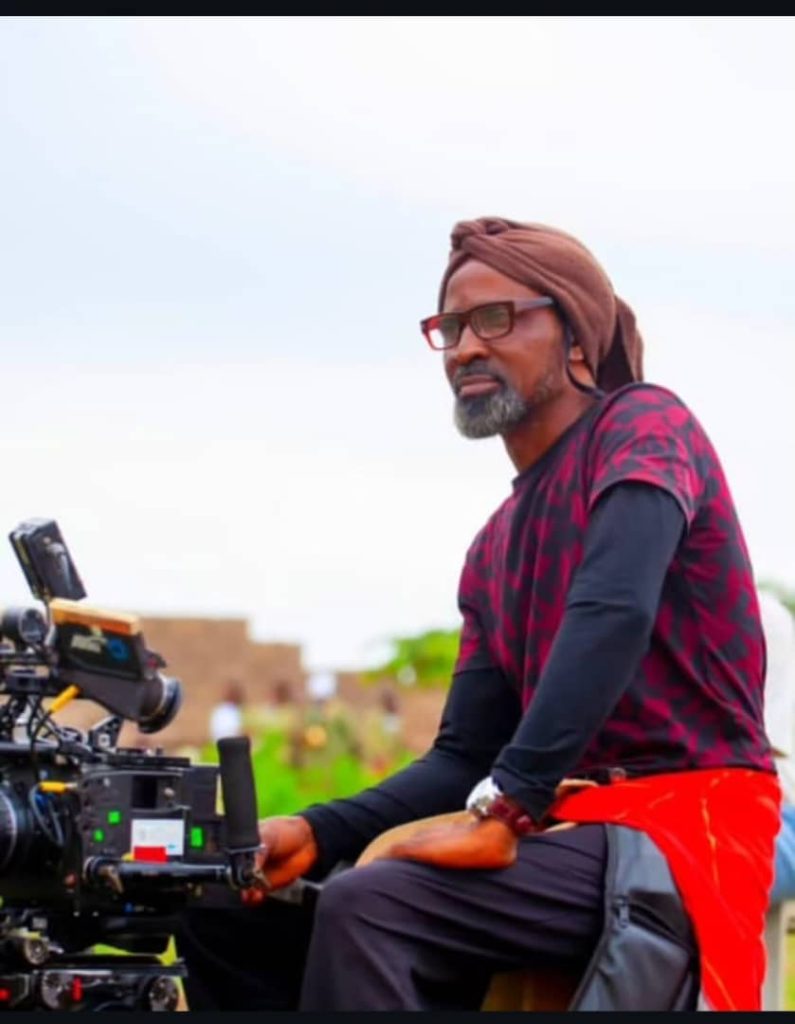
In Part One of this three-part UNVARNISHED interview, cinematographer Idowu Adedapo takes Kingsley Akam through the journey that began with a childhood fascination with television and cameras. He reflects on becoming a self-taught filmmaker, studying psychology, working across television and film, learning from an older generation defined by discipline, and understanding what it truly means to be a Director of Photography.
Kingsley Akam: Before we get into cinematography, who is Idowu Adedapo when the camera is not rolling?
Idowu Adedapo: I grew up with an interest in television and cameras. I was always curious about what was happening behind the television screen — how people appeared inside it, how they moved and how the pictures were created. I started with video coverage, including ceremonies and events. As time went on, I became more interested in film. I started asking myself: how do they do this? That interest became something more serious.
Kingsley Akam: What kept that curiosity alive?
Idowu Adedapo: I have always wanted to know more about cameras and how images are made. I grew myself by watching films, reading and observing the people I worked with. I did not simply want to press a button. I wanted to understand what is happening between the camera and the lens and what finally appears on screen.
Kingsley Akam: Did you go through the conventional film-school route?
Idowu Adedapo: No. I did not attend film school. I grew myself by watching films and learning from the top people I worked with. I also watched films carefully — how they framed shots, how they moved the camera and how they created the images. I wanted to understand the craft.
Kingsley Akam: What did you learn from that process?
Idowu Adedapo: You have to pay attention. When somebody who knows the work is talking to you, that may be your only opportunity for that day. You have to put it in your brain. I learnt to grab those opportunities whenever they came.
Kingsley Akam: You studied psychology at university and later moved into filmmaking. How did that transition happen?
Idowu Adedapo: Psychology helped me in many ways. I did not end up doing what I studied at university, but I still use what I learnt. It helped me understand people. When people are talking to me, I pay attention. I remember things. Even years later, I can remember what happened because I learnt to listen and observe.
Kingsley Akam: What did television teach you that you still carry into film?
Idowu Adedapo: I worked across music videos, TV programmes, news, documentaries and series. Back then, you did not have people doing only one thing. You had to do different things. That gave me the opportunity to learn entertainment and filming from different sides. I became what I call a universal Director of Photography rather than limiting myself to one particular area.
Kingsley Akam: What was different about the older generation?
Idowu Adedapo: Discipline. That is the right word. You cannot compare the discipline then with what we have now. When you were given an opportunity, even to carry a camera, you carried it carefully. You respected the equipment and respected the people you were learning from.
Kingsley Akam: Why did senior professionals sometimes keep knowledge to themselves?
Idowu Adedapo: I think some believed that because they suffered to get that knowledge, you also had to suffer. They might think, “I suffered for 10 years and you want to gain it in six months.” But I don’t believe you have to suffer the way somebody else suffered. If I can teach you in six months what took me many years to learn, there is no reason not to do it.
Kingsley Akam: In simple terms, what does a DOP do on a film set?
Idowu Adedapo: The Director of Photography and the director are like husband and wife. You must be very aligned with the director. You need to understand the lens, lighting, costume, makeup, colour and art direction. You need to understand the colour palette and what you are putting into the frame.
Kingsley Akam: Is it just about framing the shot?
Idowu Adedapo: No. You need to understand what you are framing. You need to understand aspect ratio, Kelvin, exposure, camera movement and composition. You cannot just frame and leave it there. Somebody is watching. You have to know why you are doing what you are doing.
Kingsley Akam: Why is the moment before you press the red button so important?
Idowu Adedapo: Before you press that red button, you need to be very, very sure. In the celluloid days, you could not just rewind and say, “Let’s repeat it.” That is why rehearsal was important. You had to understand the story, the script, where the actor was moving and when your camera had to move.
To be continued…
Part Two: FROM CELLULOID TO AI — Adedapo on analogue, digital, AI, production budgets and why Nigerian filmmakers must keep moving.