

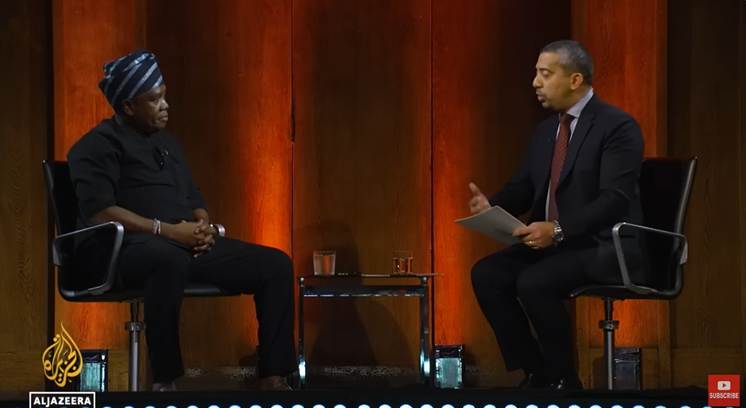
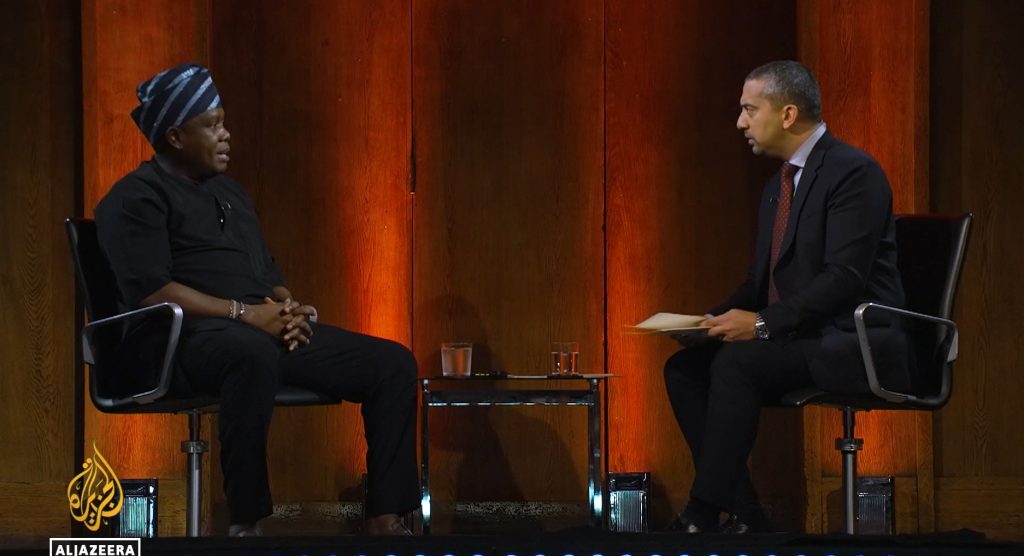
When Daniel Bwala, Special Adviser to President Bola Ahmed Tinubu on Media and Policy Communications, appeared on Al Jazeera’s Head to Head on March 6, 2026, in an episode titled Nigeria: ‘Renewed Hope’ or ‘Hopelessness’?, the interview was anticipated to deliver a robust defence of the administration’s record. Instead, it became one of the most dissected—and widely criticised—public appearances by a Nigerian government official in recent memory.
Hosted by Mehdi Hasan before a live audience at Conway Hall in London, the 49-minute video exchange exposed stark inconsistencies between Bwala’s past criticisms of Tinubu (primarily from 2022–2023, when he supported Atiku Abubakar) and his current role as a staunch defender. Hasan confronted Bwala with direct quotations from his earlier statements, while the final edited broadcast incorporated archival video clips juxtaposed with Bwala’s real-time denials to highlight the contradictions.
Hasan’s methodical style—quoting statements aloud during the live recording and reinforcing them with visual evidence in the edited version—turned the session into a sustained test of credibility. Bwala’s responses leaned heavily on outright denial, appeals to “context,” and repeated claims of being “not aware” or misquoted. This analysis examines the textual patterns of evasion and the visual dynamics that amplified perceptions of a disastrous performance, while also noting nuances in the production process.
Textual Patterns: Evasion Through “Context” and Denial
The interview’s structure hinged on direct juxtaposition. Hasan repeatedly confronted Bwala with his own prior words from his time as an Atiku supporter, often reading them aloud.
Key examples include:
• On militia allegations: Hasan referenced a January 22, 2023 claim that “President Tinubu and his people created a militia” to influence votes. Bwala insisted: “I never said that… “I want to put it on record on my own honour—that’s not what I said”.
• On election corruption and personal distress: Hasan cited Bwala’s 2023 statement: “In fact, I became so sick for the past three days. I found it very hard eating food,” attributing it to the corrupt nature of Tinubu’s victory. Bwala repeatedly denied it, stating: “I never said that.”
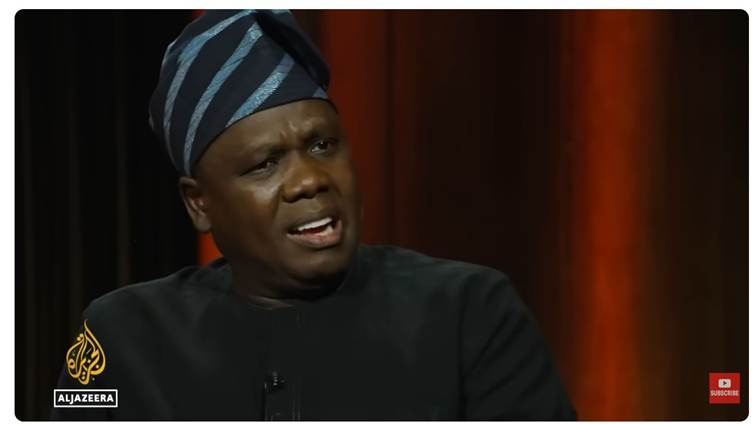
Daniel in shock of his own words.
• On bullion vans and corruption: Hasan quoted Bwala’s February 2023 remarks on Channels Television about cash-laden bullion vans seen at Tinubu’s residence on Bourdillon Street—widely discussed at the time as possible evidence of vote-buying—and broader allegations about misuse of wealth (for example, “Tinubu is not just super rich… it’s what he does with his wealth.”). Bwala denied or reframed the statements, again saying “I never said that,” later adding that he had reconsidered his earlier views after court rulings found no proven electoral irregularities.
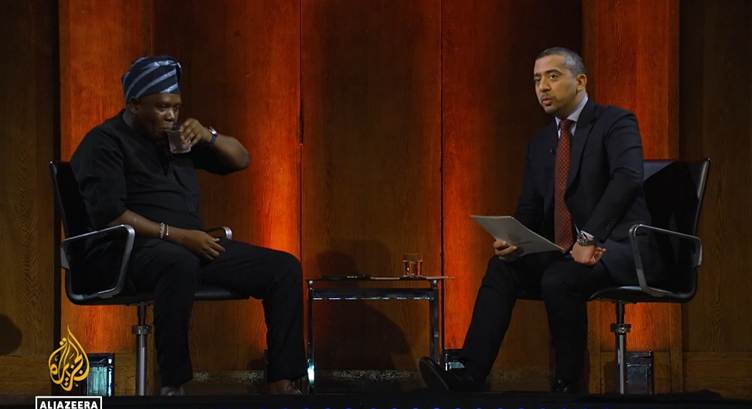
Daniel Bwala disagreed with Daniel Bwala (Self-Denial)
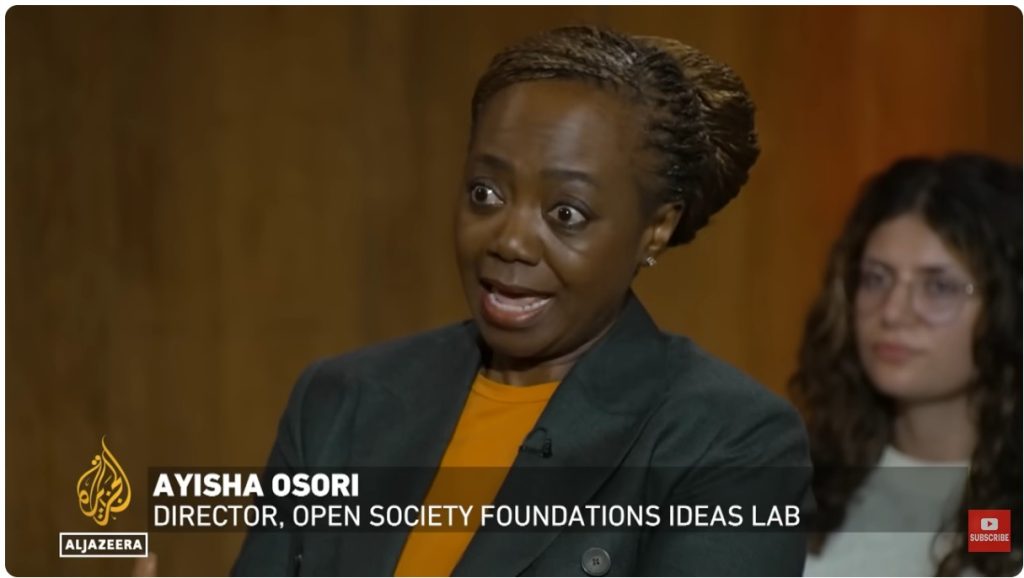
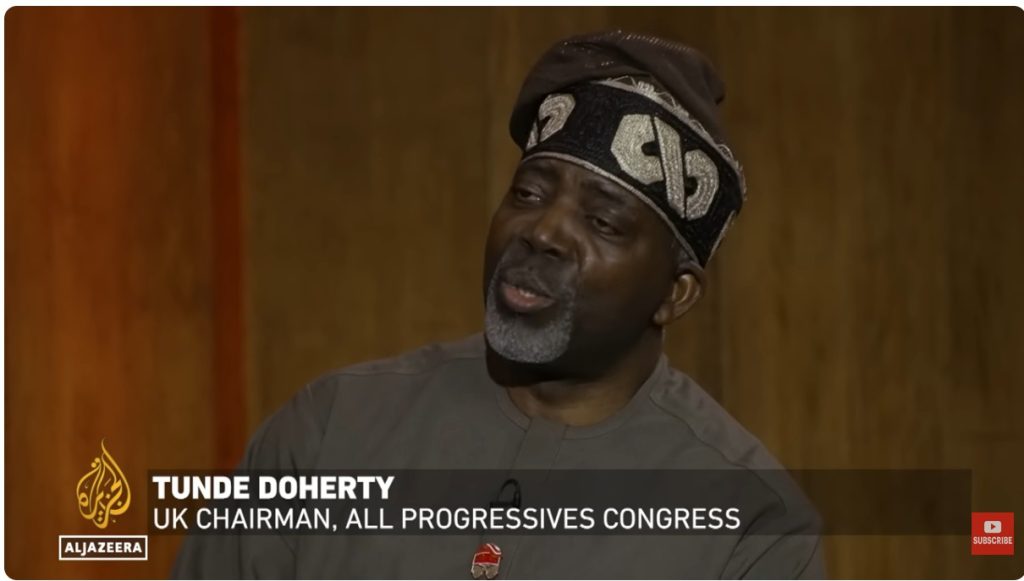
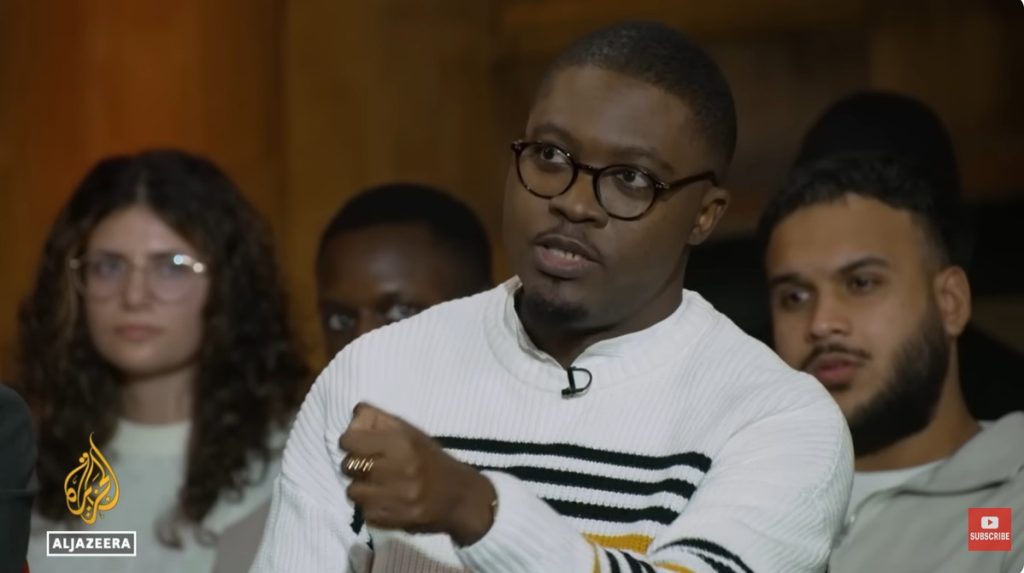
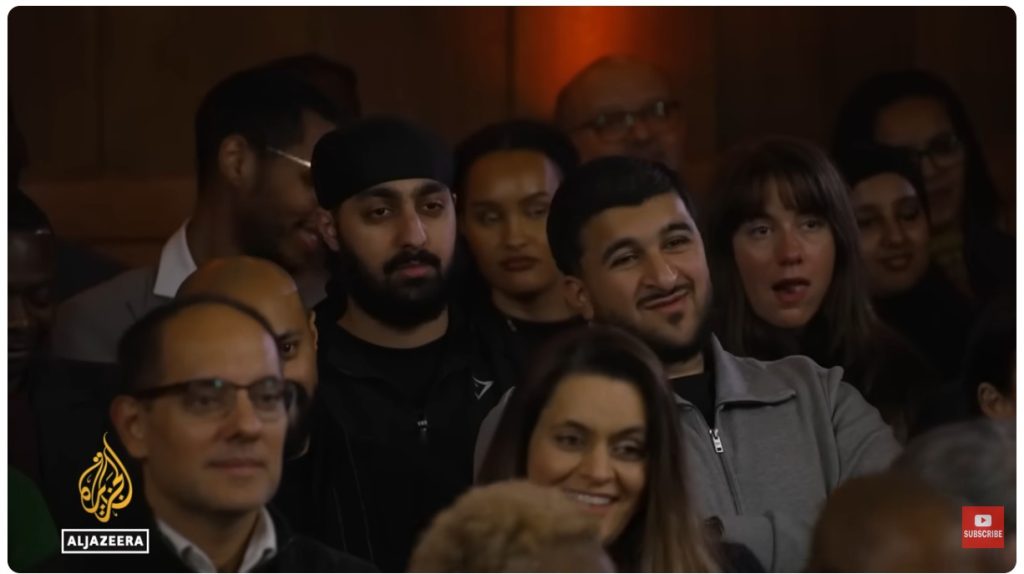
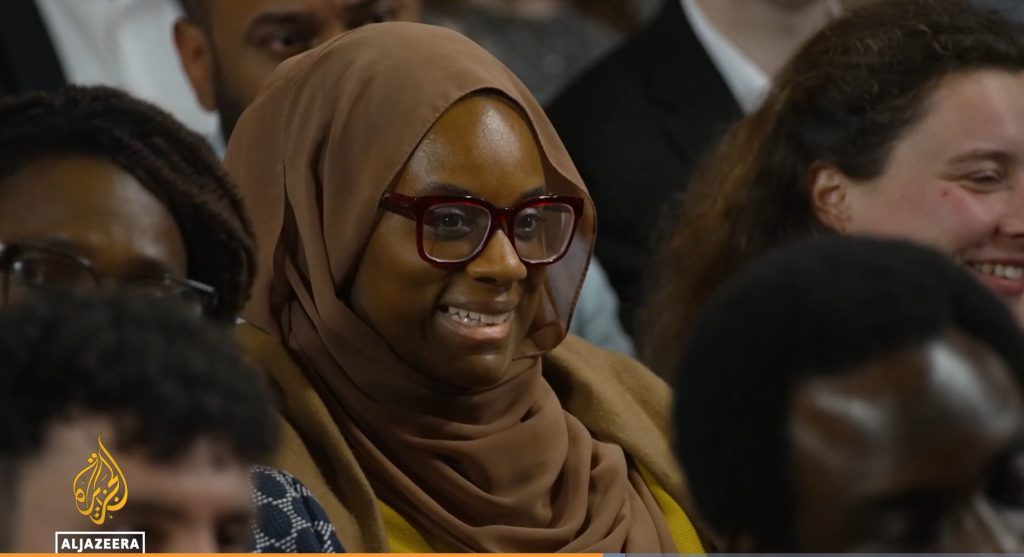
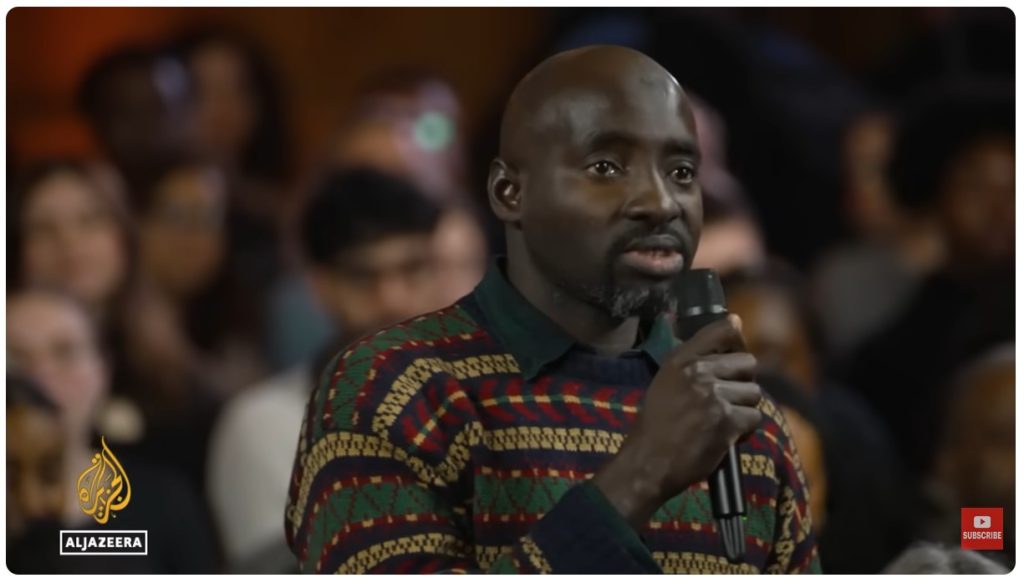
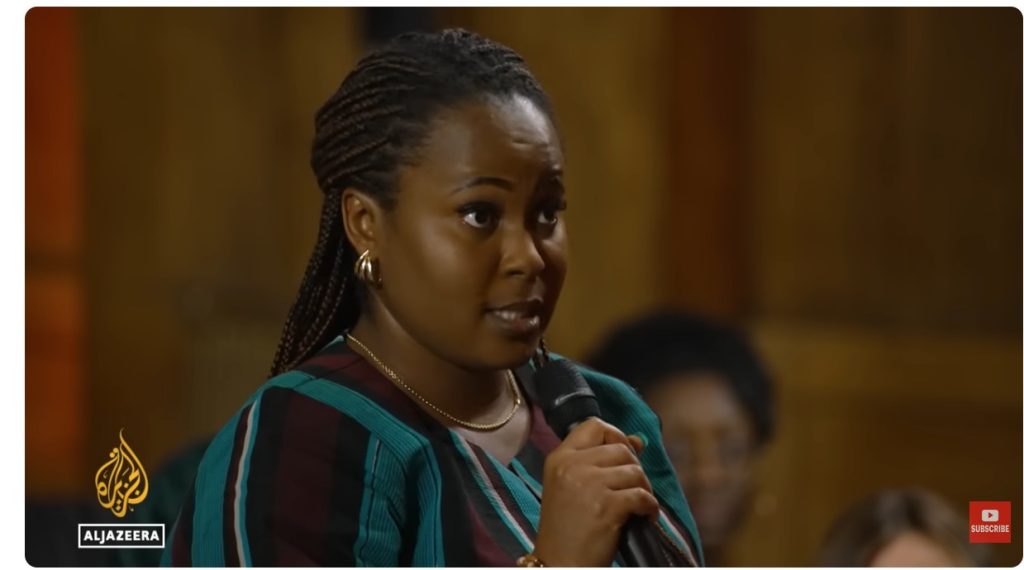
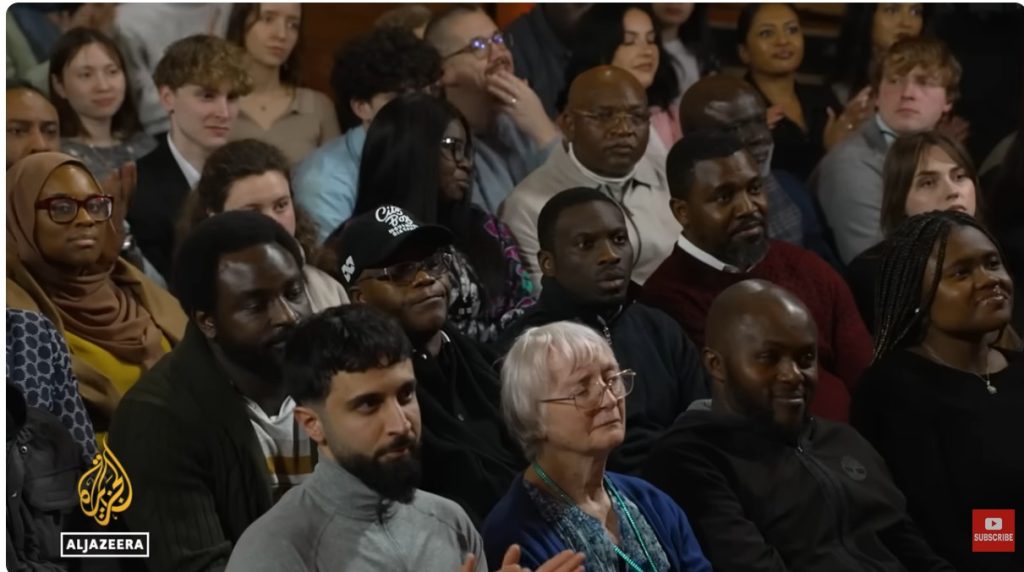
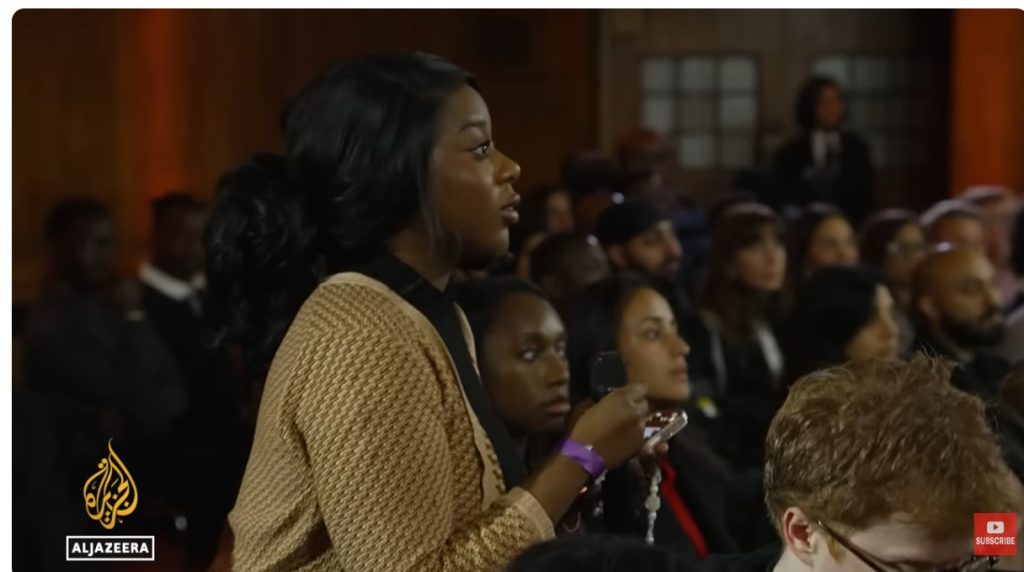
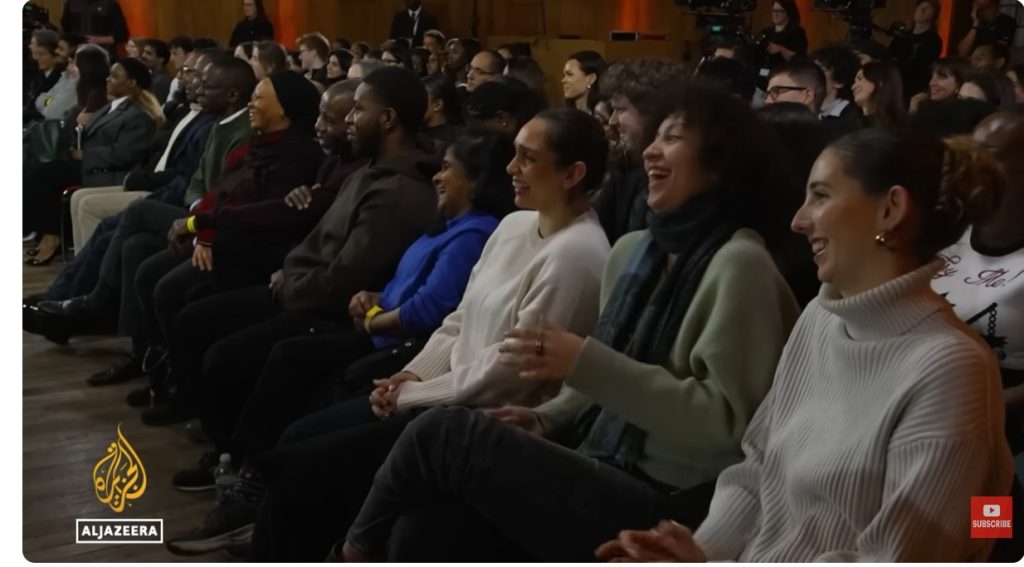
Difference reactions of the audience.
Bwala frequently invoked “context” to deflect—a tactic so repetitive that it quickly became an online meme, mocked for “doing a lot of heavy lifting” to avoid accountability.
One notable verbal slip occurred while defending security progress: a garbled phrase widely interpreted as a bungled attempt at “water under the bridge,” which went viral as shorthand for the interview’s awkwardness. (Note: No direct confirmation of the exact “water” slip appears in all public clips, but the reference aligns with reported verbal stumbles and memes circulating from the episode.)
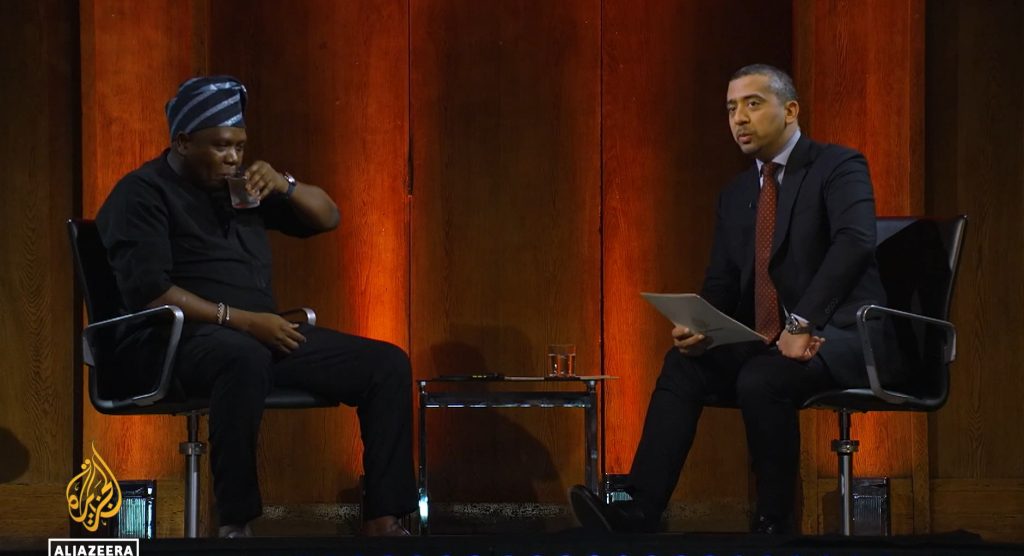
On security statistics, Hasan cited rising conflict-related deaths—from roughly 8,700 in 2023 to nearly 12,000 in 2025, according to sources such as ACLED. Bwala insisted that “context matters,” prompting Hasan’s dry response: “Mathematics matters too.”
Panel contributions sharpened the critique:
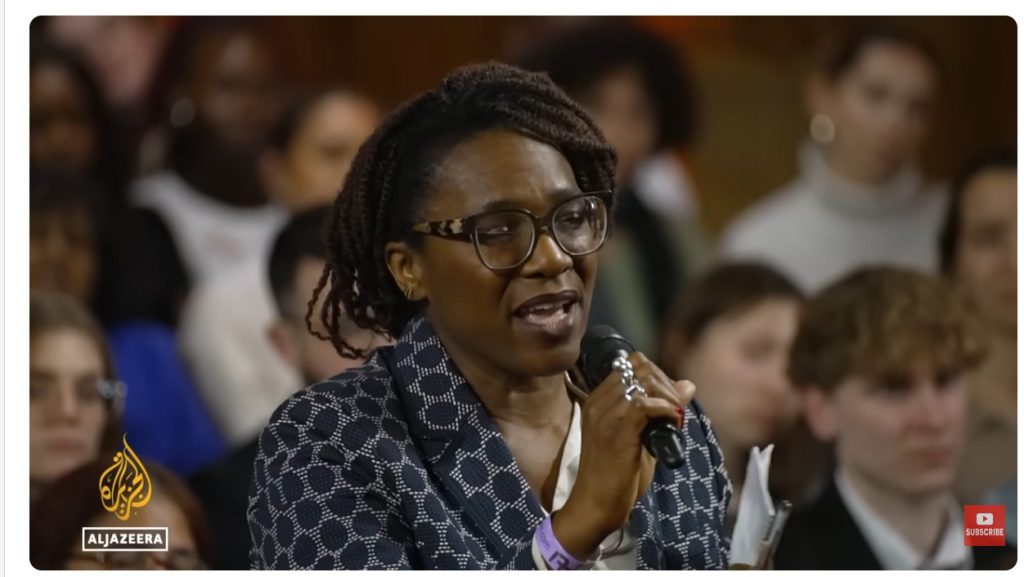
• Ayisha Osori (Director, Open Society Foundations Ideas Workshop) rated the government’s security performance 1 out of 10, citing more than $1 billion in kidnapping ransoms reportedly paid in 2024 and weak regional coordination.
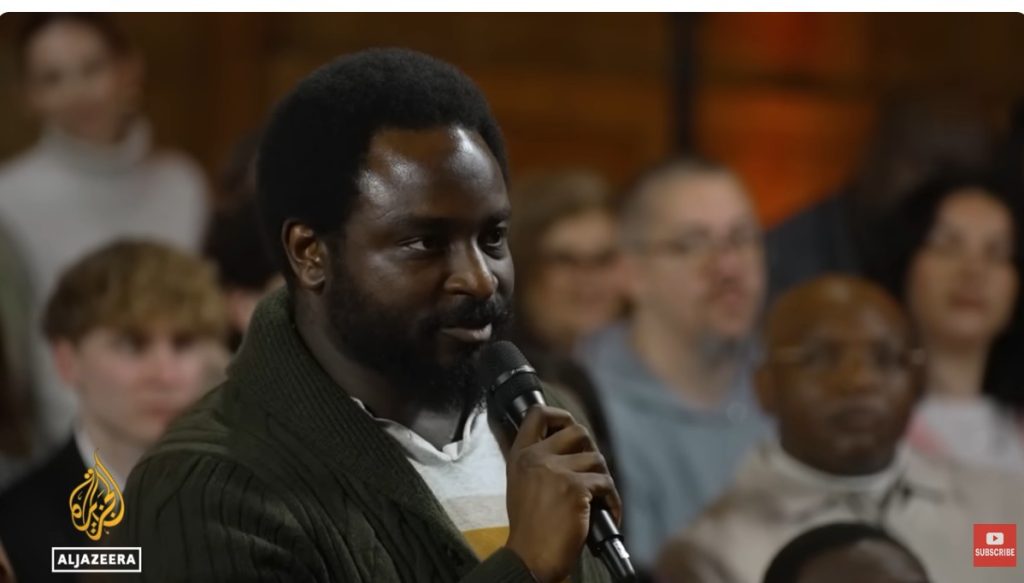
• Aanu Adeoye (Financial Times journalist) highlighted persistent poverty, noting that more than 120 million Nigerians live in multidimensional poverty, and questioned comparisons with Western economies.
• Tunde Doherty (UK chairman, All Progressives Congress) defended the administration’s reforms and international partnerships but struggled against the overall critical tone.
PANELISTS
Reaction shots or wide shot of panel (Osori speaking calmly, Adeoye gesturing, Doherty listening).
After the broadcast, Bwala dismissed the format as “opposition-research-style journalism.” Yet the textual record—archival quotes and clips contradicting his real-time denials—undermined that claim for many viewers. Hasan read quotations during the live session, often prompting audience reactions, while archival clips were inserted in post-production to reinforce contrasts without altering the substance.
Visual Analysis: Non-Verbal Cues and Televised Spectacle
The broadcast’s visual elements intensified the textual confrontation. Production choices—tight close-ups, rapid cuts to archival footage, dramatic orange studio lighting, and visible audience reactions—created a high-stakes atmosphere that underscored the contradictions.
Bwala’s non-verbal cues often signaled discomfort: averted gazes during confrontations, audible sighs, forced smiles, and repeated pauses to sip water after difficult questions.
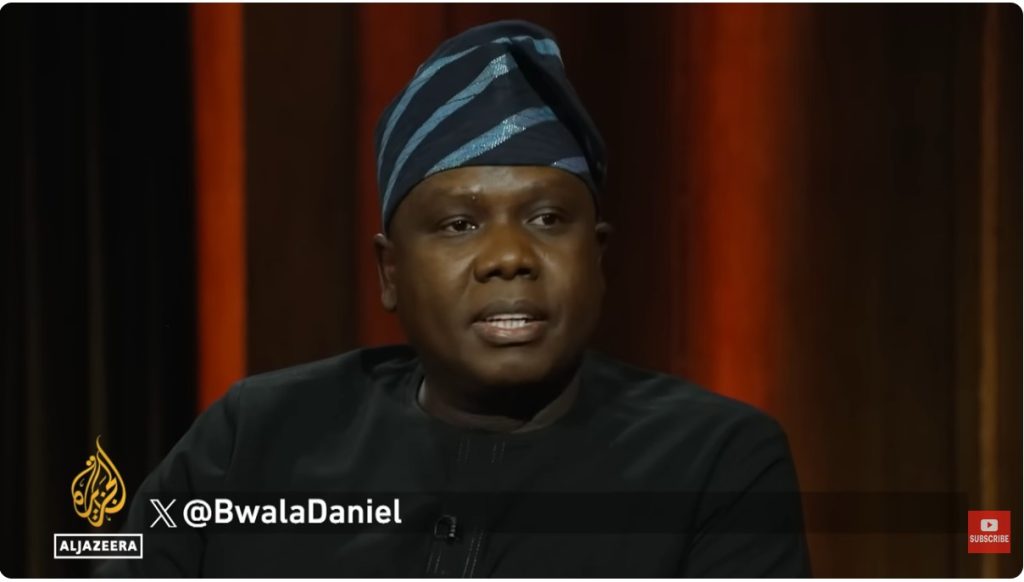
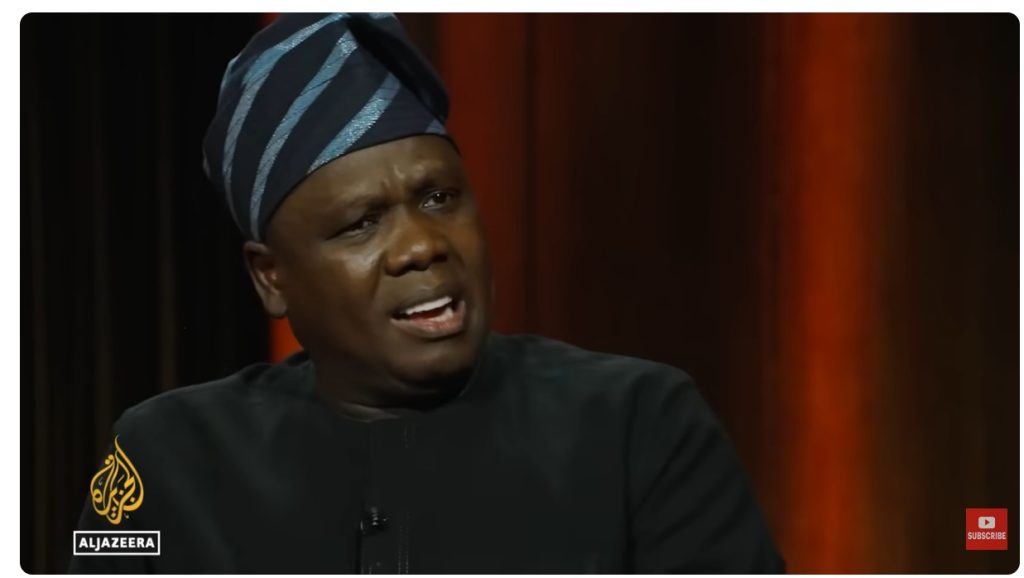
Bwala looking shocked, uncomfortable,
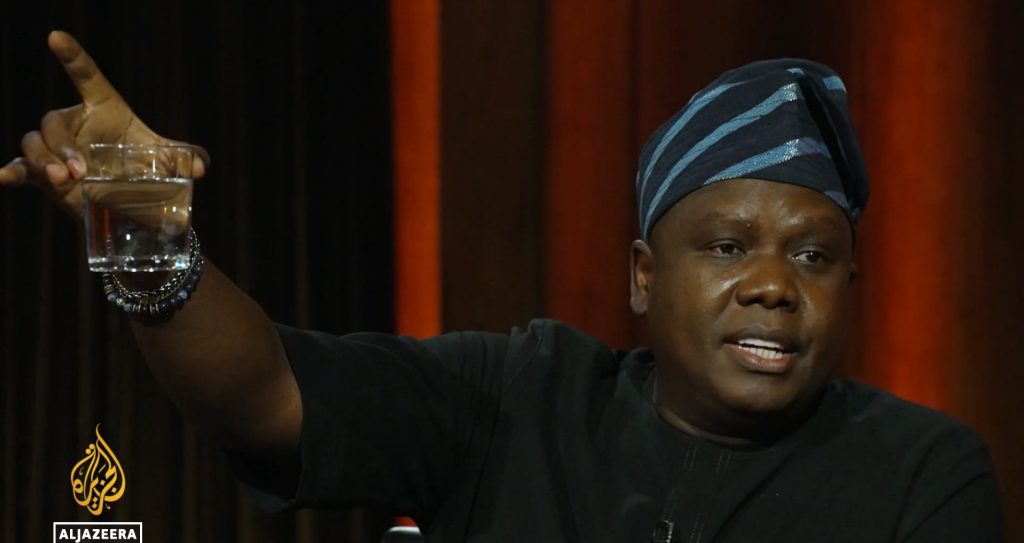
The viral “water” remark coincided with a gesture toward his glass, turning a mundane prop into a meme symbolizing deflection.
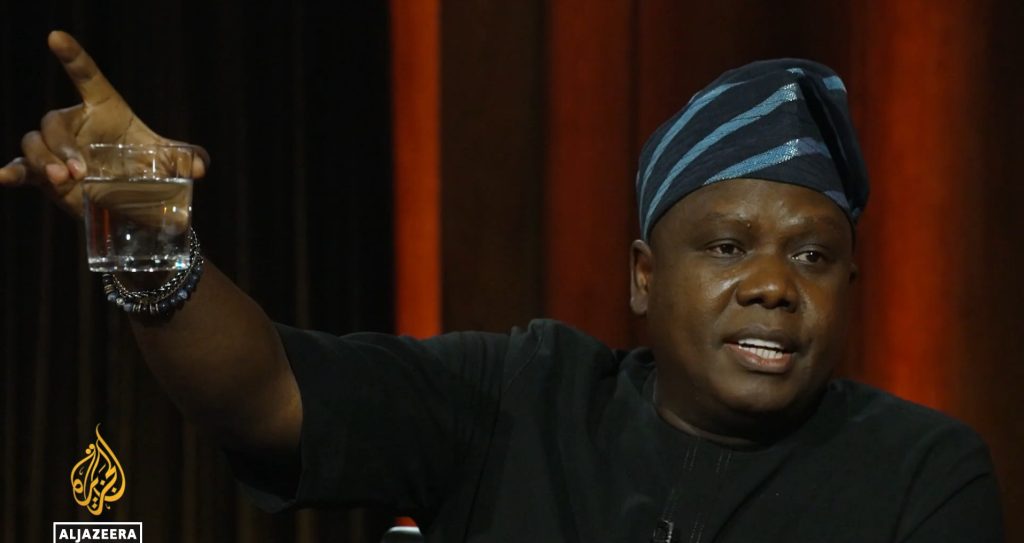
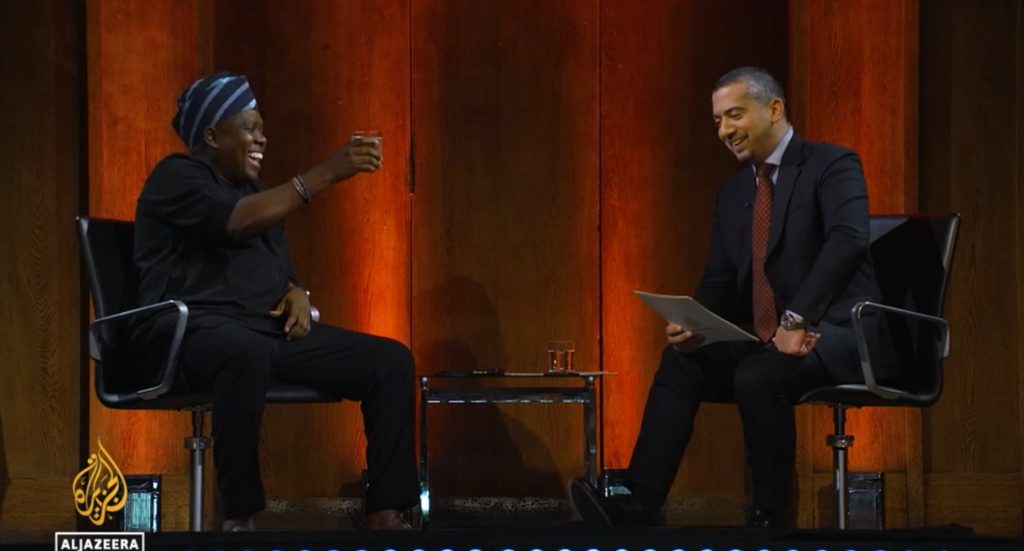
Screen grab of Bwala gesturing toward after sipping from the water glass. He offers some to the host.
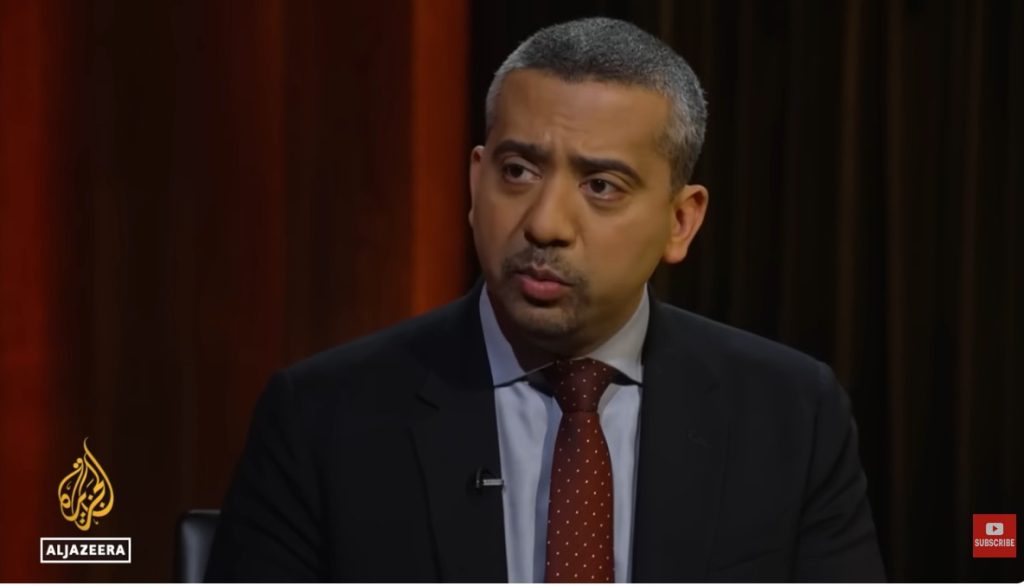
By contrast, Hasan dominated the visual frame: leaning forward, maintaining direct eye contact, and displaying furrowed brows or narrowed eyes during evasive replies—projecting visible skepticism that shaped audience perception.
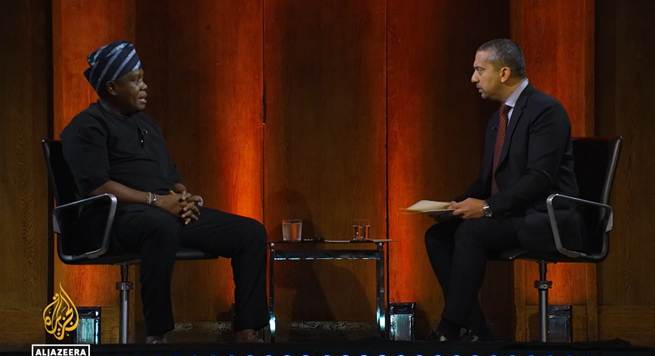
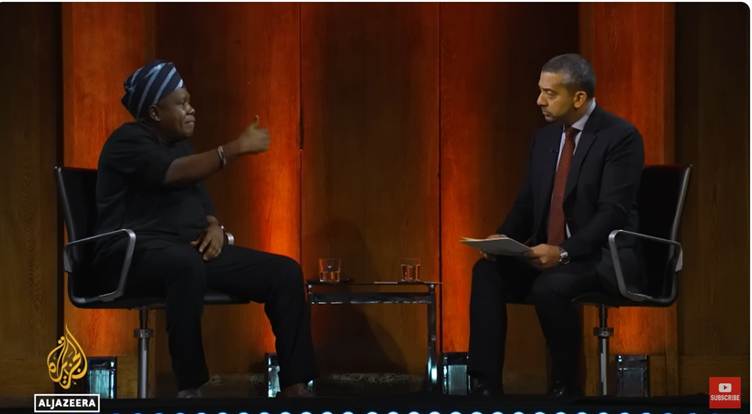
HASAN VS BWALA: A side-by-side showing Hasan leaning forward vs Bwala avoiding eye contact.
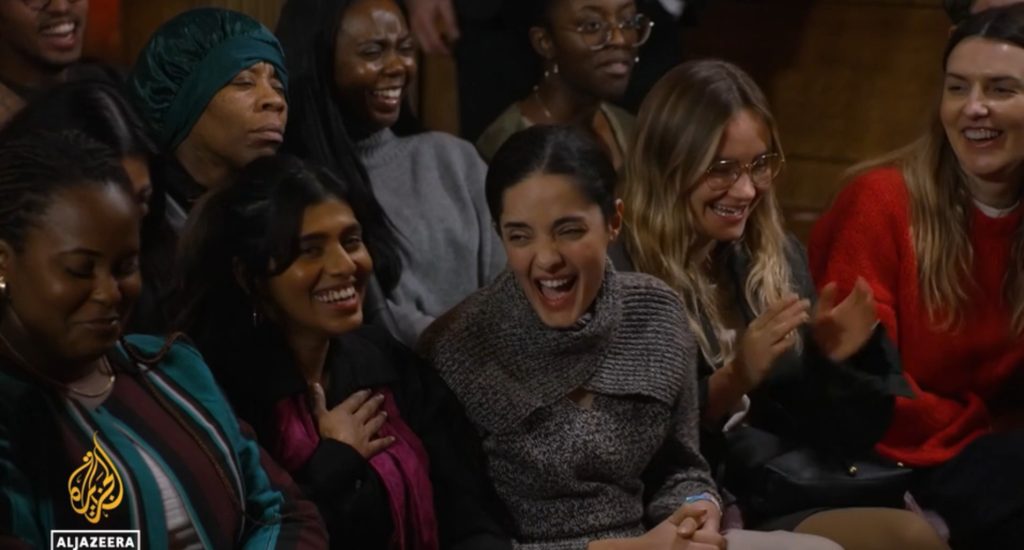
AUDIENCE AND PANELIST REACTIONS
Wide audience shot laughing or reacting; close-up of audience members responding.
Wide shots captured an engaged crowd whose reactions—laughter, head-shaking, and forward-leaning posture—heightened the tension of the exchange. Editing later amplified these moments, reinforcing the dramatic rhythm of the episode.
Tunde Doherty (UK chairman, All Progressives Congress) defended the administration’s reforms and international partnerships but struggled against the overall critical tone.
Through deliberate production choices—juxtaposing past and present statements, displaying on-screen statistics, and lingering on hesitation—the program reinforced its core narrative: a government spokesperson confronted, repeatedly and visibly, by his own recorded words.
Conclusion: A Lasting Spectacle
Commentators quickly labelled the episode a “disaster,” “meltdown,” or global embarrassment for Bwala and the Tinubu administration. Political analyst Kingsley Moghalu described it as “a spectacle on the global stage,” while others praised Hasan’s cross-examination for preventing narrative control.
Clips—especially denials contradicted by archival footage—continue to circulate widely on social media. Beyond one official’s performance, the interview illuminated deeper issues in Nigeria’s political communications culture: the prioritisation of loyalty over consistency, the routine invocation of “context” to evade documented statements, and the difficulty of sustaining such strategies under international scrutiny.
Debates about journalistic tactics persist. Supporters argue the visual reinforcements strengthened accountability; critics question whether the confrontational style limited substantive policy discussion.
Yet one point is clear: in the digital era, past statements rarely disappear. They resurface—textually and visually—with precision.
For millions of Nigerians grappling with insecurity, poverty, and corruption concerns, the discussion offered less “renewed hope” than a reminder of the continuing demand for political accountability.
The full episode remains available on Al Jazeera’s YouTube channel.
The Credibility News remains committed to evidence over evasion.