

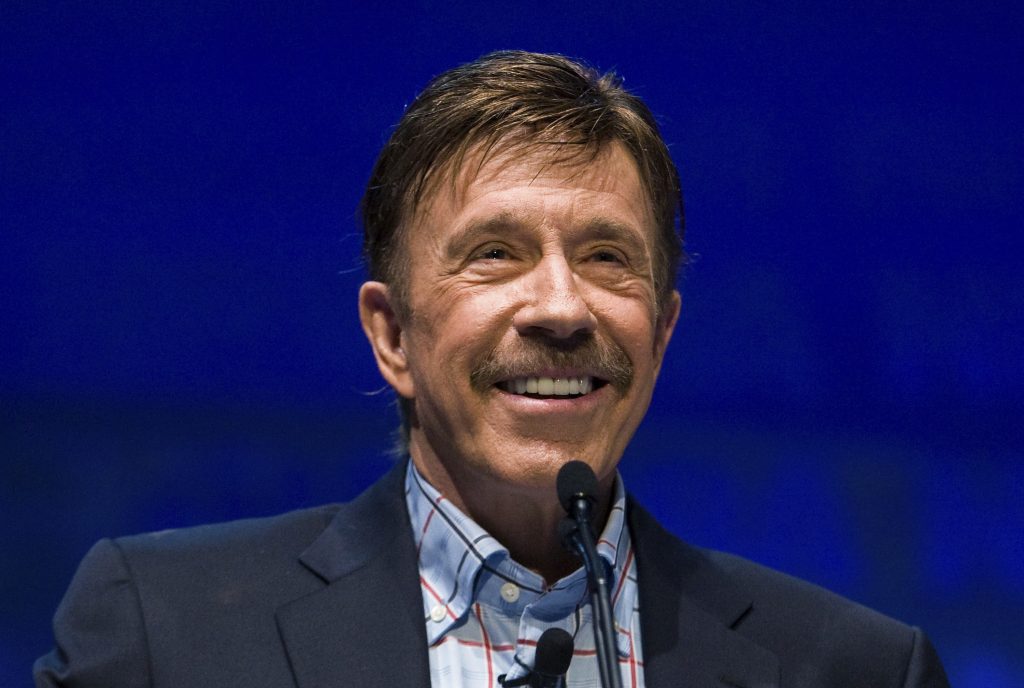
Chuck Norris, the martial arts champion and iconic action hero who defined an era of no-nonsense, fist-first filmmaking, died on 19 March 2026 at the age of 86 in Hawaii. His family announced the news the following day, saying he was surrounded by loved ones and “at peace.”
His passing marks the end of an era for the action film genre. As one of the last surviving icons of the 1980s action boom — alongside Arnold Schwarzenegger, Sylvester Stallone, and Bruce Willis — Norris leaves a significant gap in Hollywood’s pantheon of physical, martial arts-driven action heroes.
Key implications for the film and entertainment industry:
- End of an action era: Norris represented a specific archetype — the silent, stoic, martial arts expert who let his fists do the talking. His career spanned the transition from B-movie cult status to mainstream television success with Walker, Texas Ranger, which ran for eight seasons. His death invites reflection on the evolution of the action genre, which has since shifted toward CGI-heavy spectacles and superhero franchises.
- Martial arts on screen: Norris’s film debut was opposite Bruce Lee in The Way of the Dragon (1973) — one of the most iconic martial arts fight scenes in cinema history. As a bridge between Lee’s groundbreaking 1970s kung fu films and the later Hollywood action wave, Norris helped legitimise martial arts in Western cinema and paved the way for stars like Jean-Claude Van Damme, Steven Seagal, Jackie Chan, and Jet Li.
- The “Expendables” generation: Norris’s appearance in The Expendables 2 (2012) alongside Stallone, Schwarzenegger, and Willis provided a nostalgic moment for fans of 1980s action cinema. His death underscores the ageing and passing of that generation of stars and raises questions about whether the action genre can still cultivate new physical, non-superhero talents.
- Internet culture legacy: Norris became an unlikely internet phenomenon in the 2000s through “Chuck Norris Facts” — satirical jokes about his invincibility (“Chuck Norris doesn’t do push-ups; he pushes the Earth down”). This viral moment showed how pre-internet celebrities could find new audiences through meme culture, a strategy later embraced by figures like Dwayne Johnson and Ryan Reynolds.
- Conservative Hollywood figure: One of the few openly conservative actors in a predominantly liberal industry, Norris was a vocal NRA supporter, advocate for U.S. troops, and contributor to conservative media. Though polarising, he proved that a long career was still possible for Hollywood conservatives.
- Beyond acting: Norris’s legacy extends far beyond the screen. He founded his own martial arts discipline, Chun Kuk Do, and the Kickstart Kids nonprofit, which uses martial arts to build self-esteem in children. His entrepreneurial and philanthropic efforts offer a model for action stars seeking longevity past their physical prime.
Industry tributes have poured in from fans and fellow actors, though Hollywood’s official response has been relatively muted — reflecting his status as a B-movie icon rather than an A-list favourite. Still, his cultural footprint, particularly through the “Chuck Norris Facts” phenomenon, arguably surpasses that of many more critically acclaimed contemporaries.
Film historians note that Norris embodied a specific moment in American cinema: the Reagan-era action hero who stood for strength, patriotism, and moral certainty. As one critic observed, “He was never going to win an Oscar, but he won something more enduring — a place in the cultural imagination.”
The following is the Reuters report on Norris’s life and career (published under license):
March 20 (Reuters) – Chuck Norris, the former martial arts champion and 1980s action-film hero who fought the bad guys in “Code of Silence,” “Missing in Action” and “The Delta Force” and upheld the law in the TV series “Walker, Texas Ranger,” died on Thursday, his family said in a statement on his Instagram account on Friday.
“While we would like to keep the circumstances private, please know that he was surrounded by his family and was at peace,” the statement read.
The six-time undefeated World Professional Middleweight Karate Champion, whose tough-guy image inspired satirical “facts” that made him an Internet phenomenon, had been hospitalised in Hawaii on Thursday, Variety reported.
Norris starred in more than two dozen films portraying silent loners, soldiers, lawmen, veterans and All-American heroes who captured criminals, released prisoners of war, rescued hostages and battled terrorists.
With his roundhouse kicks he fought martial arts icon Bruce Lee in Rome’s Colosseum in his 1973 film debut “The Way of the Dragon.” Along with Sylvester Stallone, Arnold Schwarzenegger and Bruce Willis he helped defeat villain Jean-Claude Van Damme in the 2012 blockbuster “The Expendables 2.”
Time magazine once described him as “the ultimate tough guy.” “In his strictly wham-bam B-movie genre, Norris, a former karate champion, has become the undisputed superstar,” it said in 1985.
His macho image made him a hit at the box office and on the small screen. From 1993 to 2001, he played Sergeant Cordell Walker, an upstanding lawman, former Marine and martial arts expert in “Walker, Texas Ranger.”
The bearded actor, writer and producer became an online cult hero in 2005 when an American student created what became Chuck Norris Facts — online jokes about the actor’s physical prowess and masculinity that became a viral sensation and inspired several books. Among the most popular: “Chuck Norris has a mug of nails instead of coffee in the morning” and “Chuck Norris doesn’t do push-ups; he pushes the Earth down.”
An Unlikely Tough Guy
Carlos Ray Norris was born on 10 March 1940 in Ryan, Oklahoma, the oldest of three brothers. The family moved to California after his parents divorced. He was extremely quiet and introverted, which he attributed to his father’s alcoholism and the family’s poverty.
After enlisting in the U.S. Air Force in 1958 and learning Tang Soo Do while stationed in South Korea, Norris began teaching martial arts in California and won major competitions. Actor Steve McQueen, one of his students, encouraged him to try acting.
Norris’ films grossed millions and made him especially popular among the U.S. military. He visited troops in Iraq in 2006 and 2007.
In 1990, he founded his own martial arts discipline, Chun Kuk Do, and established the nonprofit Kickstart Kids to teach children martial arts and self-esteem.
A patriot, conservative and devout Christian, he worked with the National Rifle Association (NRA) and contributed to WorldNetDaily, a conservative news website.
He was married twice and had five children. In addition to his best-selling memoir Against All Odds: My Story, he wrote books on fitness, self-improvement and two novels.
Norris defended his films against critics who said they promoted violence. “It’s how it’s done. I don’t advocate violence for violence’s sake,” he told the Los Angeles Times in 1994. “What people hang on to is that the good guy wins in the end.”
(Additional reporting by Rishabh Jaiswal in Bengaluru; Editing by Diane Craft)
Reuters wire copy published under license. Film & entertainment industry impact analysis by The Credibility News.