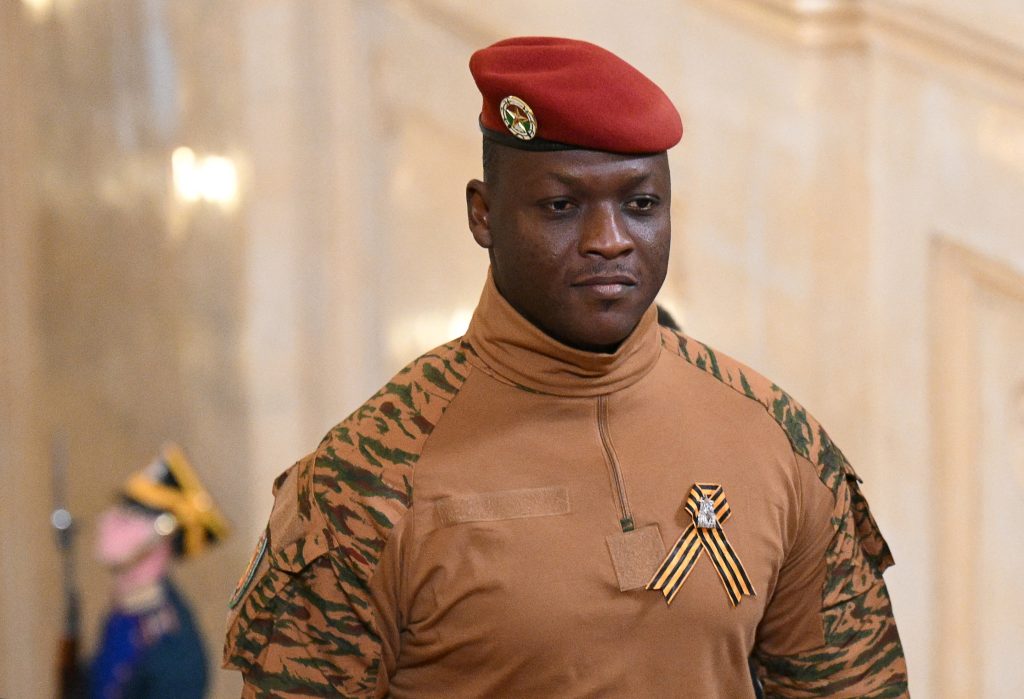
Burkina Faso’s military ruler, Captain Ibrahim Traoré, who seized power in a September 2022 coup, has told journalists that “people need to forget about democracy” and that “democracy kills” — in his clearest signal yet of plans to rule for the long term.
Traoré’s junta originally promised to restore civilian rule through elections in 2024. That timeline was later extended by five years to at least 2029, with the government citing the persistent Islamist insurgency as the main obstacle.
During a roundtable with journalists aired on state television on Thursday night, Traoré shifted focus away from elections.
“People need to forget about the issue of democracy,” he said. “We have to tell the truth: democracy isn’t for us.”
Citing Libya as an example of externally imposed democracy, he added: “Democracy kills.”
Dissolution of Political Parties
In January 2026, the government formally dissolved all political parties — over 100 had existed before the 2022 coups — and seized their assets, arguing that multiparty politics deepens division. Similar steps have been taken in neighbouring Mali and Niger, also under military leadership.
The three Sahel countries have battled insurgencies linked to al Qaeda and Islamic State affiliates for more than a decade, resulting in thousands of deaths and millions displaced.
Supporters of Traoré’s government argue that democratic processes, particularly elections, have often triggered violence and loss of life across Africa. In Nigeria, for instance, elections have repeatedly been marred by allegations of rigging — sometimes described by political observers as “democratic coups” — along with associated deaths and injuries. In contrast, they portray the military takeover in Burkina Faso as largely bloodless and more like a “rebirth” or popular reset that did not target civilians.
Human Rights Concerns
However, a Human Rights Watch report released on Thursday paints a different picture of the security situation under military rule. It documents at least 1,837 civilian deaths between January 2023 and August 2025, with government forces and allied militias responsible for more than twice as many killings (around 1,255) as Islamist militants.
The report accuses all sides of war crimes and crimes against humanity, including ethnic targeting of Fulani communities by the military. The Burkinabè government did not respond to requests for comment on the findings.
Traoré and his backers often present the junta’s rule as a sovereign “revolution” that prioritises security and anti-imperialist sovereignty over Western-style multiparty democracy.
Based on reporting by Portia Crowe; Editing by Robbie Corey-Boulet and Ros Russell. Additional analysis by The Credibility News.