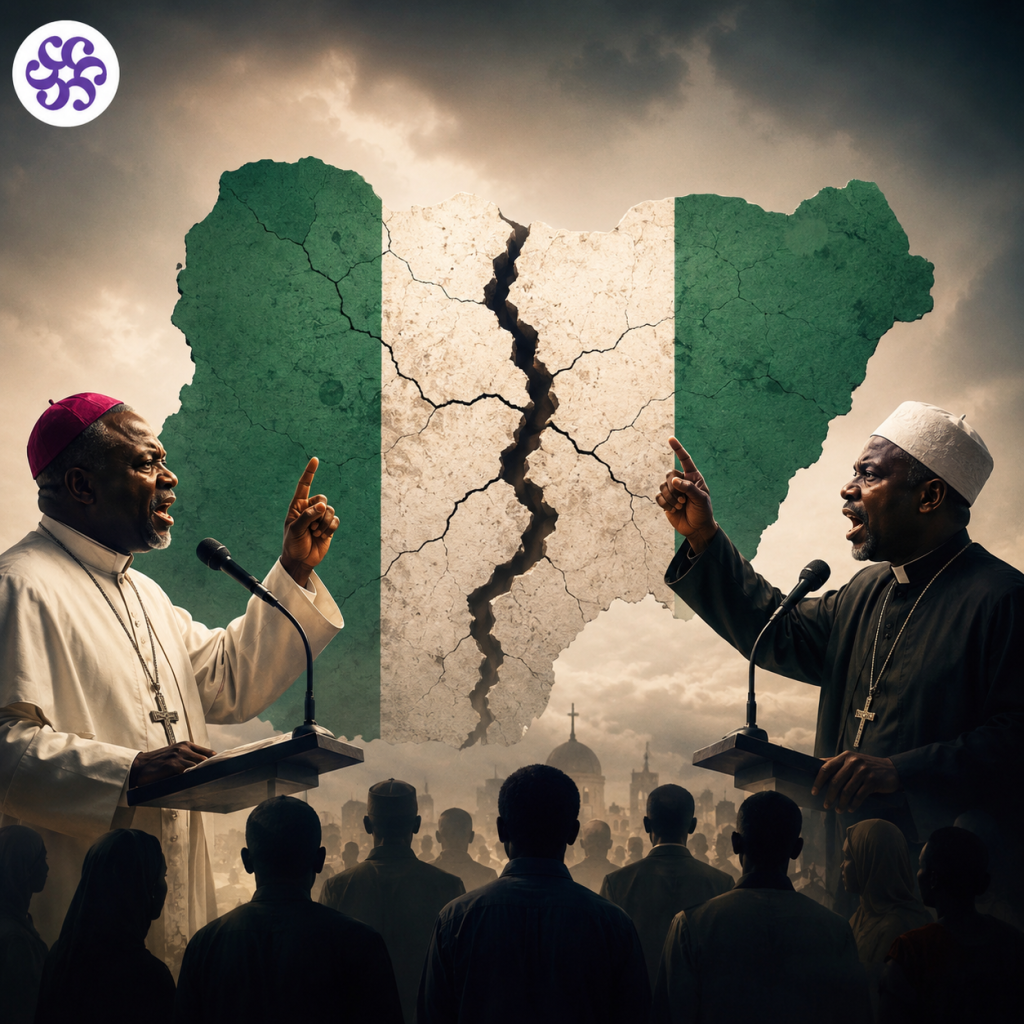
Nigeria is a country where diversity is not an abstract concept but a daily reality. Across towns and villages, Muslims and Christians live side by side, sharing markets, schools, and water sources. In some communities, even within the same family, members practice different faiths yet continue to live together in harmony. They celebrate one another’s milestones, mourn together in times of loss, and raise children under the same roof without conflict. This coexistence is the real Nigeria, a reminder that religion need not divide us. Nobody chose to be born into Islam or Christianity; these are inherited circumstances, determined by family and geography, not by deliberate decision. That truth should inspire humility and tolerance, not hostility.
Against this backdrop, the recent remarks of Sheikh Sani Yahaya Jingir are deeply troubling. At a mass wedding in Kano, he described Christians and other non‑Muslims as “infidels” and urged Muslims to “show them their limit” through the ballot box. He insisted that Muslims should use their Permanent Voter Cards to demonstrate their numerical strength. Later, in a BBC Hausa interview, he doubled down: “I have absolutely no regrets. I stand firmly by my words and will never apologise. I will continue to advocate for a Muslim‑Muslim ticket. I am not campaigning for Tinubu; I am campaigning for my religion.”
These words were not spoken in private. They were delivered before thousands, amplified by media, and received by followers who often treat clerical guidance as binding. They were not a slip of the tongue but a deliberate stance. And they were dangerous.
The National Human Rights Commission condemned the remarks as hate speech and incitement, calling for Jingir’s arrest and prosecution. Fellow Muslim clerics also criticised him. Members of the Council of Ulama and other respected scholars distanced themselves, stressing that Islam teaches moderation, justice, and respect for fellow citizens. One cleric said plainly: “Sheikh Jingir speaks only for himself. His remarks amount to hate speech, pure and simple, and could incite religious violence. Such comments should not come from a leader of his stature.”
Among those who spoke out was Sheikh Muhammad Nura Khalid, widely known as the Digital Imam. Khalid, the former Chief Imam of Apo Legislative Quarters Juma’at Mosque in Abuja, is respected for his modern outreach through televised and online sermons. He condemned Jingir’s words, warning that clerics must not use their pulpits to sow division. His intervention was significant because Khalid himself commands a large following, particularly among younger Muslims who consume his digital sermons. By rejecting Jingir’s rhetoric, he reinforced the message that Islam calls for justice, peace, and coexistence, not exclusion or hostility.
Other clerics have added fuel. Sheikh Musa Salihu Alburhan told his audience he would rather endure hardship under a leader of his own faith than enjoy comfort under one of another. Another cleric in Katsina, with political ambitions, was recorded saying that if elected governor he would remove Christians from public employment. These statements, taken together, form a troubling pattern: clerics entrusted with moral guidance occasionally allow political ambition or communal grievance to override their responsibility.
Nigeria’s history shows why this matters. The Maitatsine riots of the 1980s, the Jos crises of the 2000s, and countless clashes in Plateau, Benue, and Borno were rarely sparked by a single act. More often, they were preceded by rhetoric that dehumanised or excluded one group from full citizenship. Words matter. When clerics describe fellow citizens as “infidels” or “outsiders,” they normalise hostility. They prepare the ground for discrimination, exclusion, and violence.
Some governments are responding. Niger State Governor Umar Mohammed Bago has warned clerics that any preacher promoting hatred or division will be arrested, with worship centres shut down. He directed traditional rulers to monitor sermons and report offenders. His stance has drawn both praise and criticism. Supporters see it as a necessary safeguard; critics warn of government overreach. Whatever one’s view, the underlying concern is valid: unchecked inflammatory preaching can ignite violence in fragile communities.
Nigeria’s constitution guarantees freedom of religion and prohibits discrimination based on faith. Every Nigerian has the right to serve in public office and hold employment without prejudice. When clerics advocate excluding Christians or prioritising leaders of one faith, they undermine these constitutional principles. They erode the foundation of Nigeria’s democracy, which depends on equal citizenship.
The responsibility of clerics is immense. Their congregants often receive their words not merely as opinion but as divine guidance. That authority is a trust, and it must be exercised responsibly. Religious leaders must promote unity and respect across faiths, exercise restraint in public speech, and acknowledge that political ambition must never come at the expense of national cohesion.
Nigeria already faces insecurity, economic hardship, and communal violence. In this combustible environment, divisive rhetoric is an accelerant. It adds fuel to fires already burning, making peace even harder to achieve. What Nigeria needs is a renewed commitment to values that unite rather than divide: respect for equal citizenship, restraint in speech, and bridge‑building across communities.
In countless towns across Nigeria, Muslims and Christians live together as one. In some families, siblings practice different faiths yet remain united. They share meals, raise children, and support one another without issue. This coexistence is the real Nigeria. Hate speech will not take us anywhere. It will not feed the hungry, heal the sick, or educate our children. It will only deepen wounds and sow discord.
Sheikh Jingir’s words are dangerous not only because of their content but because of his influence. His refusal to apologise risks normalising exclusionary politics. Nigeria cannot afford this. Religious leaders must remember their calling: to build bridges, not walls. Governments must act firmly against hate speech, but clerics themselves must lead the way in promoting unity.
Nigeria’s survival depends on embracing diversity. Citizens did not choose their religion at birth, but they can choose how they treat one another. Leaders—religious and political alike—must help Nigerians make that choice. The survival of Nigeria depends on it. Our clerics must lead the way, reminding us that we are bound together not only by faith but by shared citizenship. Only then can Nigeria endure as a nation where differences are respected, and unity is preserved.
For comments, reflections and further conversation, reach Sam Agogo at samuelagogo4one@yahoo.com or call +2348055847364