History has a dangerous habit of repeating itself whenever nations fail to recognize warning signs early enough. The greatest threats to national security rarely emerge overnight. They grow gradually, feeding on hesitation, weak responses, institutional gaps, and public complacency. By the time their full danger becomes obvious, the cost of confronting them has multiplied beyond measure.
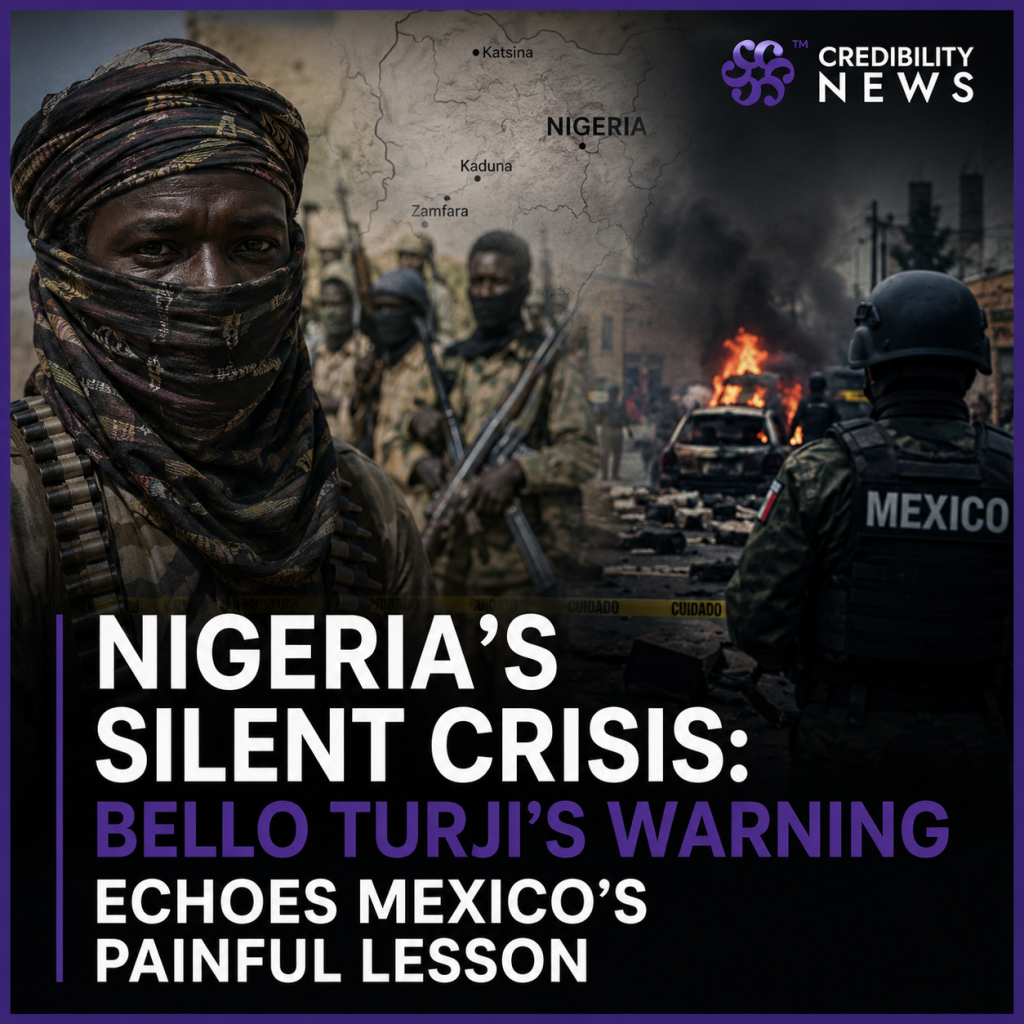
That is why the recent video released by notorious bandit leader Bello Turji should not be dismissed as mere propaganda or the desperate boast of a criminal seeking relevance. It should be seen for what it truly represents: a warning signal. More importantly, it should force Nigeria to ask a difficult question: Are we witnessing the early stages of a threat that could become far more dangerous if left unchecked?
The video, which circulated widely across security and intelligence circles, shows Turji seated confidently among heavily armed fighters and commanders. The scene appeared carefully choreographed. Weapons were displayed prominently. The fighters seemed organized and disciplined. The message was unmistakable. Turji did not speak like a fugitive running from the law; he spoke like a man convinced that he possesses influence, territory, and operational strength.
Such images should concern every Nigerian—not because the country is on the verge of collapse, but because history has repeatedly shown that criminal networks become most dangerous when they evolve beyond ordinary banditry into structured organizations capable of challenging state authority.
The world has seen this before. One of the clearest examples emerged in Mexico through the rise of Nemesio Oseguera Cervantes, popularly known as El Mencho. Born into poverty in rural Mexico, his beginnings were remarkably ordinary. He worked on farms, struggled through difficult circumstances, and later migrated to the United States, where he was arrested for minor drug-related offences and deported. At the time, few viewed him as a significant threat.
Yet beneath that unremarkable profile was a man who would eventually build one of the most powerful criminal organizations in modern history. After rising through the ranks of organized crime, El Mencho established the Jalisco New Generation Cartel (CJNG), transforming it into a sprawling criminal empire. The organization expanded rapidly across Mexico, generating enormous wealth through drug trafficking, extortion, kidnapping, fuel theft, and other criminal enterprises.
More troubling was its growing military capability. Its fighters became heavily armed, highly trained, and increasingly bold in confronting government forces. In one shocking incident in 2015, cartel operatives shot down a Mexican military helicopter, demonstrating a level of firepower and organization once thought impossible for a criminal group. At that moment, the line between organized crime and armed insurgency had effectively blurred. The cartel was no longer hiding from the state—it was openly challenging it.
Years of intensive security operations and intelligence efforts have targeted the organization, yet the CJNG remains a major force in Mexico’s criminal landscape. The lesson is clear: the challenge was never simply confronting the group, but preventing it from reaching such a formidable level of power in the first place.
That lesson carries important implications for Nigeria. No serious observer would suggest that Bello Turji currently commands a network comparable to the CJNG. The scale, resources, international reach, and financial sophistication are entirely different. However, the concern lies not in what exists today but in what may emerge tomorrow if growth continues unchecked.
Recent intelligence reports suggest that Turji’s network is becoming increasingly organized. Reports have pointed to structured weapons training, military-style tactical drills, and the movement of experienced fighters into his areas of operation. There have also been reports of advanced equipment finding its way into criminal camps and growing alliances among armed groups operating across parts of Zamfara, Sokoto, and neighbouring areas.
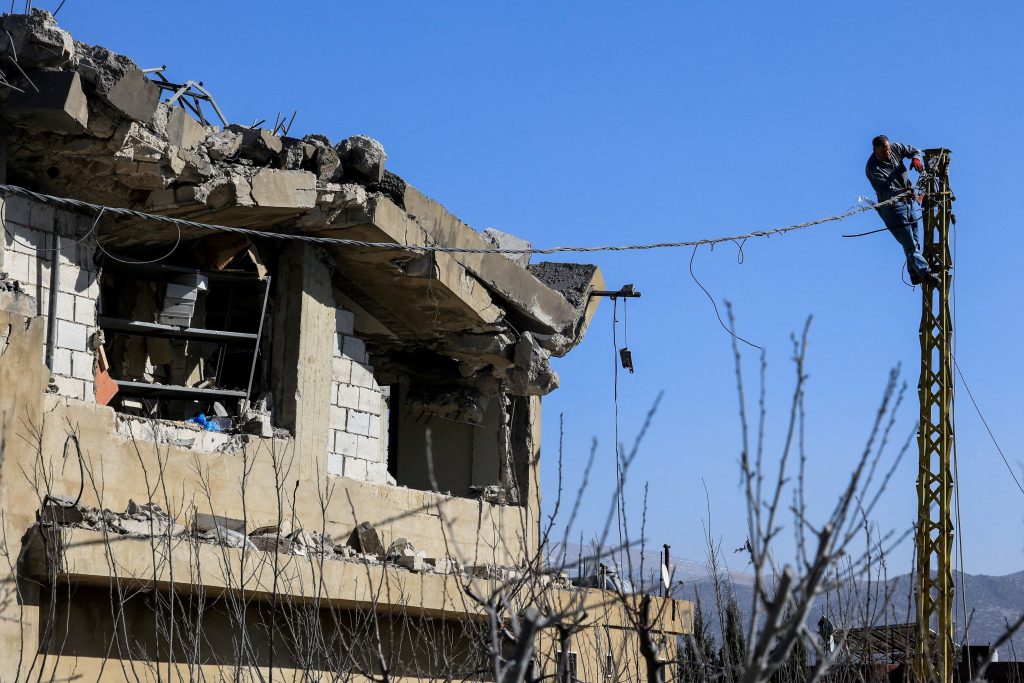
Perhaps even more alarming is the humanitarian impact. Entire communities have reportedly been abandoned as residents flee repeated attacks and insecurity. Villages that once supported farming and commerce now stand deserted, while displaced families seek refuge in schools and temporary shelters. These realities demonstrate that the threat extends far beyond isolated attacks. It is gradually reshaping the social and economic landscape of affected communities.
To be fair, Nigeria’s security forces continue to confront these challenges under extremely difficult circumstances. Many soldiers and security personnel have paid the ultimate price in defence of the nation. Their sacrifices deserve recognition and respect. This discussion is therefore not an indictment of those risking their lives on the frontlines. Rather, it is a call for strategic urgency.
History teaches that threats evolve. Criminal groups adapt. Networks expand. Resources accumulate. When responses fail to grow at the same pace as the threat, the gap widens until containing the problem becomes exponentially more expensive and difficult. Mexico learned this lesson through years of bloodshed. Nigeria cannot afford to learn it the same way.
The encouraging reality is that the situation remains manageable. Unlike the mature criminal empires seen elsewhere, networks operating in Nigeria’s North-West have not yet reached a point where they possess overwhelming territorial control, international reach, or deep institutional penetration. That means there is still time. But time is not unlimited.
The signs emerging today—organized structures, tactical training, growing alliances, and expanding operational capabilities—should be treated as indicators of a threat seeking to evolve into something larger. Turji’s recent video should therefore be viewed not as a publicity stunt but as a status report. It reveals confidence. It displays organization. And it sends a message that demands careful attention from policymakers, security planners, and political leaders.
What Nigeria requires now is neither panic nor sensationalism. It requires clear-eyed assessment, intelligence-driven operations, stronger coordination among security agencies, and sustained political commitment. The country has successfully confronted major security threats before. It possesses experienced military personnel, capable intelligence institutions, and valuable lessons from years of counterterrorism operations. The challenge is whether those lessons will be applied early enough.
Because the most expensive security battles are often the ones that could have been prevented years earlier. Nigeria still has an opportunity to act while the cost remains manageable. The question is whether the nation will seize that opportunity before history repeats itself.
By then, waking up may no longer be enough.
For comments, reflections, and further conversation, email: samuelagogo4one@yahoo.com