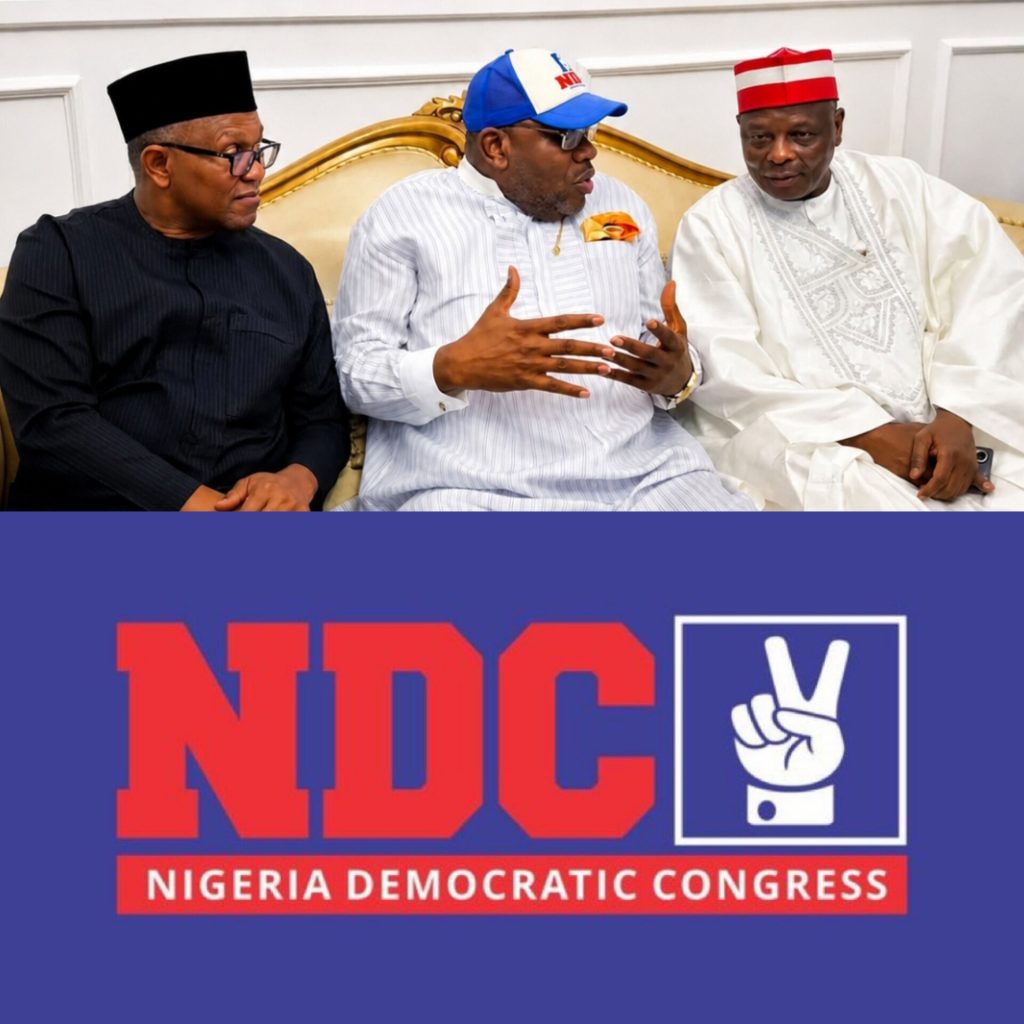
When Pastor Dave Ogbole walked into the BON Hotel in Jabi, Abuja, on May 25, 2026, to face the screening committee of the Nigerian Democratic Congress (NDC), he was stepping into the most ambitious political contest of his career. For him, this was not just another political ritual but a defining moment — the pursuit of a Senate seat that could reshape the future of Benue South Senatorial District, popularly known as Zone C.
Benue South is a land of contradictions. It is blessed with fertile soil that has earned Benue State the title “Food Basket of the Nation,” yet insecurity has forced farmers to abandon their fields. Its population of nearly two million is overwhelmingly youthful, with more than sixty percent under the age of twenty-five, but opportunities for education, employment, and innovation remain scarce. Communities have endured killings, displacement, and economic hardship, while successive governments have often responded with motions and press statements rather than concrete protection. Against this backdrop, Ogbole’s candidacy is not seen as a newcomer’s ambition but as the culmination of years of activism, policy work, and leadership.
Ogbole’s public life began in the pulpit. As a pastor, he built trust through service, guiding his congregation with a philosophy of service before status. That pastoral instinct became the moral compass of his later work in governance. He transitioned into public service as Special Adviser on Strategic Investment and Knowledge Economy to the Benue State Government, contributed to the Transition Committee 2019, and worked with international partners such as the European Union and UNHCR on peacebuilding initiatives. His academic credentials — a Master’s in Public Administration, fellowships with the Institute of Management Consultants (Nigeria) and the Chartered Institute of Leadership, Education and Development (U.S.) — reinforce his technocratic profile. His fluency in English, Hausa, Idoma, and Tiv is more than symbolic; in a district layered with ethnic identities, it is a practical tool for bridging
Security has been the defining issue of Benue politics, and it has equally defined Ogbole’s career. Long before his name appeared on a ballot, he co-founded the Movement Against Fulani Occupation (MAFO), a grassroots campaign that mobilised communities against killings in Agatu and other embattled areas of Benue State. MAFO was not built around press conferences but around banners in the streets, advocacy in the public hearing halls of Abuja and Benue, slogans that turned open grazing into a defining political fault line, and advocacy that demanded action. Ogbole co-authored the landmark 2016 Open Grazing Prohibition and Ranches Establishment Law, reshaping land-use policy and setting a precedent referenced across Nigeria. He later documented the crisis in his book Herdsmen Crisis in Nigeria: The Benue Peace Option, arguing for negotiated, policy-driven solutions rather than endless cycles of violence. In a district where thousands remain displaced, his record positions him not as a candidate reciting talking points, but as one of the architects of Benue’s security response.
If security has been his defining battle, youth empowerment has been his construction project. In 2020, he chaired the Benue Youth Summit, giving structure to the voices of the state’s overwhelmingly young population. He also served as Vice President of the Africa Food Security Academy, helping train over 200 specialists now working under Nigeria’s Zero Hunger agenda. Today, as Global Director of Digital Policy and Public Engagement at Young Innovators of Nigeria, he continues to shape national conversations on technology, innovation, and youth development.
For a district where farming remains the backbone of the economy, his work has doubled as both agricultural intervention and youth employment pipeline.
Benue South does not just need a local champion; it needs a representative who can be heard in Abuja. Ogbole has already proven he can occupy that space. His policy commentary has reached national television audiences, including multiple strategic appearances on Channels TV, TVC News, and others. He has shared platforms with figures like Peter Obi and Dr Oby Ezekwesili, embedding himself in national policy circles. This visibility matters. It signals that he is not learning the ropes of national advocacy — he has already been in the rooms where decisions are shaped.
Although none of this guarantees victory in 2027, as elections are decided at the ballot, not in résumés, Ogbole’s candidacy defies the notion of the political newcomer. His security activism predates his ambition. His youth development initiatives were built long before campaign season. His national fluency has already been tested.
As he told the NDC screening committee, this is the highest office he has ever sought. He walked into that hall, he said, carrying the hopes of young people trapped in the mill of recycled leadership, and the grief of communities scarred by violence — a task he was born and equipped to tackle by providing an inclusive leadership brand that harnesses organic home-grown potential, while tapping into global opportunities through contemporary innovation.
Whether Benue South entrusts him with that mandate is now a question only the 2027 ballot can answer. But one thing is clear: Pastor Dave Ogbole is not running on promises alone. He is running on a record.