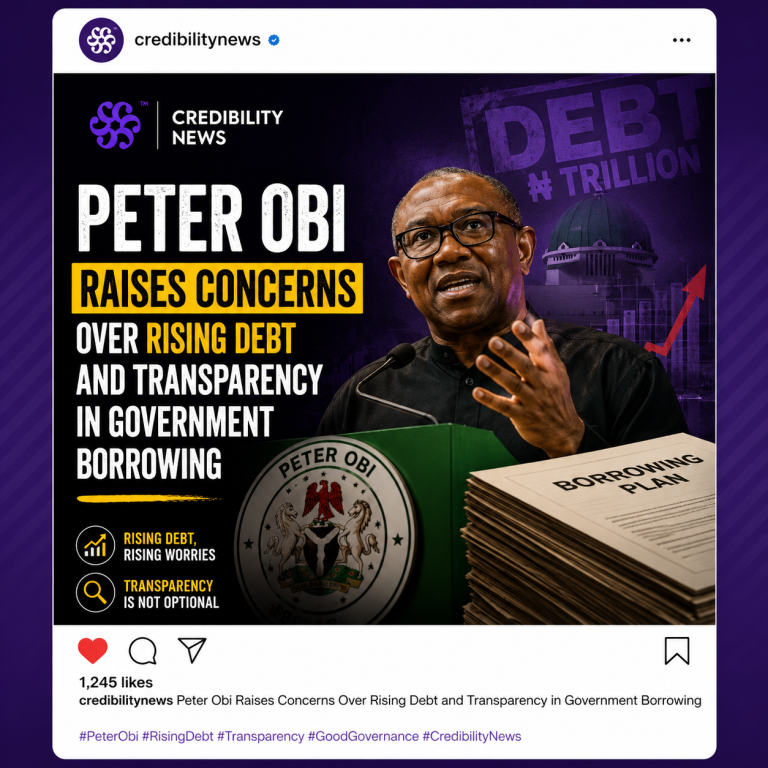
Prominent Nigerian politician and former Anambra State Governor, Peter Obi, has criticised President Bola Tinubu’s recent state visit to the United Kingdom, saying such trips must produce concrete economic benefits instead of being treated as ceremonial photo opportunities.
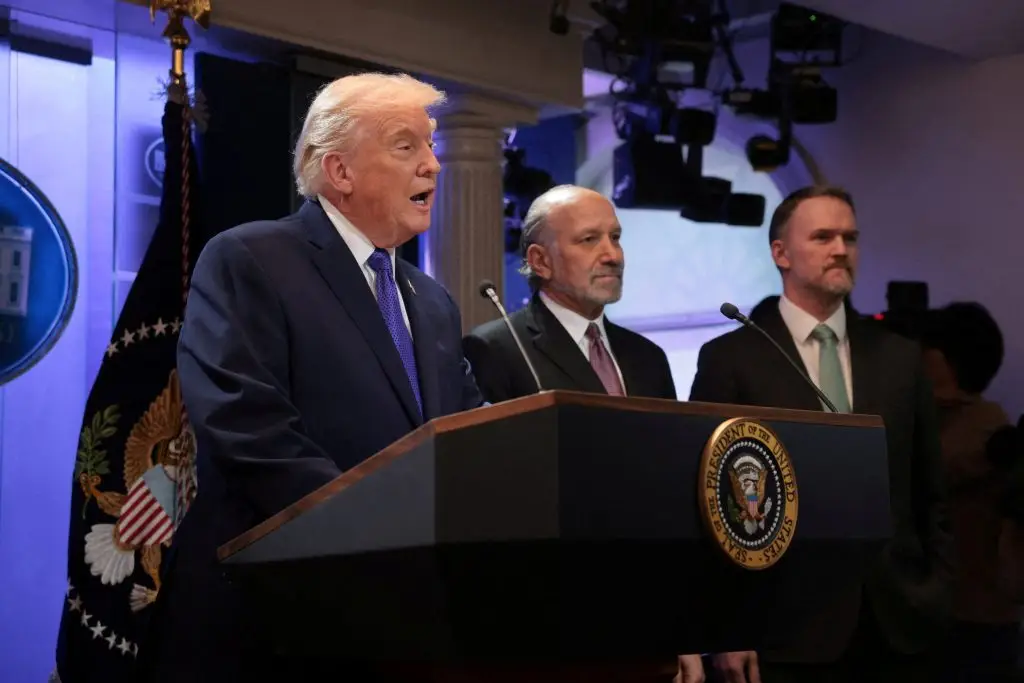
In a strongly worded press statement, Obi drew a sharp contrast between President Donald Trump’s recent visit to China and President Tinubu’s trip to the UK, arguing that serious nations use diplomacy to drive economic growth, investments, and job creation.
“State visits by leaders are not tourism, and diplomacy is not a fashion parade. Every foreign trip undertaken by a government must deliver measurable benefits to the people — investments, technology transfer, trade agreements, factory expansion, industrial partnerships, and job creation,” Obi stated.
Trump’s China Delegation
Obi highlighted President Trump’s recent visit to China, where the American delegation combined top government officials with leading global business executives. The delegation reportedly included:
- Donald J. Trump – President of the United States
- Marco Rubio – Secretary of State
- Pete Hegseth – Secretary of Defence
- Elon Musk – CEO, Tesla & SpaceX
- Jensen Huang – CEO, Nvidia
- Tim Cook – CEO, Apple
- Larry Fink – CEO, BlackRock
- Stephen Schwarzman – CEO, Blackstone
- Kelly Ortberg – CEO, Boeing
and several other CEOs from major companies such as Cargill, Citigroup, General Electric, Goldman Sachs, Qualcomm, Visa, Mastercard, Meta, and others.
According to Obi, this high-powered delegation resulted in huge trade deals worth several billion dollars, including orders for about 200 Boeing aircraft. He argued that this approach shows how serious nations align foreign policy with economic expansion, industrial growth, innovation, and national productivity.
Tinubu’s UK Visit
In contrast, Obi questioned the tangible outcomes of President Tinubu’s state visit to the United Kingdom, which was accompanied by a large delegation that included the President and his wife, Senator Oluremi Tinubu, 12 state governors, 9 ministers, 7 members of the National Assembly, over 20 senior State House officials, more than 30 security personnel, domestic staff, and political associates.
“Nigerians are still asking a simple question: what exactly did Nigeria bring home?” Obi said.
He posed several critical questions:
- Which factories are coming to Nigeria?
- What power, technology, manufacturing, agricultural, or industrial agreements were secured?
- How many direct jobs will this visit create for Nigerian youths?
- What investments were attracted?
Obi noted that it is not enough to ride horses, wear matching uniforms, attend royal banquets, and release glossy photographs, adding that “symbolism without substance cannot feed hungry citizens.”
Economic Context
The former Labour Party presidential candidate stressed that Nigeria is currently battling serious insecurity, food insecurity, unemployment, a weakened naira, declining industrial productivity, and worsening poverty.
“At a time when millions of Nigerians struggle daily to afford food and survive economic hardship, every kobo spent on foreign trips must produce tangible national value: investments, factories, jobs, exports, infrastructure, and economic opportunities,” he added.
Obi concluded by calling for leadership that focuses less on optics and more on productivity and measurable economic results.
“A New Nigeria is Possible,” he said.