

By Reuters
Cape Verde / London
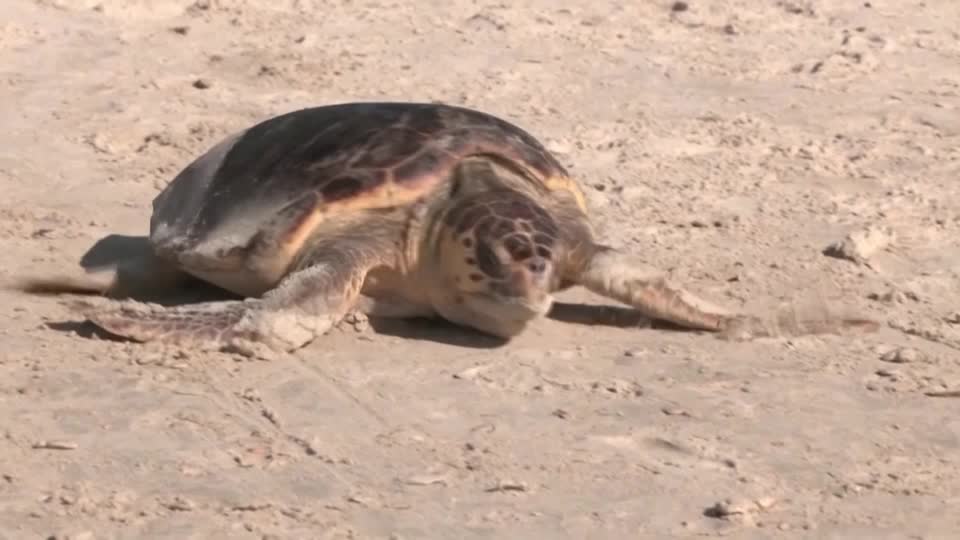
Loggerhead sea turtles nesting in Cape Verde are arriving earlier as Atlantic waters warm, but are breeding less often and producing fewer eggs, according to a 17-year scientific study published in the journal Animals.
Researchers tracking the turtles found that rising ocean temperatures appear to be accelerating egg development inside the turtles’ bodies, shortening the interval between clutches and prompting earlier nesting.
“At first, it looked like good news,” researchers said, noting that the shift suggested the turtles were adapting to warmer conditions.
However, deeper analysis revealed a troubling trend: turtles are laying fewer eggs and mating less frequently, raising concerns about the long-term survival of the species.
The study’s lead author, Fitra Nugraha of Queen Mary University of London, said the problem goes beyond temperature alone.
“When we follow individual turtles, a complex picture emerges,” Nugraha said. “Something is happening in the oceans beyond temperature — ocean productivity matters. When productivity declines, turtles produce fewer eggs, have fewer clutches, and their nesting intervals become longer.”
Researchers used chlorophyll levels — a key indicator of ocean productivity and food availability — to assess feeding conditions in turtle foraging areas. The study found a long-term decline in chlorophyll concentration, suggesting reduced food supply.
As a result, nesting intervals have lengthened from around two years to four years over the course of the study. When females do return to nest, they lay fewer eggs than in previous years.
Cape Verde currently hosts tens of thousands of nesting loggerhead females annually, making it one of the world’s most important nesting sites.
Scientists warn that conservation efforts must go beyond protecting nesting beaches.
“We have to protect foraging grounds far away from nesting areas,” Nugraha said. “We must reduce pressures on marine ecosystems because turtles depend on healthy oceans for food and reproduction.”
Image / Video credit
REUTERS / Guillaume Couche / Project Biodiversity
© Reuters. Published by Credibility Media and Entertainment Ltd under licence.