

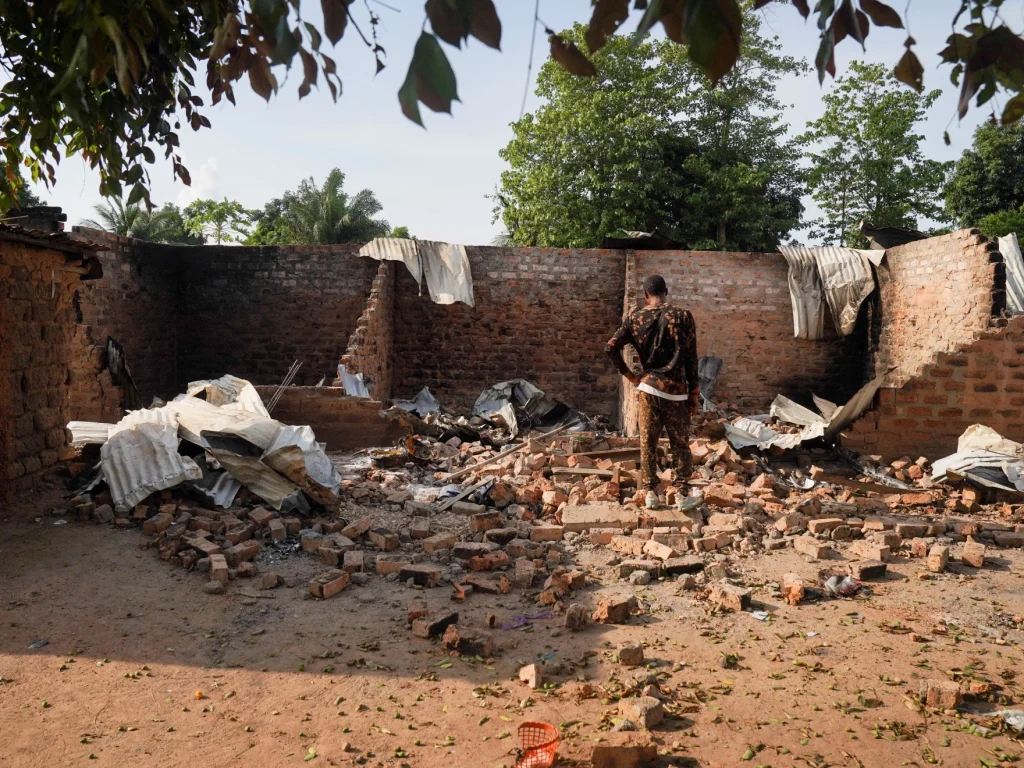
Nigeria’s rural communities, once defined by quiet farming life and close-knit social structures, are increasingly gripped by violence.
In February 2026, armed attackers on motorcycles stormed Tungan Dutse village and surrounding communities in Zamfara State, killing at least 50 people and abducting women and children. The assault, which lasted through the night into the early morning, forced dozens of families to flee their homes at the height of the farming season, leaving farmlands abandoned and livelihoods shattered. Incidents like this have become emblematic of a broader crisis affecting vast stretches of rural Nigeria.
Insecurity across the country continues to worsen daily, with frequent attacks reported in different parts of the nation. Nigerians increasingly wake up to disturbing news of fresh incidents — including bombings, kidnappings, and assaults on military bases and formations — like those that occurred in previous months and throughout March 2026.
Across the country, villagers now live under constant threat from armed bandit groups, kidnappers, insurgents, and clashes between farmers and herders — often driven by disputes over land and water resources. Beyond the human toll, the crisis is disrupting agriculture, fuelling inflation, and raising concerns about Nigeria’s economic stability.
As insecurity deepens, the debate over how best to respond has intensified. One proposal gaining renewed attention is the creation of state police — a decentralised system that would allow individual states to establish their own law enforcement agencies alongside the federal police. The key question remains: can such a reform provide a lasting solution, or is it only one piece of a much larger puzzle?
Rising Insecurity in Rural Communities
Rural regions in Nigeria’s North-West and North-Central zones have been particularly hard hit. States such as Zamfara, Kaduna, Niger, and Katsina have witnessed repeated attacks by armed bandit groups, often involving mass kidnappings and village raids.
According to the Council on Foreign Relations Nigeria Security Tracker, thousands of Nigerians have been killed in violent incidents over the past decade, with a significant proportion occurring in rural communities where state presence is limited.
In the North-East, the long-running insurgency by Boko Haram and the Islamic State West Africa Province continues to displace millions, compounding the humanitarian crisis.
In many of these areas, security response times remain slow. Residents often report waiting hours – or even days – before help arrives, largely due to the distance between rural communities and security outposts.
The Economic Toll
The economic consequences are severe. According to recent modelled estimates, agriculture employs approximately 34 percent of Nigeria’s workforce. When insecurity prevents farmers from accessing their land, food production declines, contributing to rising food prices nationwide.
The impact extends to export commodities as well. Disruptions in cocoa production in the South-West and sesame farming in the North directly affect Nigeria’s non-oil export earnings and foreign exchange inflows — key indicators for global investors.
Limitations of the Current Policing Structure
Nigeria operates a centralised policing system under the Nigeria Police Force, which is responsible for maintaining law and order across a population exceeding 200 million.
However, structural limitations have become increasingly apparent.
The United Nations recommends a policing ratio of approximately one officer to 450 citizens. Nigeria’s current ratio falls significantly below this benchmark — often estimated at around 1:500 or worse — with far fewer officers available per capita, especially in rural areas.
Security analyst Kabiru Adamu has argued that the current system struggles to generate timely, actionable intelligence at the community level. He notes that “community-based policing structures can significantly improve intelligence gathering and enable faster response to emerging threats.”
Centralised command structures can also slow operational decisions, particularly in remote regions where rapid intervention is critical. Additionally, officers deployed from outside local communities may lack familiarity with local languages, terrain, and social dynamics — an advantage often exploited by criminal groups.
The Case for State Police
Advocates of state police argue that decentralization could address many of these challenges by bringing security closer to the people. Former Inspector-General of Police Solomon Arase has emphasized that effective policing depends on strong collaboration between law enforcement and local communities — something a localised system could enhance.
Security expert Kabiru Adamu has similarly noted that locally controlled forces are better positioned to understand community-specific threats, gather intelligence, and respond quickly.
The push for state policing has gained renewed rhetorical traction under the administration of President Bola Ahmed Tinubu. In February 2026, the President urged the National Assembly to amend the Constitution to accommodate state police. In early March, Inspector-General of Police Olatunji Disu inaugurated a committee to develop an operational framework.
The Nigeria Governors’ Forum has since submitted its proposals to the National Security Adviser, with the document expected to reach the National Assembly. The Senate has pledged to conclude the necessary constitutional amendments by the end of 2026.
Yet, for many Nigerians living in communities ravaged by banditry and kidnappings, these developments have done little to inspire confidence. On the ground, there is little visible evidence of a coordinated push to operationalise state policing.
Security outposts remain understaffed or non-existent in rural areas, and response times to attacks have not improved. Meanwhile, political activities ahead of the 2027 general elections are already gathering momentum, with critics arguing that the administration’s focus has drifted from the urgent task of securing lives and livelihoods toward electoral positioning.
To ordinary citizens watching from affected communities, the gap between official rhetoric and on-the-ground reality remains as wide as ever. Proponents argue that Nigeria’s diverse security challenges — from banditry and insurgency in the North to oil-related conflicts in the Niger Delta and kidnapping networks in southern regions — require tailored, region-specific responses that a centralised system cannot efficiently provide.
From an economic perspective, improved rural security could stabilise agricultural production, protect supply chains, and ease inflationary pressures — issues closely monitored by international markets.
Concerns Over Political Misuse and Inequality
Despite these potential benefits, the proposal remains contentious.
Legal scholar Yemi Akinseye-George has warned that without strong institutional safeguards; state police could be vulnerable to political misuse. He cautions that governors might deploy such forces to suppress opposition or influence electoral processes.
There are also concerns about fiscal inequality. Nigeria’s states vary widely in financial capacity. Wealthier states could afford well-trained and equipped police forces, while poorer states may struggle to maintain basic security infrastructure. This disparity could lead to uneven protection across the country, potentially deepening existing regional inequalities.
A Solution – But Not the Only One
While the arguments for and against state police are compelling, analysts increasingly agree that decentralisation alone cannot resolve Nigeria’s security crisis.
Even proponents acknowledge that state police must be part of a broader, multi-layered reform strategy one that includes strengthening federal security institutions, investing in intelligence systems, improving training and funding, and addressing underlying socio-economic drivers such as poverty and unemployment.
Framing state police as a complementary reform rather than a standalone fix is essential to understanding its potential role.
Conclusion
Nigeria’s rural insecurity crisis is both a humanitarian and economic emergency. The displacement of farming communities, disruption of food systems, and erosion of local economies underscore the urgency of effective reform.
State police offer a promising pathway to improving localised security, but it is not a silver bullet. Its success will depend on careful implementation, strong constitutional safeguards against abuse, robust funding and training mechanisms, and seamless coordination with existing federal structures.
Ultimately, securing Nigeria’s rural communities is critical not only for protecting lives but also for ensuring food security, stabilizing markets, and safeguarding the country’s broader economic future.