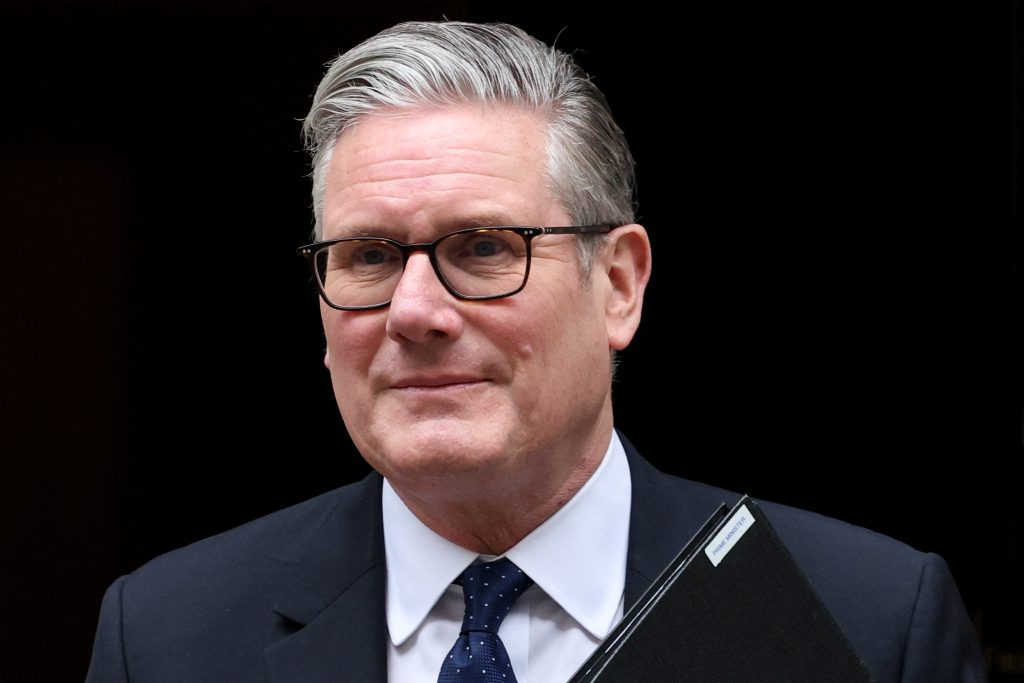
LONDON — A former top foreign ministry official said on Tuesday he had faced “constant pressure” from Prime Minister Keir Starmer’s office to speed up the appointment of his pick as ambassador to the United States, deepening a row that threatens the British leader.
A war of words over who should ultimately take the blame for appointing Labour veteran Peter Mandelson to Britain’s highest diplomatic post despite his history and known ties to the late US sex offender Jeffrey Epstein has piled pressure on Starmer, prompting calls for his resignation.
Starmer has said he was “wrong” to appoint Mandelson to the role and has expressed regret, but on Monday put the blame firmly on foreign ministry officials for failing to tell him a security vetting body had advised against the appointment.
On Tuesday, it was the turn of Olly Robbins, the foreign ministry’s former top official who was sacked late on Thursday after Starmer and Foreign Minister Yvette Cooper said they had lost confidence in him, to mount his defence.
While much of what he said backed up Starmer’s account of being told Mandelson had been granted clearance for the role, Robbins spoke of the pressure to speed things up and that the appointment had been treated as virtually a done deal.
“I walked into a situation in which there was already a very, very strong expectation … that he needed to be in post and in America as quickly as humanly possible,” a sometimes visibly upset Robbins told a parliamentary committee.
“I think throughout January (2025), honestly, my office, the foreign secretary’s office, were under constant pressure,” Robbins said, describing himself at one point as a “scapegoat.” “There was an atmosphere of constant chasing,” he said, describing “frequent phone calls” from Starmer’s private office.
Starmer’s spokesperson rejected Robbins’ allegations, telling reporters: “I would draw a distinction between the idea of pressure, and being kept informed about the process and the progress of the appointment.”
Robbins’ account is likely to increase the pressure on Starmer, who after winning the largest majority in modern history for Labour at a national election in 2024 is facing new calls to step down over a scandal which has run for months.
Labour lawmakers said they did not expect an immediate move to oust Starmer, especially before local elections in England and regional votes in Wales and Scotland on May 7.
Yet Robbins’ comments will do little to quell concerns over what some in Starmer’s party say is a bunker mentality and a lack of political nous.
Labour lawmakers on Tuesday highlighted Robbins’ revelation that Downing Street had also pushed for an ambassadorial job for Matthew Doyle, Starmer’s former senior communications director. Doyle was removed from the Labour Party over his links to a convicted sex offender and has apologised for his actions, but one lawmaker described the attempt to get him a job by Downing Street as “pretty damning.”
Robbins said when he took office on January 20, 2025, Mandelson’s appointment had already been announced, approval had been given by King Charles, it had been agreed by the US government, and Mandelson was being granted access to highly classified briefings on a case-by-case basis.
Robbins said it would have damaged relations with the US if the foreign office had blocked the appointment at that stage, and that he had given the green light by saying Mandelson had cleared vetting, based on what the foreign office knew at the time.
He questioned whether Downing Street even wanted the foreign ministry to complete so-called developed vetting clearance — a status that allows individuals access to information regarded as top secret.
It was down to the foreign ministry to complete that process, he said, and officials had stuck to a system whereby reports from a unit called UK Security Vetting were never shared with ministers to protect the candidate’s confidentiality.
But he did say that the vetting unit had advised the appointment was a borderline case and they were leaning against granting clearance — a message Starmer says he never received.
Robbins’ defence again cranks up pressure on Starmer, who had won a brief reprieve from his critics after limiting Britain’s role in the Iran war.
Even some senior ministers have subtly moved to distance themselves from him over the Mandelson decision.
Asked what went through his mind over the appointment, Energy Minister Ed Miliband told Sky News: “That it could blow up, that it could go wrong.”
Sources: Reuters