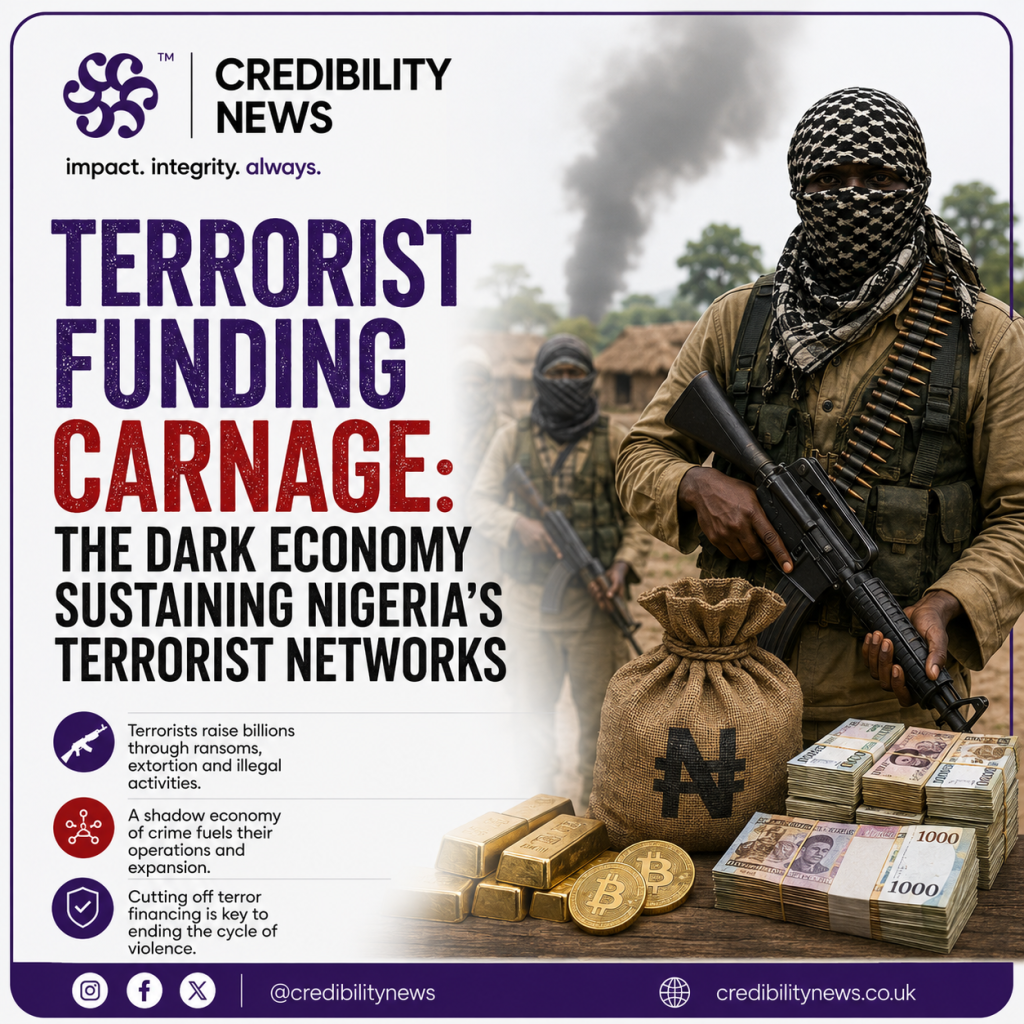
Every terrorist group, no matter how ideologically driven or militarily organised, shares one unavoidable vulnerability: it needs money to survive. From kidnapping ransoms and cattle rustling to cryptocurrencies and shadow networks, extremist groups operating across Nigeria have raised billions to sustain their campaigns of carnage — and the question that now confronts the nation is no longer simply how they do it, but what Nigeria must urgently do to cut off that lifeline of terror once and for all.
Cut the money, and you weaken the fighters, silence the propaganda, ground the logistics, and ultimately break the organisation. Nigeria has known this truth for years. The harder question — the one that successive administrations have struggled to answer with sufficient conviction — is not whether terrorism financing can be curtailed, but whether the country possesses the political will, institutional discipline, and strategic coherence to actually do it.
The answer, according to security analysts, policy experts, and international bodies that have studied Nigeria’s counter-terrorism financing architecture, is that the tools exist and the road is mapped. What remains is the decision to walk it without compromise or distraction.