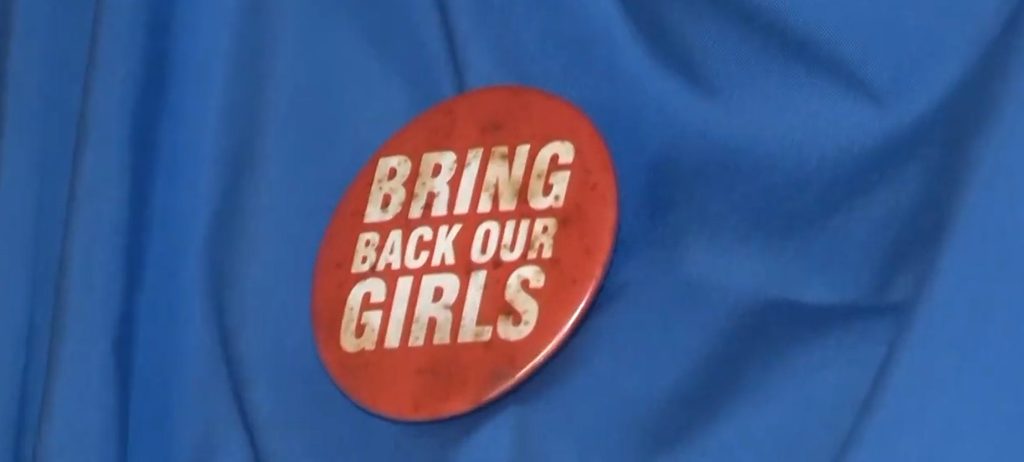
Aisha Yesufu still wears her “Bring Back Our Girls” badge every day, twelve years after Boko Haram abducted 276 schoolgirls from Chibok, and long after the world stopped watching.
At a gathering of Chibok community members in Abuja last week, the pain remained raw.
“For over 12 years, I’ve been wearing this badge,” Yesufu said.
The Nigerian activist did not need to explain why. The badge itself — a small, persistent act of defiance — told the story.
‘The World Has Moved On’
Yesufu, one of the most prominent voices of the #BringBackOurGirls movement, expressed frustration that the world had abandoned the remaining missing girls.
“Parents have died. Parents are still in mourning. Girls have not been brought back,” she said.
“And it seems as if the world has moved on, moved on from girls who were told that they should aspire, they should dream, they should shatter the glass ceilings and that they can be anything. And when they did, they were abducted and the world didn’t do everything it can to ensure that they were brought back.”
Her words carried the weight of more than a decade of waiting. More than 80 of the original 276 girls are still missing.
The Chibok Abductions: A Timeline
In April 2014, Boko Haram militants abducted 276 schoolgirls from their dormitory in Chibok, a small town in northeastern Nigeria.
The kidnapping ignited global outrage. The hashtag #BringBackOurGirls generated more than four million tweets and pushed the crisis onto the international agenda.
The slogan went viral in 2014, amplified by celebrities and world leaders — including then US First Lady Michelle Obama — and forced the kidnapping into the global spotlight.
Some of the girls escaped in the immediate aftermath. Others were released or found in subsequent years. But more than 80 have never returned home.
A Community Still Mourning
At the Abuja gathering, Ruth Zacharia, a member of the Chibok community, spoke of the ongoing uncertainty and pain.
“Those that are not yet back, we don’t know how they are doing now,” she said. “If they are still alive, we pray that one day God will bring them, that we will rejoice together.”
Her prayer is one that has been repeated for 12 years. For some families, that reunion will never come. Parents have died waiting.
Mass Kidnappings Have Become Routine
In the years since the Chibok abductions, mass kidnappings have become grimly routine across Nigeria. Schoolchildren, villagers and travellers continue to be seized by armed groups.
What was once a shocking headline is now a familiar tragedy. The world, as Yesufu said, has largely moved on.
But she has not. Every day, she puts on her badge. Every day, she remembers.
Why This Story Still Matters
The Chibok abductions were a turning point in global awareness of Boko Haram’s brutality. Twelve years later, the fact that more than 80 girls are still missing is a stain on Nigeria’s security apparatus and a reminder of the international community’s short attention span.
For the families still waiting, closure remains elusive. For the girls still missing, the world has stopped asking.
But Aisha Yesufu has not stopped wearing her badge. And as long as she does, the question remains: where are the rest of the Chibok girls?
Sources: Reuters