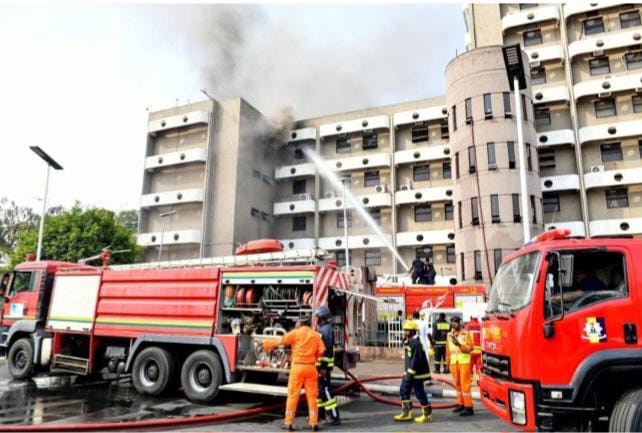
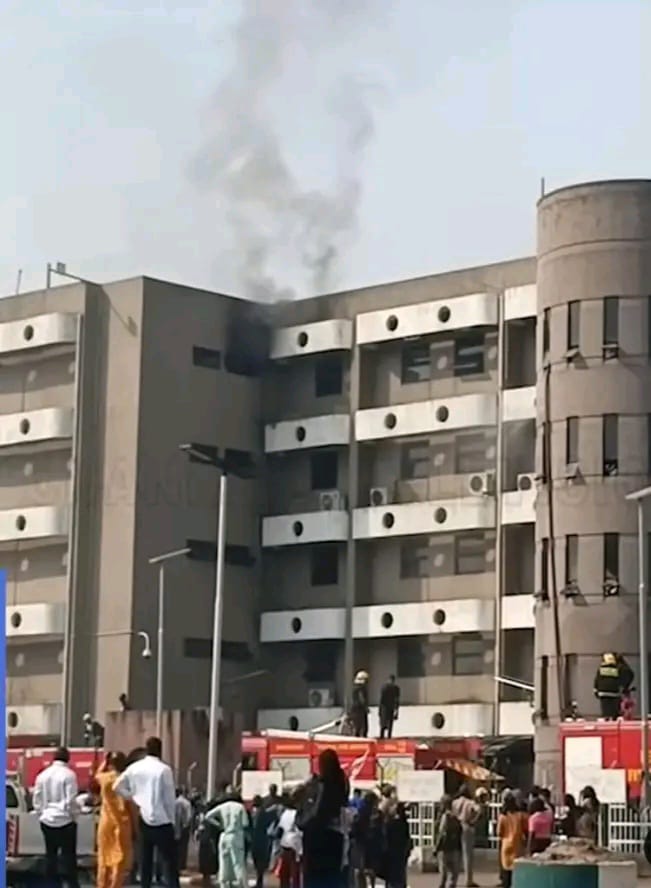
A fire outbreak occurred on Monday, March 9, 2026, at the Office of the Head of the Civil Service of the Federation (OHCSF) within the Federal Secretariat Complex, Phase II, Abuja.
The blaze affected a section of the building on the fourth floor of Block C, which houses the National Board for Technology Incubation. Emergency responders quickly contained the fire, and no casualties were reported. Preliminary assessments indicate that the damage was limited.
According to eyewitness accounts and official statements, thick smoke was first noticed between 8:00 a.m. and 8:30 a.m., prompting staff to evacuate the building as a precaution.
Firefighters from the Federal Fire Service, with support from the National Emergency Management Agency (NEMA) and other emergency agencies, responded promptly and brought the situation under control before the fire could spread to other parts of the complex.
In a statement, the Federal Fire Service confirmed that the incident was effectively managed and there was no cause for alarm. Officials from the Office of the Head of the Civil Service of the Federation, including the Head of Service, Mrs. Didi Esther Walson-Jack, also commended the emergency responders during an on-site assessment.
The exact cause of the fire has not yet been officially determined. However, preliminary reports from sources suggest it may have been linked to a faulty air-conditioning unit or an electrical issue such as a power surge. Relevant authorities have begun investigations to determine the precise cause and assess the extent of the damage.
Normal operations at the building are expected to resume with minimal disruption. Authorities have assured the public that the incident was isolated and effectively handled.
Although the incident ended without injuries or major losses—largely due to the swift response of emergency services—it highlights persistent concerns about fire safety in many public buildings across Nigeria.
Several structures still lack adequate fire suppression systems, clearly marked emergency exits, and inclusive designs that accommodate persons with disabilities. These gaps can increase the risk of minor incidents escalating into major emergencies.
The incident serves as a reminder of the need for stricter enforcement of building safety codes, regular safety audits, and greater attention to accessibility in public infrastructure planning.