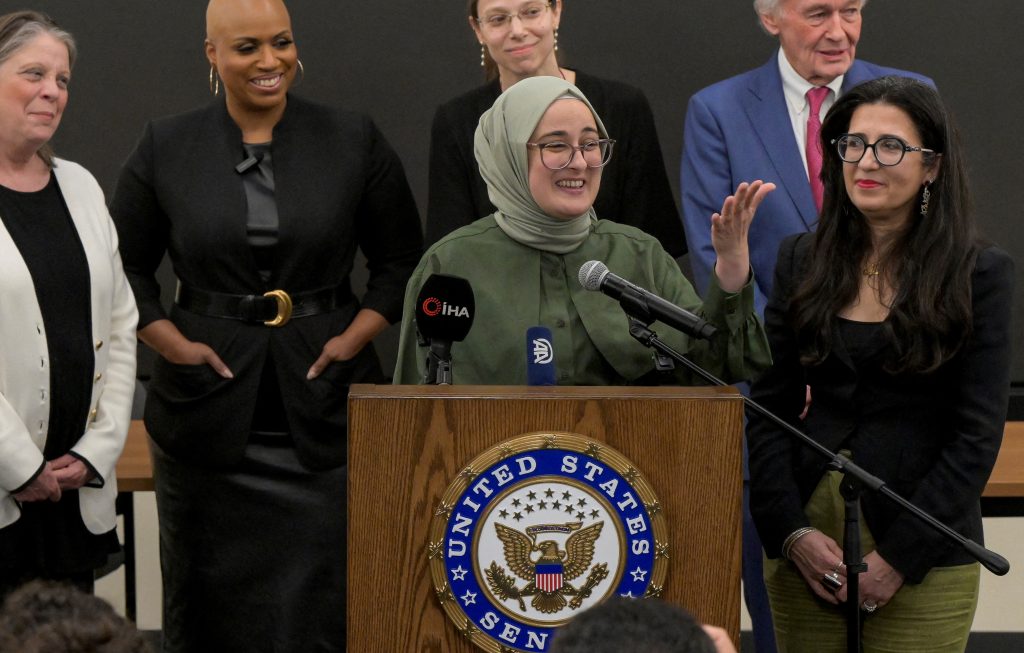
Rumeysa Ozturk, a Turkish national, came to the United States on a prestigious Fulbright scholarship to pursue a PhD in child development at Tufts University. She successfully completed her doctorate — but somewhere along the way, she expressed a political opinion.
In 2024, she co-authored an opinion piece in her university’s student newspaper criticising Tufts University’s response to Israel’s war in Gaza. That single article became the basis for her detention.
In 2025, immigration agents arrested Ozturk while she was walking on the street. She was subsequently held for 45 days in a detention facility in Louisiana, far from her university, legal team, and support network.
On Friday, her legal team announced a settlement with the US government. The Department of Homeland Security quietly dropped all deportation proceedings. In the settlement documents, the government acknowledged that Ozturk had maintained lawful immigration status in the United States throughout the entire period.
The Department of Homeland Security described the outcome as a “self-deportation”. Ozturk, however, returned to Turkey on her own terms, where she intends to continue her academic career as a scholar.
Ozturk had maintained valid status as a Fulbright scholar and PhD candidate. Despite this, the US government pursued her case vigorously — appealing court rulings and reportedly dismissing the immigration judge who rejected the deportation attempt in January 2026.
In her statement, Ozturk said she refused to lose more time to “state-imposed violence and hostility” simply for advocating for Palestinian rights. She described her detention as an act of punishment intended to silence criticism.
The case has raised serious concerns about freedom of speech and the use of immigration enforcement against international students who express dissenting views on US campuses.
While Ozturk is now home and her degree is complete, the episode has left a broader question unanswered: if this is how the United States treated a Fulbright scholar with lawful status and significant academic credentials, what happens to those who lack the same visibility, legal support, or public attention?
Rumeysa Ozturk got out. Not everyone does.
Source: Reuters