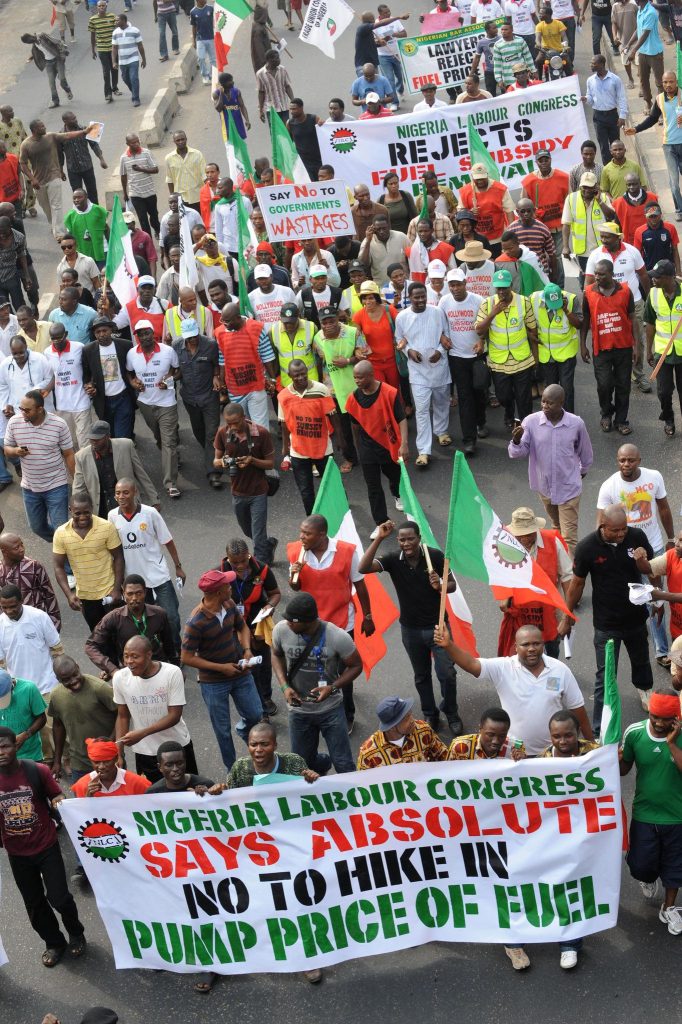
Nigerian workers on Thursday joined their counterparts worldwide to commemorate this year’s May Day under mounting economic and social pressure, as insecurity, inflation, and deepening poverty continue to erode livelihoods and the dignity of labour.
Across key sectors — from agriculture and manufacturing to offices and the informal economy — workers say the promise of improved living conditions remains elusive. Surging food prices, rising transport fares, and escalating energy costs have significantly weakened purchasing power, while concerns over personal safety and job security persist.
Labour leaders, reflecting the mood of the workforce, warned that ongoing economic reforms have yet to deliver tangible relief to ordinary Nigerians. They stressed that without urgent measures to stabilise prices, improve security, and safeguard jobs, workers’ conditions could worsen further.
For many, this year’s May Day observance is marked less by celebration and more by reflection, as millions grapple with daily survival despite official ceremonies and speeches.
President of the Nigeria Labour Congress, Joe Ajaero, described the current situation as dire, citing widespread insecurity, poverty, inflation, and the continued depreciation of the naira as key drivers of hardship.
He warned that failure to address insecurity and poverty could lead to rising unemployment and the further collapse of decent jobs.
“About 90 per cent of jobs in Nigeria are in the informal sector, where workers lack job security, pensions, and decent working conditions,” Ajaero said.
“Decent jobs are gradually disappearing across industries, worsening inequality and poverty. If insecurity is addressed, farmers will return to their fields, food production will improve, and employment opportunities will expand.”
Similarly, Acting General Secretary of the National Union of Electricity Employees, Dominic Igwebike, highlighted the precarious conditions faced by electricity workers nationwide.
He listed challenges including arbitrary dismissals, stalled negotiations on working conditions, stagnant wages, and unsafe work environments, compounded by inflation and currency instability.
Electricity workers, he said, operate under constant threat.
“Our linemen and technicians face dangers from kidnappers and bandits, while distribution staff are frequently assaulted by hoodlums and local youths. Sales and marketing teams also endure harassment and intimidation while carrying out their duties,” Igwebike noted.
He added that attacks on critical infrastructure — including vandalism of transmission lines and substations — have further exposed workers to life-threatening risks.
“No worker should have to choose between earning a living and staying alive,” he said.
Beyond security concerns, labour leaders also pointed to worsening economic hardship, noting that many workers struggle to meet basic needs despite steady employment. Rising inflation and stagnant wages, they said, have steadily diminished the value of labour.
Earlier, at a pre-May Day lecture organised by the Nigeria Labour Congress and the Trade Union Congress of Nigeria, development expert Toyin Olawunmi warned that Nigeria risks reaching a critical tipping point.
He argued that growing insecurity and poverty now pose direct threats to national stability, economic productivity, and the future of decent work.
“Nigeria cannot build a system of decent work on the foundation of fear, hunger, weak institutions, and collapsing purchasing power,” Olawunmi said.
He explained that many workers are no longer simply earning wages but are burdened by multiple “invisible taxes,” including inflation, high transport and energy costs, healthcare expenses, corruption, and the psychological strain of uncertainty.
According to him, insecurity has evolved beyond a security issue into a major economic challenge.
“When farmers cannot access their land, traders cannot move goods safely, and essential workers avoid high-risk areas, the entire economy becomes destabilised,” he warned.