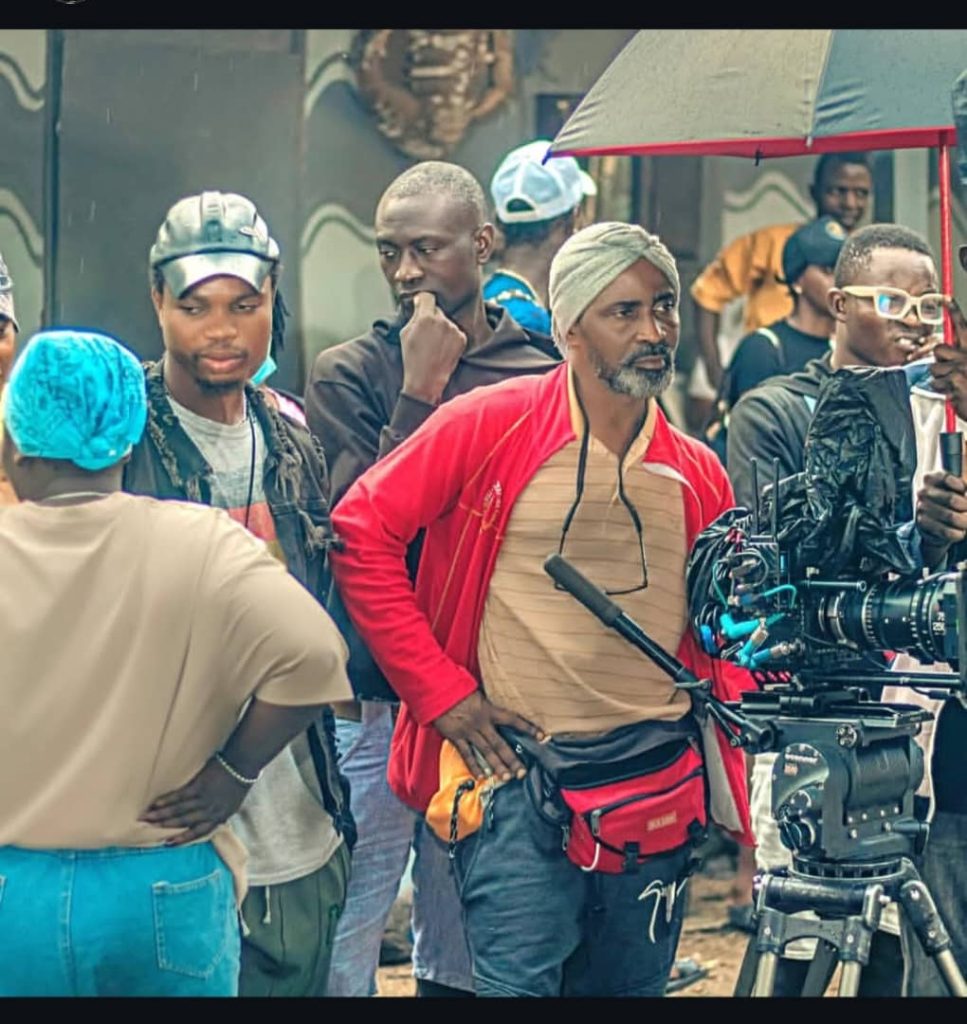
Part Two moves from the craft to the industry itself. Adedapo compares celluloid with digital filmmaking, explains why he does not regard AI as a reason to panic, and speaks frankly about the compromises created by production budgets.
Kingsley Akam: How has the move from celluloid to digital affected filmmaking?
Idowu Adedapo: They are totally different. In the celluloid era, you were not completely sure of what you were doing because you could not immediately see the result. You were praying that the exposure was right and that nothing had gone wrong. You had to mark where actors would stop because there was no monitor like we have now.
Kingsley Akam: What changed with digital?
Idowu Adedapo: Digital made it easier. You can see your exposure and the colour. You can see if it is too blue or too red. You have room to see what you are doing as you go. That gives you peace of mind.
Kingsley Akam: How do you see AI affecting cinematography and film production in Nigeria?
Idowu Adedapo: For me, I don’t think AI is affecting anybody in the way people think. You move when everybody is moving. AI is coming to a stage where you can put one character somewhere and build the house or whatever around it. It can make production easier.
Kingsley Akam: What about commercials and production costs?
Idowu Adedapo: Most commercials now use AI. Before, you had to carry all the cameras, a large crew and go outdoors, spending a lot of money. Now they can build something with AI and talk about the product. It can allow younger people to come up with something quickly and try something even without having a camera.
Kingsley Akam: Is AI a threat to your own job?
Idowu Adedapo: If AI will replace my job, it still boils down to me. Why, when AI came, didn’t I join people who are learning? I need to let my clients know that I can do this and this is what I can do with AI. Why didn’t I see digital as a threat when we changed from analogue? I moved to digital immediately. So why can’t I move from digital when AI is coming? I need to move when people are moving.
Kingsley Akam: How do you stand between the director’s vision, the producer’s budget and the realities of time?
Idowu Adedapo: As a DP, you are in the middle. The director has the vision and the executive producer has the budget. In this country, you have to work with the budget and the number of days. If the story needs two months but the producer has money for one month, you have to sit down and work around it. You help the executive producer achieve it, or you drop it. Everything boils down to budget.
Kingsley Akam: Have you ever had to compromise something you believed would have made a production better?
Idowu Adedapo: I won’t lie. I have. Sometimes you read a script and you know the camera you want to use. Then the executive producer sees the cost and says it is too much. You look at alternatives. You have to work with what is available unless you don’t want to do the job.
Kingsley Akam: Does that frustrate you?
Idowu Adedapo: Of course, you want to give your best. But if one person is funding the project, you have to understand the reality. If there were more companies collaborating and funding productions, there would be less need to compromise.
Kingsley Akam: Are you conscious that your lighting and framing shape how the audience understands Nigerian society?
Idowu Adedapo: Yes. Whenever I am on set, I make sure my lighting tells the story. You need to understand the mood and the camera movement. If somebody is crying and emotional, you do not expose everything around the character. You concentrate the audience on that character so they can connect.
Kingsley Akam: So cinematography is part of storytelling?
Idowu Adedapo: Yes. As a DP, you are telling a story too. I don’t want the audience to feel that they are watching a camera. I want them to see it like real life. That is how you make people forget they are watching a film. Lighting, camera movement and composition help you achieve that.
Kingsley Akam: What should government be doing to support filmmaking in Nigeria?
Idowu Adedapo: Government should support us. I get tired of watching foreign films and seeing them do things better because they have support. We can do what they are doing. They are human beings and we are human beings too. If they support us, we will deliver.
Kingsley Akam: Do Nigerian filmmakers have the talent to compete internationally?
Idowu Adedapo: I can beat my chest and say we can do it. Foreign DPs and filmmakers come to Nigeria and sometimes tell us, “You guys know what you are doing.” But we are limited by resources. You want to use some lights and your producer tells you there is no budget.
Kingsley Akam: Why is local ownership of Nigerian stories important?
Idowu Adedapo: You can’t bring somebody from outside to tell my hometown’s story and expect them to understand it the way I do. Nigerians understand Nigerian stories. We can do it. We can deliver. The resources are the problem.
To be continued…
Part Three: WOMEN, POWER, MONEY AND THE FUTURE OF NOLLYWOOD — Adedapo on women in cinematography, sexual harassment, the ‘sex-for-roles’ debate, power, money and his advice to the next generation.