Nigeria’s ambitious tax reform agenda has hit another wave of controversy after the Minister of State for Finance and Chairman of the Presidential Fiscal Policy and Tax Reforms Committee, Taiwo Oyedele, reportedly acknowledged errors in the newly implemented tax laws during a recent public engagement.
The admission, made at a fireside chat during the Nigerian Bar Association Section on Legal Practice conference in Lagos, has reignited debates over the integrity and workability of the four major Tax Reform Acts signed in 2025 and effective from January 2026.
According to multiple reports, Oyedele acknowledged that “errors occurred due to manual processes and multiple stages of review” in the law-making process. He assured stakeholders that corrections are already underway, with plans to address identified gaps through a future Finance Bill. He also emphasised that enforcement would not be arbitrary and highlighted the need for continuous stakeholder engagement.
However, the Presidential Fiscal Policy and Tax Reforms Committee swiftly pushed back on Sunday, April 12, 2026, describing media headlines claiming the minister had “finally admitted errors” as misleading and distorted. In a statement shared via Oyedele’s X account, the committee insisted that the legislative review process had already been concluded, with certified true copies of the laws published by the National Assembly in January 2026. It warned that such narratives could undermine public confidence in the reforms.
Roots Of The Controversy
The current row traces back to December 2025 when Hon. Abdussamad Dasuki, a member of the House of Representatives from Sokoto state, raised a point of privilege alleging significant discrepancies between the harmonised tax bills passed by the National Assembly and the versions gazetted and made available to the public.
Dasuki claimed he personally compared the documents and found material differences, including changes related to petroleum income tax, VAT provisions, and currency computation rules — specifically Section 39(3) of the Nigeria Tax Administration Act. He described it as a potential usurpation of legislative powers.
The House subsequently set up a panel, and the National Assembly ordered the re-gazetting of certified versions in early January 2026.
Shortly after, global professional services firm KPMG Nigeria released a detailed review titled “Nigeria’s New Tax Laws: Inherent Errors, Inconsistencies, Gaps and Omissions.” Even after the certified versions were released, KPMG flagged issues across multiple sections of the Nigeria Tax Act and the Nigeria Tax Administration Act, including:
- Ambiguities in capital gains computation, specifically the lack of inflation adjustment
- Inconsistencies in the treatment of foreign dividends and controlled foreign companies
- Gaps in foreign exchange deductions, non-resident obligations, and cross-referencing errors
- Potential for increased disputes, higher compliance costs, and unintended tax burdens
KPMG warned that if left unaddressed, these issues could spark litigation, deter investment, and hinder the reforms’ goals of simplification and economic growth.
The committee had earlier rebutted the KPMG report in January 2026, arguing that many flagged issues reflected misunderstandings of deliberate policy choices rather than genuine errors, while acknowledging some clerical matters as useful feedback. A high-level meeting between the Nigeria Revenue Service and KPMG executives reportedly helped clarify some interpretive differences.
Government’s Defence And Reported Gains
Despite the criticisms, the committee maintains that the reforms are delivering early results. These include a massive increase in taxpayer registration — from about 10 million to over 100 million — and a surge in business formalisation, driven by exemptions for small businesses with turnover below certain thresholds, low-income earners, and essential items such as food, education, healthcare, transportation, and rent.
The introduction of a Tax Ombud is also cited as a key protection for taxpayers’ rights.
The committee insists no legislation is flawless and that ongoing refinements through normal legislative processes, such as Finance Bills, are standard practice.
What This Means For Nigerians
Critics argue the back-and-forth exposes rushed drafting, transparency gaps, and risks of implementation chaos in an already complex economy marked by high inflation and forex volatility.
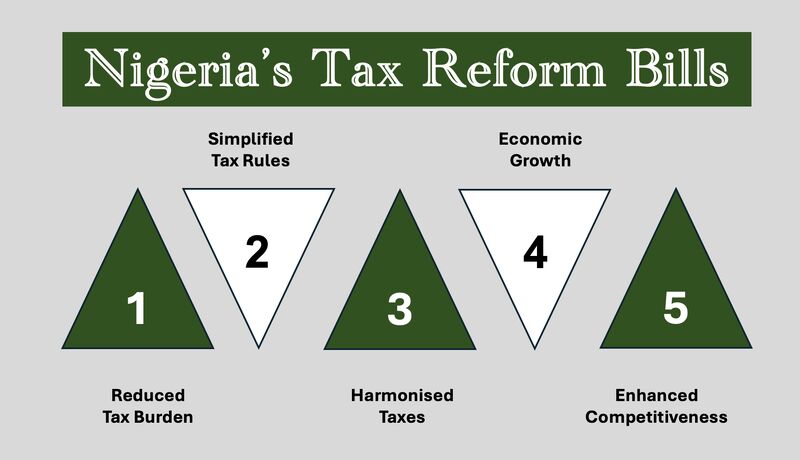
Supporters, however, view the reforms as a bold step toward reducing multiple taxation, broadening the revenue base, and providing relief to vulnerable groups.
As implementation continues, many taxpayers and businesses are watching closely for clarity on how the proposed corrective Finance Bill will resolve the flagged issues without creating new uncertainties.
The Presidential Fiscal Policy and Tax Reforms Committee has urged Nigerians to rely on official sources and ignore what it calls sensational reporting.
This developing story underscores the challenges of overhauling Nigeria’s decades-old tax system. While the intent to create a simpler, fairer, and more efficient regime is widely welcomed, questions around legislative accuracy and technical soundness continue to test public trust.
Sources: Sahara Reporters, Vanguard, Daily Post, TheCable, ThisDay, KPMG Nigeria, National Assembly statements, Presidential Fiscal Policy and Tax Reforms Committee