A 32-hour Orthodox Easter ceasefire between Russia and Ukraine unraveled almost as soon as it began, with both sides accusing the other of violations and casualty reports mounting through what was meant to be a day of silence in a four-year war.
Russia’s defence ministry logged 1,971 ceasefire breaches overnight into Sunday. Ukraine’s military General Staff went further, compiling 7,696 documented Russian violations by the time the truce approached its midnight end — among them 1,355 artillery shelling incidents, 115 assault operations, and 6,226 attack drone strikes. Neither side’s figures could be independently verified.
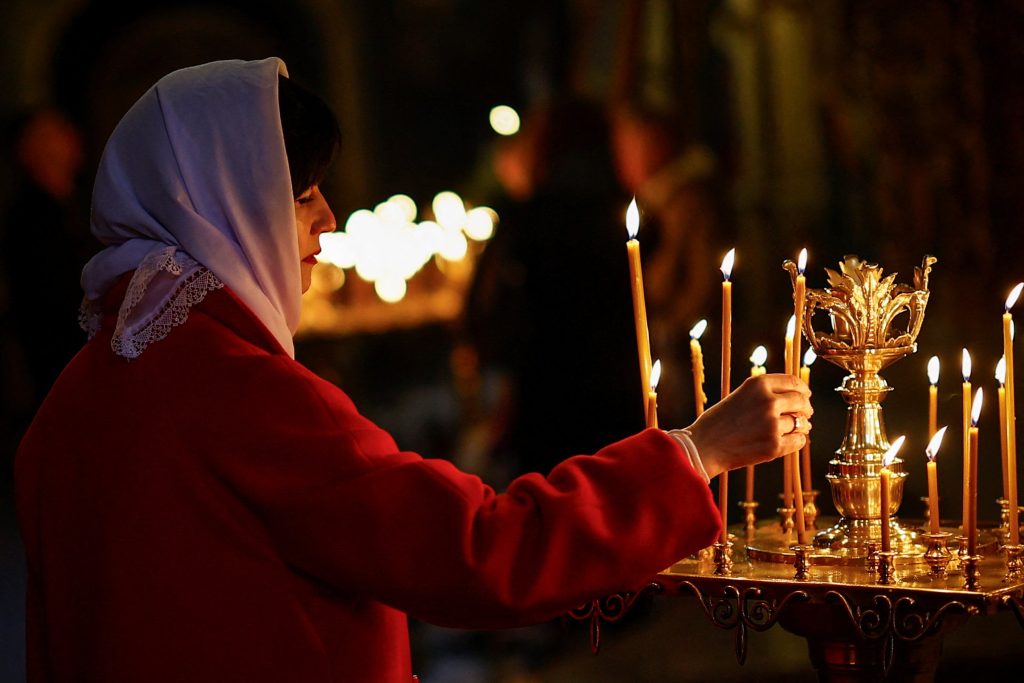
On the ground, the picture was no less grim. A Ukrainian soldier from the 65th Brigade fighting in Zaporizhzhia, known by the call sign Spider, described Russian reconnaissance drones still circling overhead at a candlelit military Easter service. His unit could not retrieve the bodies of fallen comrades.
“We wanted to evacuate our fallen comrades today,” he said, “but they are not letting us do so just yet.”
Civilian Casualties On Both Sides
Civilian casualties were reported on both sides. Ukraine’s State Emergencies Service confirmed two civilians wounded in a Russian drone attack on the northeastern Kharkiv region. Russia said a child was among those injured in a Ukrainian drone strike on the Kursk region, while Belgorod’s governor reported two people killed by Ukrainian shelling.
The ceasefire, announced by President Vladimir Putin on April 9, was framed by the Kremlin as a goodwill offering. Kremlin spokesman Dmitry Peskov called it a “humanitarian gesture” on Sunday, while making clear that Russian troops would return to full combat operations the moment it expired.
Putin has instructed the Russian military to remain on high alert in case of provocations,” Peskov said.
Ukrainian President Volodymyr Zelenskiy, whose own ceasefire proposals Moscow had previously rejected, accepted the truce. His military’s accounting of violations suggests he received little in return.
A Holy Day Shattered
Orthodox Easter falls on Sunday this year for both nations, whose populations share the same faith. That the holiest day in their common religious calendar passed under drone fire and mutual recrimination says as much about the state of diplomacy as it does about the battlefield.
The collapse of the Easter truce underscores a grim reality: after four years of war, trust between Moscow and Kyiv has evaporated entirely. Even a 32-hour pause — framed as a humanitarian gesture — could not hold.
For civilians on both sides of the border, the failure means more shelling, more drones, and more death. For the soldiers, it means another Easter without peace.
Sources: Reuters