The proposed Nigeria–US mining agreement, Washington’s security recommendations and concerns about external influence raise questions over Nigeria’s sovereignty, strategic partnerships and democratic future.
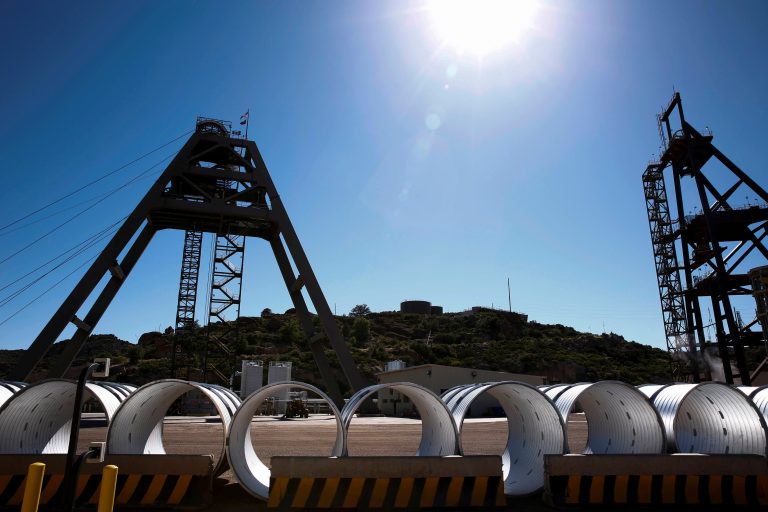
Nigeria and the United States are preparing to deepen cooperation in the mining sector, with both countries reportedly targeting the sidelines of the United Nations General Assembly in New York for the signing of a Memorandum of Understanding on mining cooperation.
According to Nigeria’s Ministry of Solid Minerals Development, the proposed agreement is expected to cover geological exploration, mining, processing, value addition and refining, as well as the development of secure and resilient critical-mineral supply chains. The agreement could provide Nigeria with investment, technology, employment and an opportunity to diversify its economy beyond crude oil.
However, documents outlining US policy recommendations for Nigeria, alongside comments by investigative journalist David Hundeyin, raise questions about whether the proposed partnership extends beyond economic cooperation and security assistance. The central question is whether Nigeria can benefit from American support without allowing external interests to influence its strategic decisions, economic partnerships or political future.
David Hundeyin Raises Questions About Nigeria’s Political Future
Reacting to a PUNCH report on the proposed Nigeria–US mining cooperation agreement, David Hundeyin wrote on X:
“Palantir is already in place waiting for this to be signed. Next is cancellation of any pending Chinese infrastructure projects. Then Tinubu gets his second term. All of this was written in Riley Moore’s recommendations months ago BTW. Anyway, Pan-Africanists are the problem.”
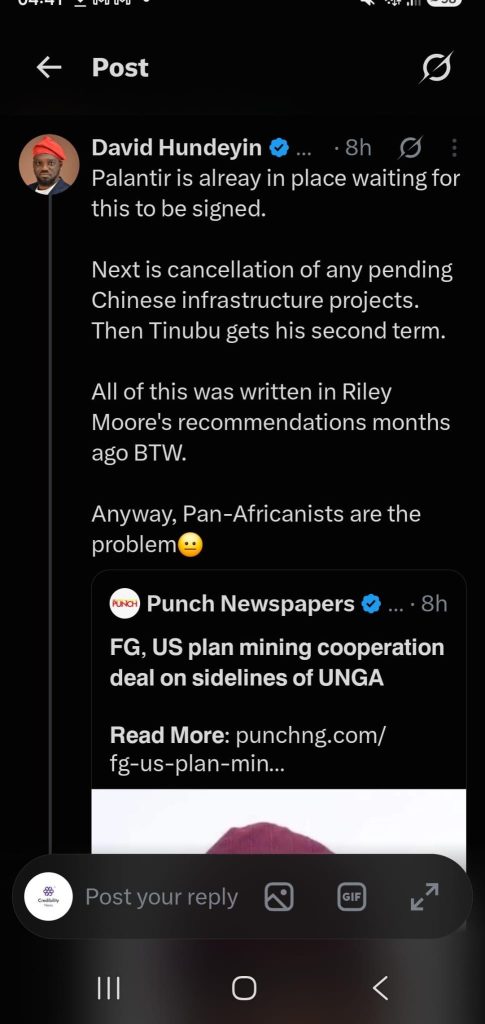
Hundeyin’s post raises a serious concern about the possible relationship between foreign strategic arrangements and Nigeria’s political future. However, The Credibility News has not independently verified his claim that Palantir is already in place, nor established that the proposed agreement is designed to secure President Bola Tinubu’s second term. The claims should therefore be treated as allegations requiring further evidence.
Nevertheless, the broader issue deserves public scrutiny. International partnerships can create influence through aid conditions, investment priorities, defence agreements, diplomatic pressure and access to strategic technologies. The important question is whether any foreign government, company or strategic partner could gain influence over decisions that should remain exclusively within Nigeria’s democratic institutions.
What Nigerians Should Demand to Know
- Has Palantir been contracted by any Nigerian government institution?
- If so, what is the purpose of the engagement?
- Does it concern mining, intelligence, defence or electoral technology?
- Will any foreign company have access to Nigerian citizens’ personal or political data?
- Are there undisclosed conditions attached to US assistance or investment?
- Could the agreement affect Nigeria’s freedom to choose its economic and diplomatic partners?
- Has the Nigerian government made any commitments that could affect the 2027 election?
Nigeria’s electoral choices must be made by Nigerians through a credible, transparent and independently administered process—not through undisclosed foreign arrangements.
The Russia and China Dimension
The US congressional recommendations also reveal that Washington’s proposed engagement with Nigeria is situated within a wider geopolitical contest.
A social-media commentator summarised the recommendations in the following terms:
“We’ll help you with security, money, and diplomacy — if you buy U.S. weapons instead of Russian ones, kick China/Russia out of key sectors, help us fight terrorism, and reform your laws/economy to favor U.S. trade.”
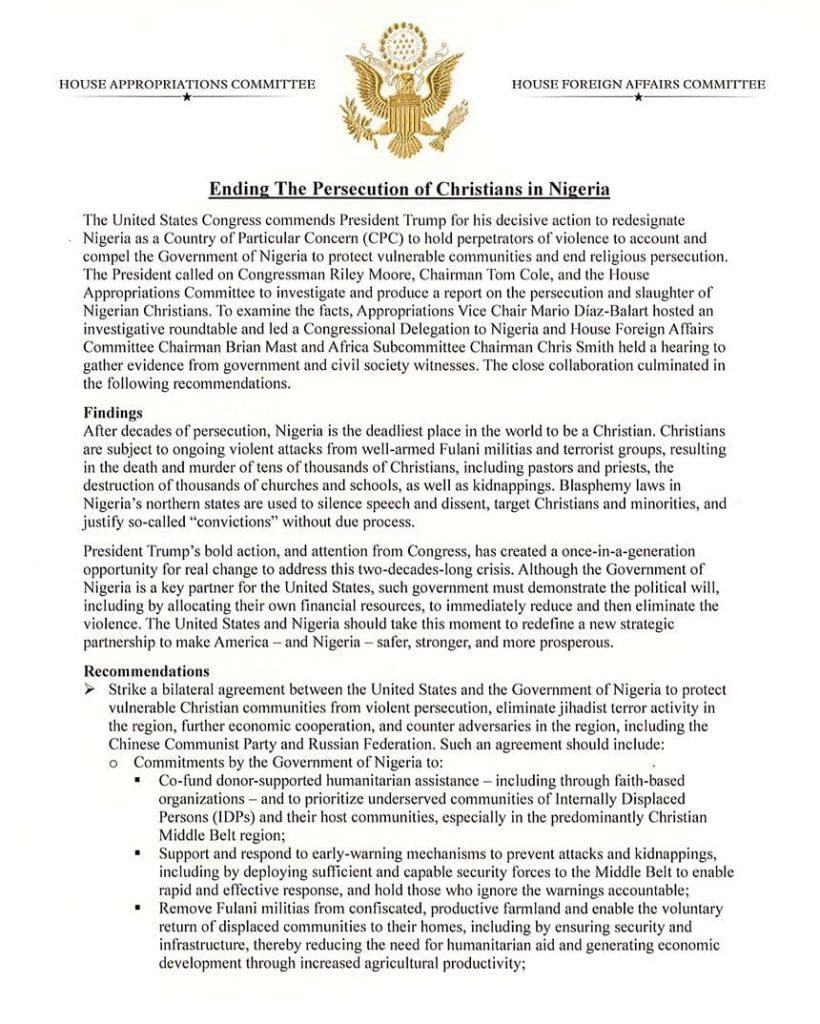
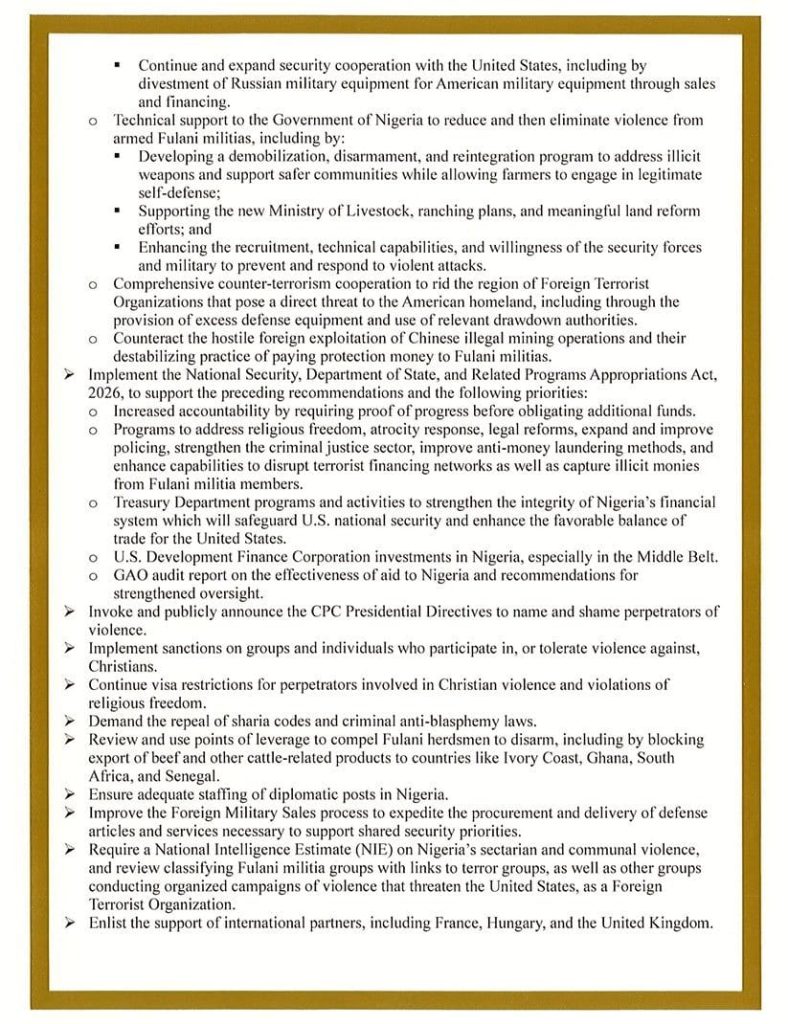
While this is a commentator’s interpretation rather than an official statement, it reflects concerns arising from the congressional report. The US House Appropriations Committee and House Foreign Affairs Committee report, titled Ending the Persecution of Christians in Nigeria, recommends that Nigeria:
- Continue and expand security cooperation with the United States.
- Consider replacing Russian military equipment with American equipment through sales and financing.
- Counter Chinese illegal mining operations and alleged destabilising practices.
- Strengthen counterterrorism cooperation.
- Expand US investment in Nigeria.
- Implement legal, financial and institutional reforms.
- Work with international partners to advance the stated security objectives.
The report also explicitly refers to countering the influence of the Chinese Communist Party and the Russian Federation. This indicates that the proposed relationship is not solely about helping Nigeria develop its mining sector. It is also connected to broader competition over strategic resources, defence markets and geopolitical influence.
Should Nigeria Cancel Chinese Projects?
Hundeyin’s reference to the possible cancellation of pending Chinese infrastructure projects is particularly important. If any such cancellations were to occur because of pressure attached to US cooperation, Nigerians would need to know:
- Which projects are affected?
- What contractual obligations exist?
- What would cancellation cost Nigeria?
- Are alternative financiers or contractors available?
- Would the decision serve Nigeria’s national interest or another country’s strategic agenda?
Nigeria should evaluate every infrastructure project on its merits. A Chinese project should not be protected merely because it is Chinese, just as an American project should not be accepted merely because it is American. The standard must be value, transparency, affordability, national benefit and accountability—not geopolitical loyalty.
Could Foreign Interests Influence the 2027 Election?
Hundeyin’s suggestion that the proposed arrangements could be connected to President Tinubu’s second-term ambitions is the most politically sensitive aspect of his post.
There is currently no independently verified evidence establishing that the United States has agreed to support a particular Nigerian candidate or manipulate Nigeria’s election. The mining report and congressional recommendations do not, by themselves, demonstrate such a plan.
However, Nigerians should remain alert to any arrangement—domestic or foreign—that could undermine electoral independence. Foreign influence does not necessarily take the form of direct ballot manipulation. It can also operate through diplomatic endorsements, security cooperation, economic incentives, access to political networks, technology and intelligence partnerships, selective sanctions or visa restrictions, public narratives about which leaders are considered reliable, and investment decisions that strengthen particular political interests.
These possibilities do not prove that such influence is occurring in Nigeria. They demonstrate why transparency and institutional safeguards are essential. No Nigerian should be persuaded to support or reject a candidate because of an undisclosed foreign bargain.
The ‘Greek Gift’ Metaphor
The expression “Greek gift” refers to the Trojan Horse in Greek mythology—a gift that concealed a strategic purpose. It is not a biblical story.
As an editorial metaphor, the expression raises the question of whether an apparently beneficial arrangement could carry obligations that are not immediately visible. But the metaphor should not replace evidence.
The proper question is not simply whether American support is a “Greek gift.” It is: what exactly is Nigeria receiving, what is Nigeria giving in return, and who has the power to enforce the terms? That is the question Nigerians should ask before any major agreement is signed.
Mining Cooperation Must Not Become Resource Dependency
The proposed mining agreement could be beneficial if it helps Nigeria develop its mineral resources into a foundation for industrialisation. Nigeria has deposits of gold, lithium and other minerals. The government says it is working to improve geological data, attract investors and encourage processing and value addition.
However, the country must avoid repeating the familiar pattern in which Africa exports raw materials and imports finished products. A serious agreement should include local processing and refining, technology transfer, Nigerian ownership and participation, employment and skills development, environmental safeguards, community compensation and development, transparent licensing, fair taxation and revenue-sharing, independent monitoring, and measures against illicit extraction and capital flight.
Investment is not the same as industrialisation. The question is whether Nigeria will become a producer with bargaining power or remain a supplier whose resources are processed elsewhere.
Security Assistance Must Protect Nigeria’s Sovereignty
The US congressional recommendations include security cooperation, military equipment, counterterrorism assistance and conditions relating to religious freedom and accountability. These are legitimate areas for bilateral engagement. Nigeria needs effective security partnerships to address terrorism, banditry, kidnapping and communal violence.
However, security cooperation must not become a mechanism for external control over Nigeria’s domestic affairs. Nigeria should retain the right to choose its defence partners, evaluate military equipment based on national needs, maintain legitimate relations with multiple countries, define its security priorities, protect citizens of every religion and ethnicity, and make constitutional and legal decisions through its own democratic institutions.
A partnership that strengthens Nigeria’s capacity is welcome. A partnership that weakens Nigeria’s independence requires scrutiny.
The Real Test: Who Benefits?
The United States has legitimate interests in Nigeria, including critical minerals, regional security, trade and geopolitical stability. Nigeria also has legitimate interests in American cooperation, including investment, technology, intelligence support, defence equipment and diplomatic engagement.
Mutual interests are not inherently problematic. The concern arises when a relationship becomes unequal, opaque or conditional in ways that compromise Nigeria’s freedom to act in its own national interest.
Before the proposed agreement is signed, Nigerians deserve answers to several questions:
- What are the financial terms?
- What are the security obligations?
- What are the data-access arrangements?
- What happens to Nigeria’s relations with China and Russia?
- What protections exist for local communities?
- What prevents foreign strategic interests from influencing Nigeria’s democratic choices?
Conclusion
It would be premature to declare that US support for Nigeria is definitively a “Greek gift.” The proposed mining agreement could deliver real benefits, and the congressional recommendations are not proof that every proposal will become binding policy.
But David Hundeyin’s warning deserves serious attention because it highlights a question Nigerians must not ignore: whether economic and security cooperation could create external leverage over Nigeria’s political and strategic decisions.
The answer should not be determined by social-media speculation, partisan loyalty or anti-American sentiment. It should be established through evidence, transparency, parliamentary scrutiny and public accountability.
Nigeria should welcome international partnerships—but Nigerians must remain the authors of their own political future. The test of the partnership will not be the number of agreements signed in New York. It will be whether those agreements make Nigeria more secure, more industrialised, more sovereign and more prosperous—or merely more useful to another country’s strategic ambitions.
Sources: The PUNCH report on the proposed Nigeria–US mining cooperation agreement; US House Appropriations Committee and House Foreign Affairs Committee report, Ending the Persecution of Christians in Nigeria; and David Hundeyin’s public post on X.