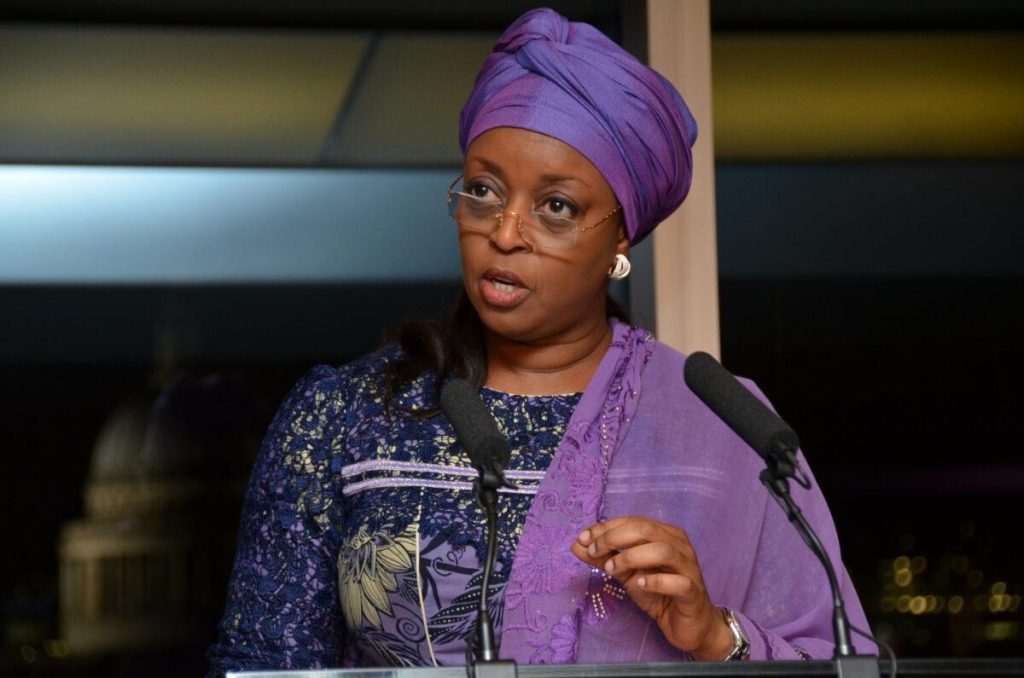
Former Nigerian Minister of Petroleum Resources, Diezani Alison-Madueke, has firmly denied all bribery allegations against her as her defence opened at London’s Southwark Crown Court, marking a significant moment in one of the most closely watched international corruption trials involving a Nigerian public official.
Taking the witness stand on Monday, Alison-Madueke rejected claims that she accepted illicit benefits in exchange for awarding lucrative oil contracts during her tenure from 2010 to 2015. Facing multiple counts of bribery and conspiracy to commit bribery, she told the court unequivocally: “I did not ask, take or seek a bribe.”
The prosecution alleges that the former minister received a range of luxury benefits from businessmen with vested interests in Nigeria’s oil sector. These include access to high-end London properties, private jet travel, chauffeur-driven vehicles, and expensive shopping trips, notably at the luxury department store Harrods. Prosecutors argue that these benefits were inducements directly linked to the awarding of oil contracts.
Alison-Madueke, however, disputed this narrative, insisting that any arrangements made during her tenure were strictly for official purposes. She explained to the court that logistical and financial challenges within Nigeria’s state oil operations often necessitated alternative arrangements, particularly during official trips abroad. According to her testimony, such expenses were not personal gifts but part of her official role, and were either authorised or later reimbursed through appropriate government channels.
In her testimony, she also pushed back against the broader narrative surrounding her case, suggesting she had been unfairly singled out. Describing herself as a target, Alison-Madueke told the court she was caught in a system that made her vulnerable to accusations. She added that she believed the scrutiny she faced was shaped by bias, and remarked that she had operated within a “patriarchal and misogynistic society,” which, in her view, influenced how the allegations against her have been framed and perceived.
The trial also involves other defendants, including business associates accused of facilitating the alleged bribery scheme. All co-defendants have denied the charges against them.
Legal observers note that this phase of the trial — in which Alison-Madueke is personally testifying — is pivotal. The court is expected to scrutinise whether the benefits outlined by prosecutors constitute legitimate official expenditures or unlawful inducements. Cross-examination by the prosecution is anticipated to rigorously test the consistency and credibility of her claims in the coming days.
The case, led by the UK’s National Crime Agency, forms part of broader international efforts to tackle corruption and recover assets linked to public officials. It has attracted significant attention both in Nigeria and globally, given Alison-Madueke’s former influence in the oil sector and her historic role as the first female president of the Organization of the Petroleum Exporting Countries (OPEC).
As proceedings continue, the outcome of the trial is expected to have far-reaching implications for anti-corruption enforcement, governance accountability, and Nigeria’s international reputation.