Dorz Cheung was at work when one of Hong Kong’s deadliest fires tore through his residential complex in November. Returning to his apartment for the first time since the tragedy, the 34-year-old said the experience left him feeling overwhelmed and “suffocated.”
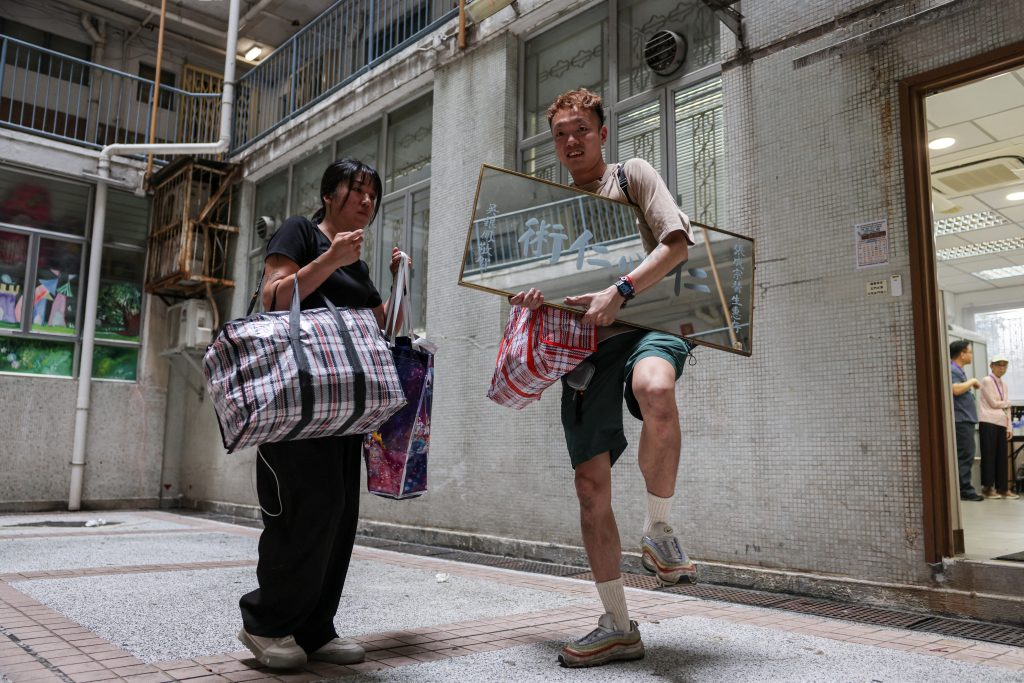
“Why did this tragedy happen?” Cheung asked as he stepped out of the charred building, holding on to a few treasured belongings — his running medals, family photographs, and his grandmother’s decades-old journals filled with reflections on the Bible.
“My emotions swing between anger and sadness,” he said. “When I first saw the kitchen, I was shocked. I felt suffocated.”
Authorities recently began allowing victims of the fire, which engulfed seven residential towers and claimed 168 lives, to return under supervision to recover whatever possessions they could salvage.
Inside Cheung’s apartment, remnants of his former life were frozen in time. A large teddy bear lay on a dishevelled bed, while ash blanketed a small piano in the living room. Smoke-stained walls and broken windows told the story of the devastation.
Among the items he managed to retrieve were his smartwatch, an old passport, and boarding passes from past travels. He also found belongings that once belonged to his late grandfather — documents, rings, and plaques inscribed with the words “good heart and great skills.” Though he could only carry one of the plaques, the discovery brought comfort, especially to his 88-year-old grandmother
“After packing everything, I just stood there and looked around,” Cheung said. “At that moment, I couldn’t help but cry. All the mental preparation I had done felt useless.”
Cheung had moved into the apartment after his grandfather’s death during the pandemic to care for his grandmother. Now, both live separately in small temporary housing units within the same building elsewhere in the city.
His grandmother, unable to climb the 14 flights of stairs, had asked him to retrieve some of her clothes. Though her room remained untouched by the fire, Cheung chose not to take any.
“When you smell them, the scent of burning is still there,” he explained.
On the day of the fire, his grandmother had been heading home when she noticed the situation and alerted him by text. He advised her to stay at a nearby church, but she returned home briefly before fleeing again after a neighbour warned her of the spreading flames. They were reunited later that evening.
Despite the trauma, Cheung said the experience has strengthened their bond. His grandmother has adapted quickly to their new living conditions and continues to attend her church regularly.
Still, the emotional toll lingers. Cheung described feeling drained, anxious, and physically unwell in the weeks following the fire. The news that he could return to his apartment even triggered recurring nightmares.
Yet, he remains determined to rebuild his life.
“After losing my home, nothing else can really defeat me,” he said. “This was the hardest thing I’ve ever faced.”
To cope, Cheung has returned to running marathons, using it as a way to manage stress and regain control.
“Life must go on,” he said. “After you’ve cried and broken down, you have to find a way to stand back up. If you don’t take care of yourself, how can you take care of others or move forward?”
Sources: Reuters